

 中文简体
中文简体 Español
 русский
 Deutsch
 Français
Content
The Core Difference
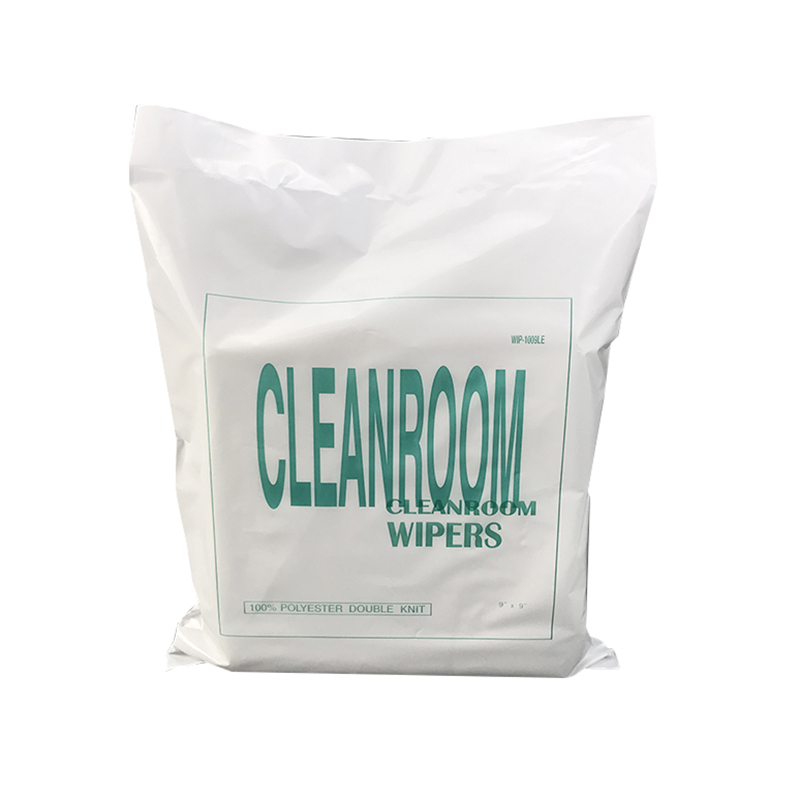
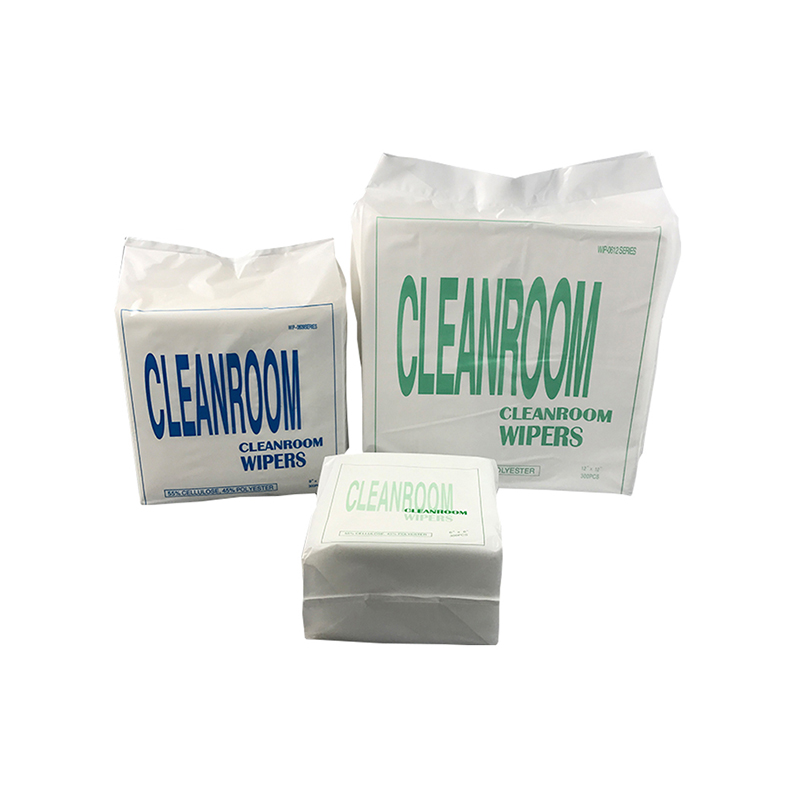
The fundamental difference lies in contamination control. A dust-free cloth (also known as a lint-free or cleanroom wipe) is manufactured, finished, and packaged specifically to minimize the release of particles, fibers, and ions. In contrast, ordinary cloth and paper are high-shedding materials that actively contaminate surfaces.
Specifically, a dust-free cloth will not add contamination to a critical surface, while ordinary materials will. For example, standard paper can release up to 5,000 times more particles than a polyester cleanroom wipe when rubbed against a surface.
Dust-Free Cloth vs. Ordinary Cloth
Ordinary cloth, such as cotton shop towels or terry cloth, is woven from natural or synthetic fibers that are not thermally or chemically bound. When used, these fibers break and detach easily.
Key Performance Data
- Fiber Shedding: Standard cotton cloth sheds millions of fibers per square meter. A high-quality dust-free cloth, like those produced in Jujie's ISO Class 5 cleanroom, is laser-sealed to ensure zero fiber protrusion.
- Absorption: While cotton absorbs water, it swells and releases more lint. Dust-free polyester cloths absorb oils and solvents without degrading.
- Chemical Purity: Ordinary cloth contains natural oils, starches, and dyes that can leach onto surfaces. Dust-free cloths are laundered in deionized water within controlled environments to meet strict ionic contamination limits.
For companies requiring strict ESD and contamination control, Suzhou Jujie Electron Co., Ltd. has specialized in the research, production, and sales of these high-grade cleanroom products since 2005.
Dust-Free Cloth vs. Paper
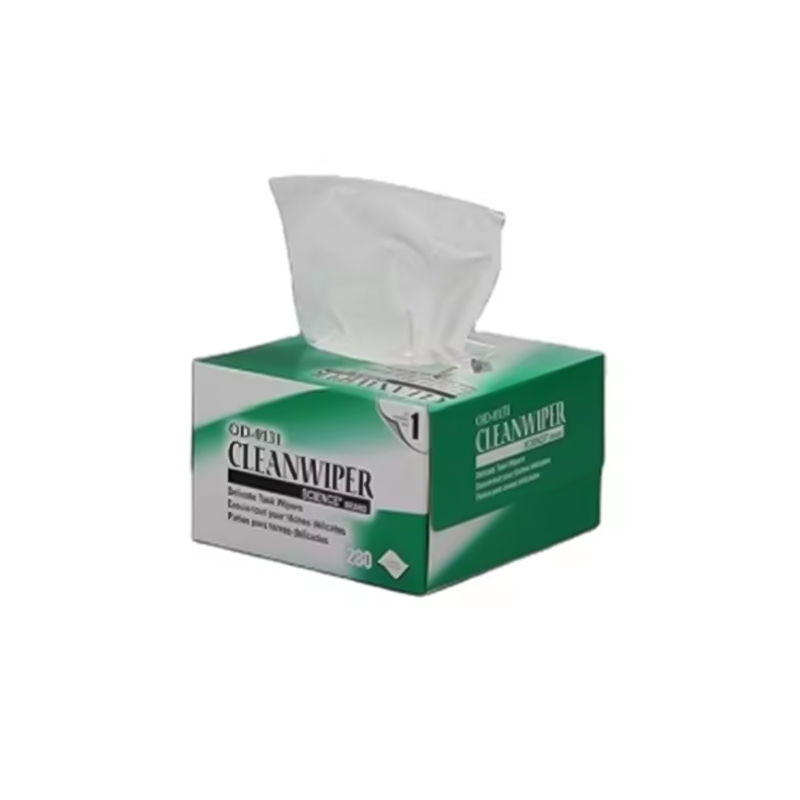
Paper wipes (like Kimwipes or standard tissue) are often mistaken for cleanroom wipes, but they are fundamentally different from engineered dust-free cloth.
| Feature | Standard Paper Wipe | Dust-Free Cloth |
|---|---|---|
| Material Base | Cellulose (Wood Pulp) | Continuous Filament Polyester or Knitted Nylon |
| Particle Generation (LPC) | High (Millions of particles >0.5µm) | Ultra-Low (Tested per IEST-RP-CC004) |
| Durability | Poor (Tears easily when wet) | High (Resists solvents and abrasion) |
| Edge Sealing | None (Cut edges release fibers) | Laser or Ultrasonic Cutting |
The ultrasonic and laser cutting machines used in Jujie's 8000m² lint-free workshop ensure that every edge is sealed, preventing the unraveling that plagues standard paper and cloth products.
FAQ about Dust-Free Cloth
Can I use a dust-free cloth like a regular rag?
Technically yes, but it is economically inefficient. Dust-free cloths are engineered for critical environments (ISO 3-8). Using them for general purpose cleaning, where a standard cloth would suffice, significantly increases operational costs. They are designed for tasks like cleaning optical lenses, applying critical coatings, or wiping electronic assemblies.
Are all dust-free cloths the same?
No. The performance depends heavily on the manufacturing environment. For example, Suzhou Jujie Electron Co., Ltd. operates a 33,000m² facility with cleanrooms built to ISO Class 5 and Class 6 standards, certified by NEBB. Cloths manufactured in a standard factory, even if made of polyester, can pick up contaminants during packaging. Only cloths processed, laundered, and sealed in a certified cleanroom are truly "dust-free."
Why is the manufacturing process important?
The process defines the product. Jujie’s expansion in 2018 added 48 automatic weaving, washing, and shaping production lines. They utilize high-end detection equipment from Germany, the US, and South Korea (like infrared spectrometers and liquid particle counters) to ensure every batch meets strict particle and non-volatile residue (NVR) limits. This level of quality control is impossible with ordinary textile or paper manufacturing.
Why Industrial Standards Demand Dust-Free Cloth
In industries like semiconductor manufacturing, biotechnology, and aerospace, a single particle from a paper towel or cotton rag can ruin a product batch.
- Semiconductors: A 0.5µm particle can short-circuit a microchip. Dust-free cloths are essential to maintain yield rates above 95%.
- Pharma & Biotech: Ordinary cloth fibers can introduce bacteria or endotoxins. Cleanroom wipes are sterilizable and biologically inert.
- Automotive Painting: Lint from shop towels lands on wet paint, causing expensive rework. Tacky dust-free cloths capture these particles without leaving residue.
Since its founding in 2005, Suzhou Jujie Electron Co., Ltd. has provided these critical supplies to such high-tech industries. Their investment in 48 automatic production lines has increased their capacity tenfold, allowing them to meet global wholesale demand for these specialized consumables.