

 中文简体
中文简体 Español
 русский
 Deutsch
 Français
Content
A Class 1000 cleanroom permits no more than 1,000 particles of 0.5 microns or larger per cubic foot of air, which makes it equivalent to an ISO Class 6 cleanroom under ISO 14644-1. It is a widely specified environment for electronics assembly, medical device manufacturing, precision optics, and secondary pharmaceutical operations because it balances contamination control with practical operating economics. In short, if your process needs HEPA-filtered air, positive pressure, controlled temperature and humidity, and disciplined gowning, but does not require the ultra-low particle counts of an ISO 5 or cleaner space, a Class 1000 cleanroom is likely the right specification.
This article explains the exact particle limits, airflow requirements, common applications, consumables, and monitoring practices you need to know before designing, building, or operating a Class 1000 cleanroom.
What Is a Class 1000 Cleanroom?
The term "Class 1000" comes from U.S. Federal Standard 209E (FED-STD-209E), which classified cleanrooms by the maximum number of particles at 0.5 microns or larger per cubic foot of air. A Class 1000 room allows exactly 1,000 such particles per cubic foot. After FED-STD-209E was retired in 2001, ISO 14644-1 became the global reference standard. Under that system, a Class 1000 cleanroom is called an ISO Class 6 cleanroom, and particle limits are expressed in particles per cubic meter.
The table below summarizes the limits that define the class.
| Parameter | Class 1000 (FS209E) | ISO Class 6 (14644-1) |
|---|---|---|
| Particles ≥ 0.5 µm per cubic foot | 1,000 | — |
| Particles ≥ 0.5 µm per cubic meter | — | 35,200 |
| Particles ≥ 1.0 µm per cubic meter | — | 8,320 |
| Particles ≥ 5.0 µm per cubic meter | — | 293 |
| Typical airflow regime | Non-unidirectional | Non-unidirectional |
| Recommended air changes per hour | 60–90 | 60–90 |
The "1000" is not an arbitrary number. It defines the maximum steady-state particle concentration at 0.5 µm, measured under the agreed operational or at-rest state defined in your validation protocol. If routine monitoring shows counts above this limit, the room is out of compliance and you must investigate the source before production continues.
Airflow, Filtration, and Room Design
A Class 1000 cleanroom typically uses non-unidirectional, turbulent airflow. Conditioned air enters through ceiling-mounted HEPA filters, sweeps particles downward and toward low-level return-air grilles, and is recirculated after passing through the filtration system. HEPA filters with 99.99% efficiency at 0.3 µm are the standard choice for this class.
Designers commonly specify 60–90 air changes per hour for an ISO Class 6 room. This high exchange rate dilutes particles generated by personnel and process equipment, which is the primary mechanism keeping the room within its 1,000-particles-per-cubic-foot limit.
Positive pressure and environmental parameters
The room should maintain a positive pressure differential of at least 10–15 pascals relative to adjacent lower-classified spaces, preventing unfiltered air from leaking in when doors open. Temperature is usually held at 21–23 °C and relative humidity at 45–55%, depending on the process. Because some products, such as antistatic clothing and cleaning wipes, perform better at moderate humidity, the HVAC design should account for the full production process, not just the particle count.
Common Applications for Class 1000 Cleanrooms
ISO Class 6 rooms sit between ultra-clean semiconductor front-end areas and more relaxed general manufacturing spaces, which makes them a cost-effective choice for many processes:
- Electronics assembly and semiconductor support: PCB assembly, wafer back-end processing, and subassembly stations that need protection from airborne particles but do not require laminar airflow.
- Precision optics: Lens grinding, polishing, coating, and inspection, where a single 0.5 µm particle can ruin an optical surface.
- Medical device assembly: Manufacturing catheters, implants, and diagnostic devices that must meet internal cleanliness specifications.
- Pharmaceutical secondary packaging: Blister packing, labeling, and cartoning of products already manufactured under stricter cleanroom conditions.
- Aerospace and defense: Assembly of gyroscopes, sensors, and avionics where particle contamination shortens component life.
Consumables and Protective Materials for Class 1000 Operation
Personnel are the largest source of particles in any cleanroom. Proper gowning for an ISO Class 6 room typically includes a cleanroom jumpsuit or ESD gown, hood, gloves, and dedicated cleanroom shoes or shoe covers. An antistatic garment does more than limit particle shedding; it also controls static charges that attract particles and damage sensitive electronics.
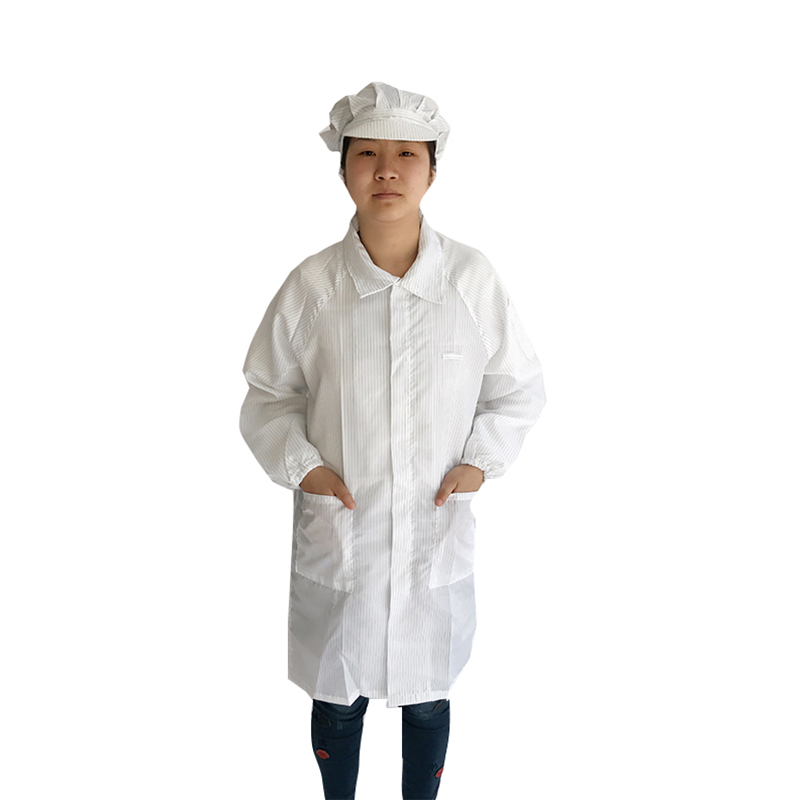 ESD Gown with Turndown Collar for Static Control in CleanroomsThis antistatic gown helps control static charges and particle shedding for personnel in ISO Class 6 environments, making it a practical choice for ESD-sensitive zones.View Product →
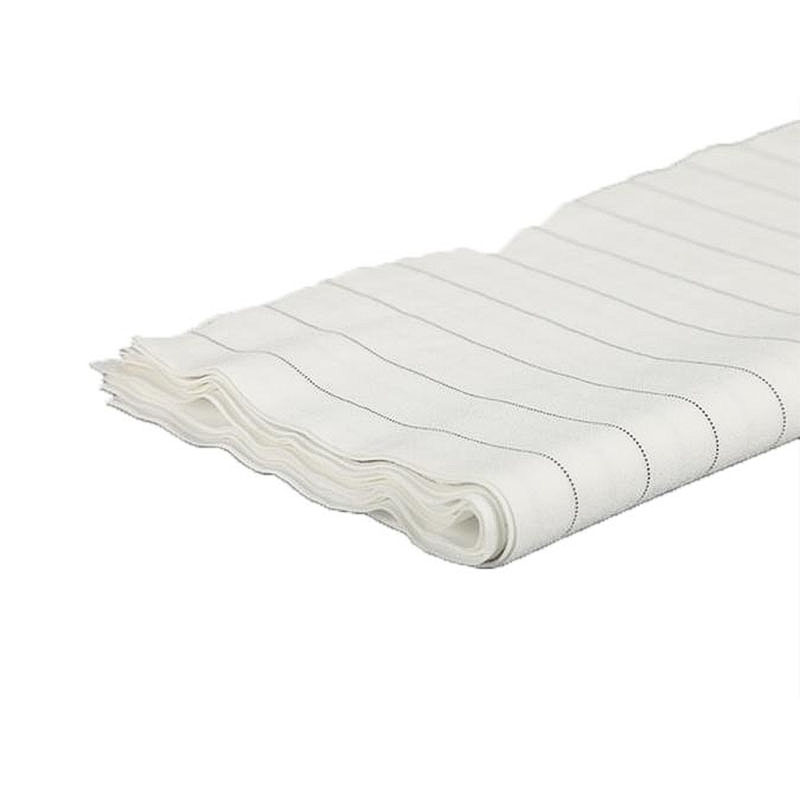
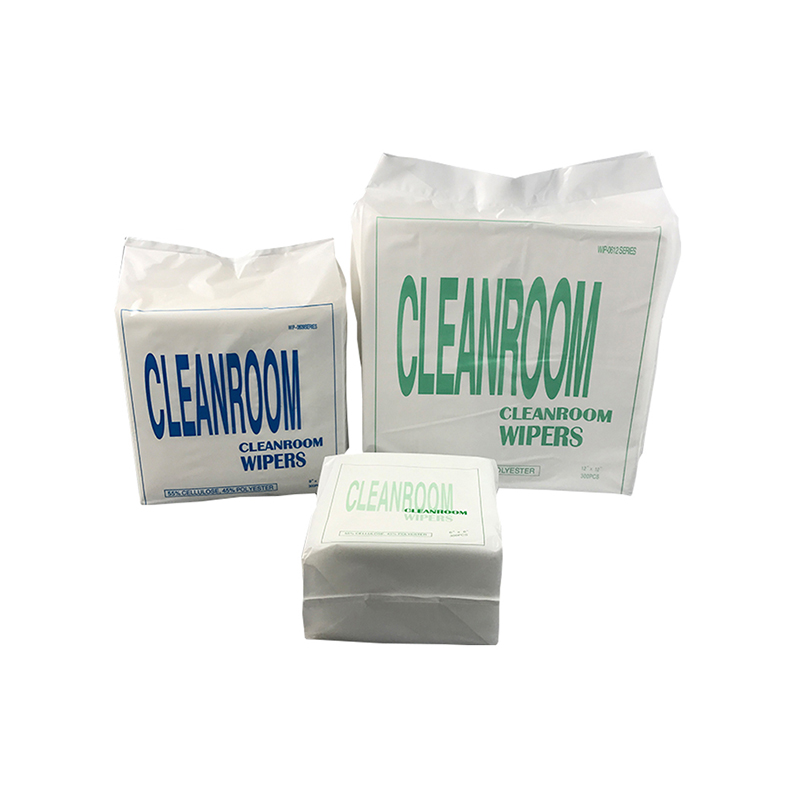
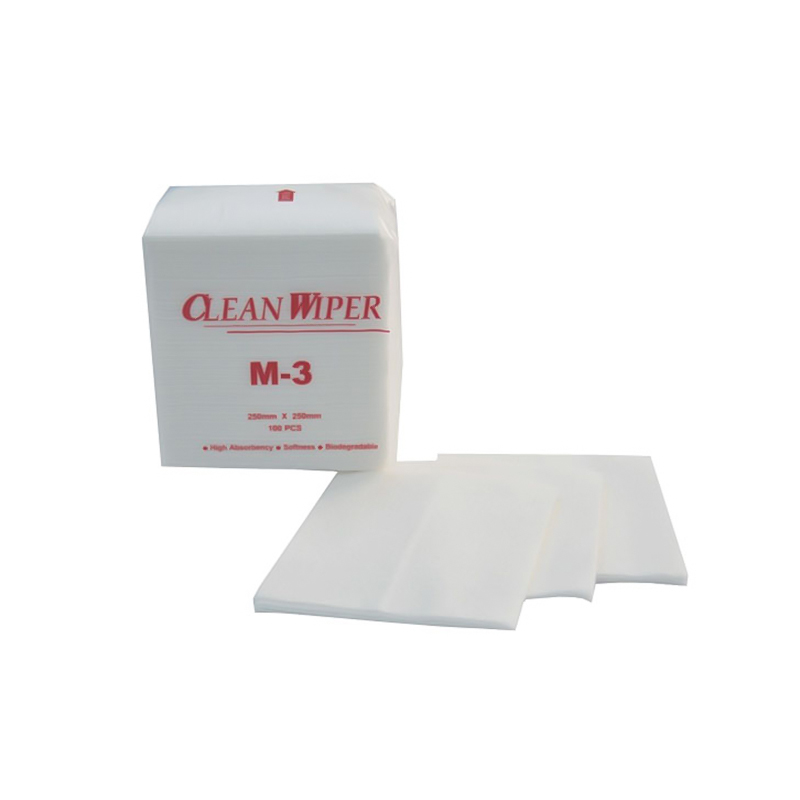
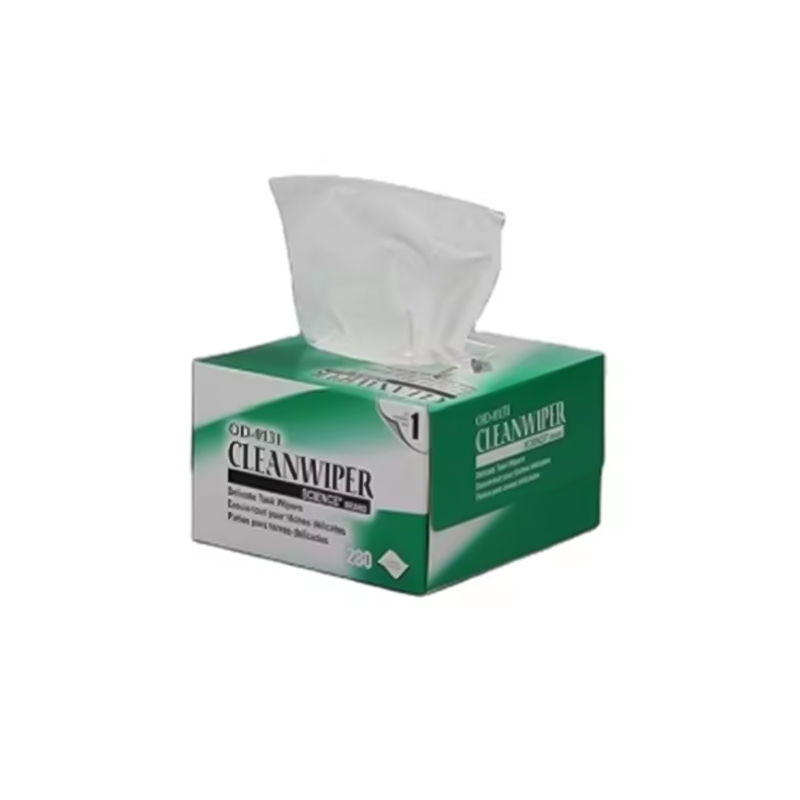
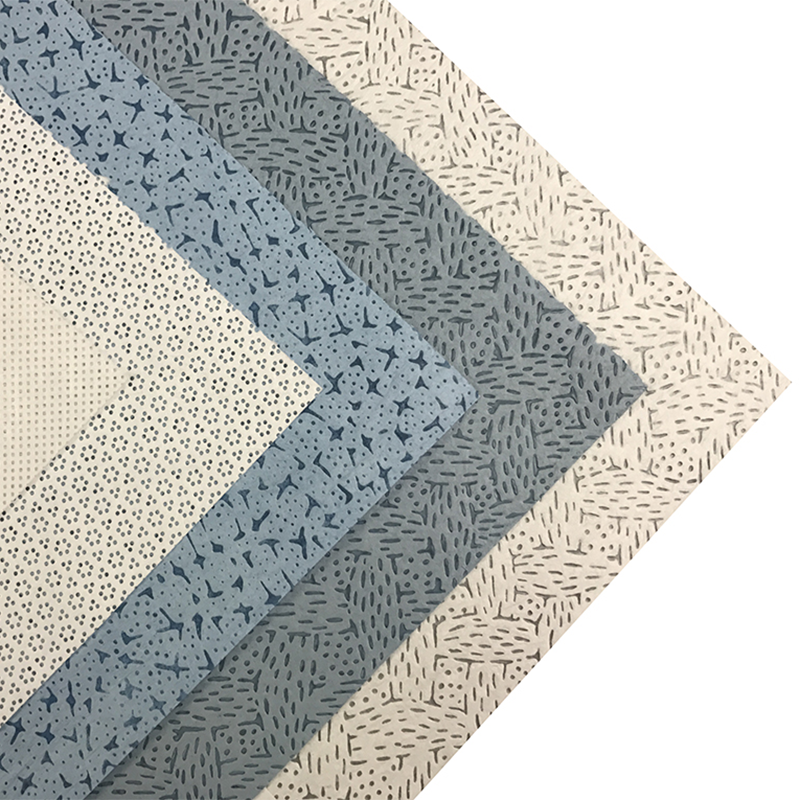
Daily cleaning of surfaces, equipment, and floors is just as important. Lint-free cleanroom wipers made of knitted polyester or microfiber remove particles and residues without shedding fibers. An overview of antistatic dust-free cloth is a good starting point when selecting wipers for ESD-sensitive zones, because not every cleanroom wiper offers the same antistatic performance.
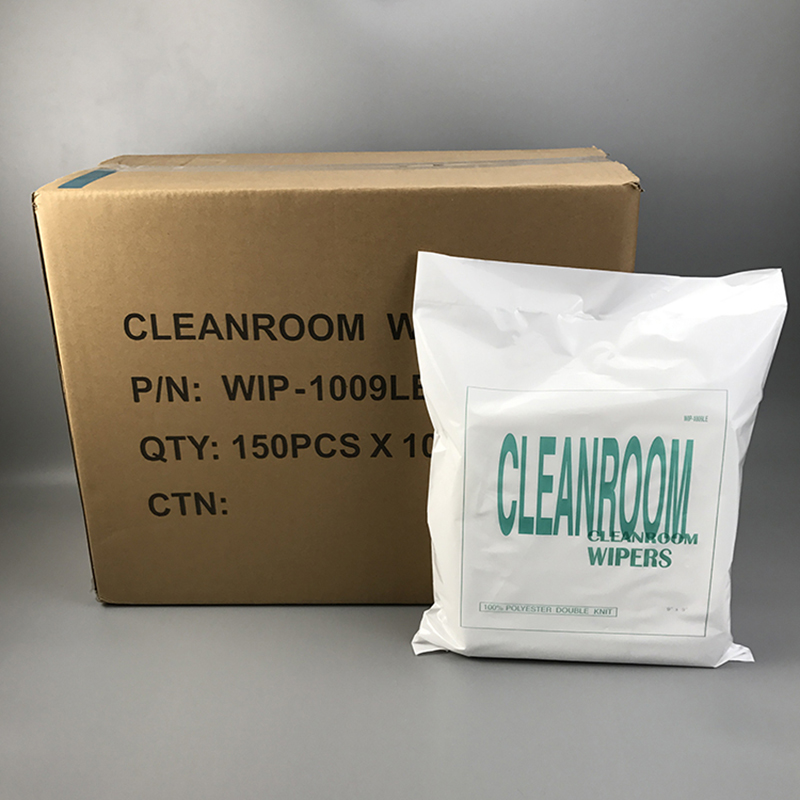 1009LE Polyester Knit Cleanroom Wiper for Critical CleaningThis low-particle, low-extractable polyester wiper suits cleaning machines and work surfaces in controlled environments, offering strength with minimal fiber release.View Product →
The same non-shedding principle applies to detailed cleaning. Foam-tipped or polyester-tipped cleanroom swabs reach narrow gaps, camera modules, sensor cavities, and print heads where a wiper cannot fit, making them essential for precision optics and electronics maintenance. Suppliers who manufacture these consumables in comparable cleanroom conditions simplify your qualification process. Suzhou Jujie Electron Co., Ltd., for example, produces cleanroom wipers and swabs in NEBB-certified ISO Class 5 and 6 rooms, which gives purchasing teams confidence that the products are made in an environment at least as clean as the Class 1000 space where they will be used.
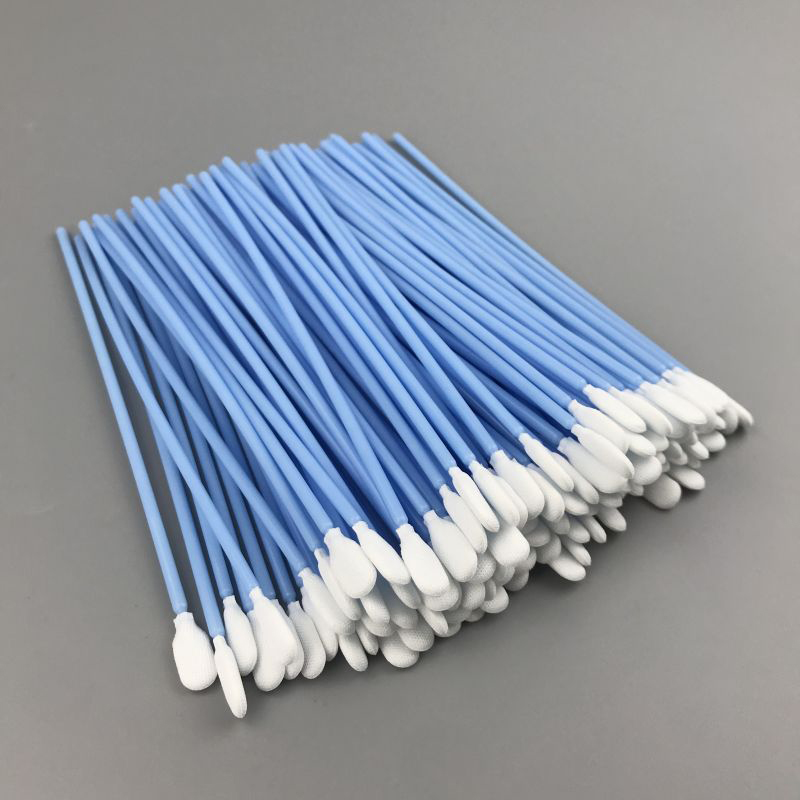 Lint-Free Polyester Cleaning Swab for Precision MaintenanceThese thermally bonded polyester swabs resist solvents and effectively scrub grease, adhesives, and flux residues, making them essential for narrow gaps and precision optics.View Product →
Entry-control materials such as sticky mats and sticky rollers capture particles from shoe soles and garments before personnel walk deeper into the controlled area. Together, these consumables form the daily operating layer that keeps a Class 1000 room stable between monitoring cycles.
Monitoring and Maintaining Compliance
Classification is not a one-time measurement. ISO 14644-2 requires regular particle-count testing to verify that the room remains within its specified class. For an ISO Class 6 room, tests are usually performed in both "at rest" and "operational" states. The at-rest state tells you whether the room and its filtration system can meet the cleanliness level on their own; the operational state tells you whether your actual work processes, headcount, and equipment generate particles that push the count above the limit.
In practice, contamination in a Class 1000 cleanroom comes from a few recurring sources:
The dominance of personnel explains why gowning discipline, static-control mats, and cleaning frequency matter more than adding extra filtration. Most ISO Class 6 rooms remain stable when the HVAC system is properly maintained and operators follow basic cleanroom protocols.
Class 1000 vs. Other Cleanroom Classes
Choosing a cleanroom class comes down to how many particles your process can tolerate. The chart below compares the maximum allowable particle counts at ≥ 0.5 µm per cubic foot for common FED-STD-209E classes. Bar widths follow a logarithmic scale so that the differences remain visible.
For most electronics and optics operations, moving from Class 1000 to Class 100 increases HVAC capacity, filtration grade, gowning requirements, and testing frequency, often with little measurable benefit if the process tolerance is already known. When in doubt, consult a cleanroom engineer and run particle characterization on your actual process before committing to a stricter class.
Frequently Asked Questions
Is a Class 1000 cleanroom the same as ISO 6?
Yes. Class 1000 refers to FED-STD-209E, while ISO 6 refers to ISO 14644-1. Both describe the same maximum particle concentration of 1,000 particles at ≥ 0.5 µm per cubic foot, or 35,200 particles per cubic meter. You will see both names in specifications, so team members should recognize them as interchangeable.
How many air changes per hour does a Class 1000 cleanroom need?
Most ISO Class 6 cleanrooms are designed with 60–90 air changes per hour. The actual figure depends on room volume, operator count, process-generated contamination, and whether the room is measured at rest or in operation. A qualified cleanroom HVAC engineer should calculate the required air changes rather than rely on a fixed rule.
Do I need ULPA or HEPA filters for an ISO Class 6 room?
HEPA filters with 99.99% efficiency at 0.3 µm are normally sufficient for a Class 1000 cleanroom. ULPA filters are intended mainly for ISO Class 1–4 environments and are rarely necessary for ISO 6 unless a specific process or local regulation requires them.
What is the cost difference between Class 1000 and Class 100?
Moving from ISO 6 to ISO 5 means more air changes per hour, higher-grade filtration, airlocks and air showers, and more frequent certification testing. Industry experience suggests the first-cost and energy consumption of an ISO 5 room can be two to three times that of an ISO 6 room, so it is worth validating whether your process truly needs the cleaner classification before investing.
If you are planning, upgrading, or equipping a Class 1000 cleanroom and need guidance on wipers, swabs, or personnel protection, contact our team to discuss the right consumable program for your application.