

 中文简体
中文简体 Español
 русский
 Deutsch
 Français
Content
If your team is upgrading an SMT line, a medical packaging area, or an optical assembly cell to a Class 10000 cleanroom, the first purchase order often goes to the HVAC contractor. That is understandable. But the parts that fail audits most often are not the HEPA filters. They are the wipers, gloves, swabs, and garments used every shift. A single low-cost polyester wipe can shed enough fibers to push a localized particle count past the ISO 7 limit during a NEBB certification test.
Class 10000 is the old US FED-STD-209E designation. Under ISO 14644-1, it is ISO 7. The airborne particle limit is 10,000 particles per cubic foot at 0.5 micrometers and larger, or 352,000 particles per cubic meter. Minimum air changes are typically 60 per hour. Those numbers are achievable with standard non-unidirectional airflow and HEPA filtration. The harder part is keeping consumables from adding particles, ions, and extractables after the room is already clean. Here is what matters for procurement, qualification, and day-to-day operation.
What Class 10000 Means in Practice
Class 10000 is not the cleanest classification, but it is one of the most common. It sits between ISO 6 (Class 1000) and ISO 8 (Class 100000). For many electronics, automotive, and medical device processes, ISO 7 provides a practical balance: enough cleanliness for yield-sensitive work, without the cost of a unidirectional ISO 5 environment. The table below shows the particle limits for the three neighboring classes.
| FED-STD-209E Class | ISO 14644-1 Class | ≥0.5 µm per ft³ | ≥0.5 µm per m³ | Typical Airflow |
|---|---|---|---|---|
| Class 1000 | ISO 6 | 1,000 | 35,200 | Non-unidirectional |
| Class 10000 | ISO 7 | 10,000 | 352,000 | Non-unidirectional |
| Class 100000 | ISO 8 | 100,000 | 3,520,000 | Non-unidirectional |
The jump from ISO 7 to ISO 6 is a tenfold reduction in allowable particles. That difference changes the consumable specification dramatically. A wipe that passes in a Class 10000 area may fail in a Class 1000 area. But the reverse is also true: buying ISO 5-grade consumables for a Class 10000 room is not automatically wrong, yet it can add cost without addressing the real contamination sources.
Applications for Class 10000 include general electronics assembly, printed circuit board manufacturing, medical device packaging, optical component cleaning, and automotive paint repair. In these areas, contamination usually enters through people, tools, and consumables rather than through the air handling system alone.
Core Requirements Beyond the Air Handler
Airflow, Pressure, and Temperature
A Class 10000 room needs at least 60 air changes per hour, HEPA-filtered supply air, and a positive pressure differential of 0.02 to 0.05 inches of water column relative to adjacent spaces. Temperature is often held between 20°C and 24°C, with relative humidity between 30% and 60%. These setpoints reduce particle generation from people and prevent condensation on sensitive parts. If the room loses positive pressure, particle counts can spike within minutes.
Personnel Protection
People are the largest particle source in any cleanroom. A single person walking can release millions of particles per minute. In Class 10000, the minimum garment set usually includes a hooded coverall, ESD-safe boots or shoe covers, a face mask, and gloves. The fabric must be low-linting and, in electronics areas, static-dissipative. A common mistake is to buy standard polyester coveralls that fit well but generate static and shed fibers at the cuffs.
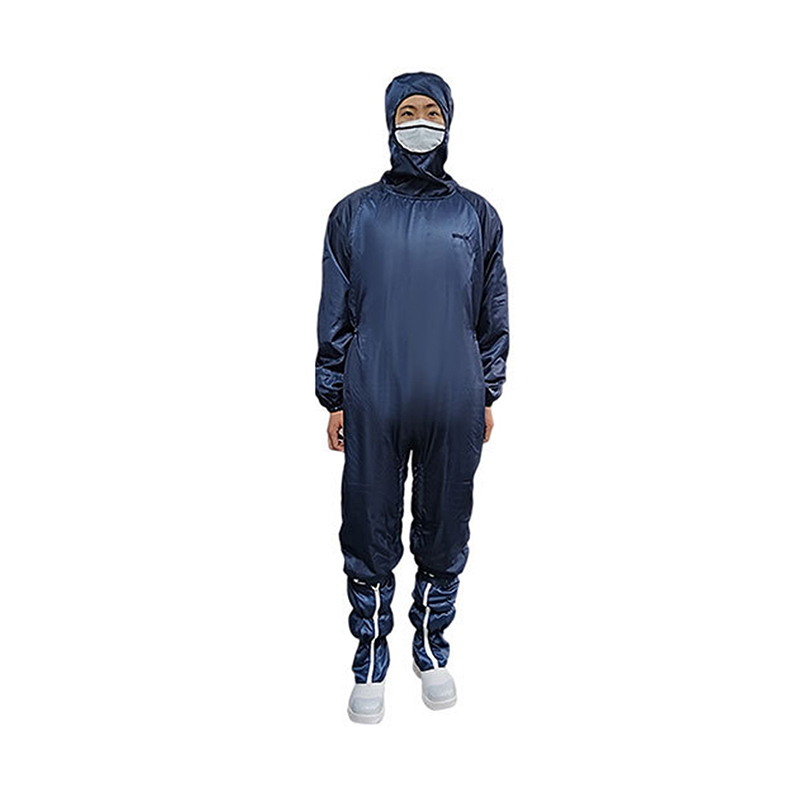 Anti Static Frog Suit With A Hooded JumpsuitSome people are happy with just wearing a wrist strap, it is proven that the Anti-static coveralls offers better protection and it is that you include it in your toolk...View Product →
For Class 10000, the garment system should be tested for particle shedding and surface resistivity. A typical target is a surface resistivity between 10^6 and 10^9 ohms, depending on the sensitivity of the product. The hood and boots must be integrated or sealed to prevent skin flakes from escaping.
Cleaning Tools and Consumables
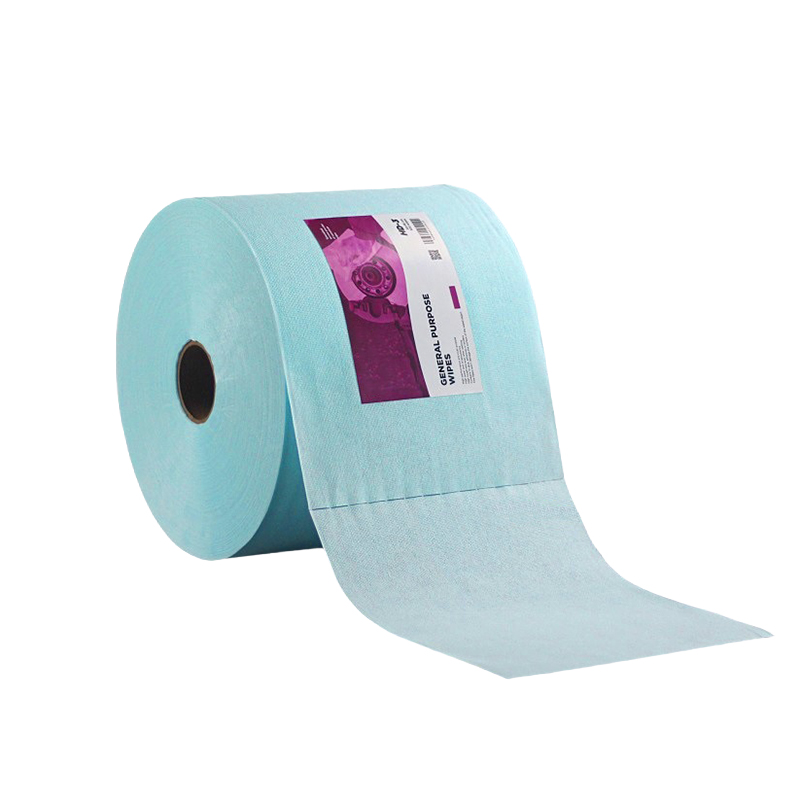
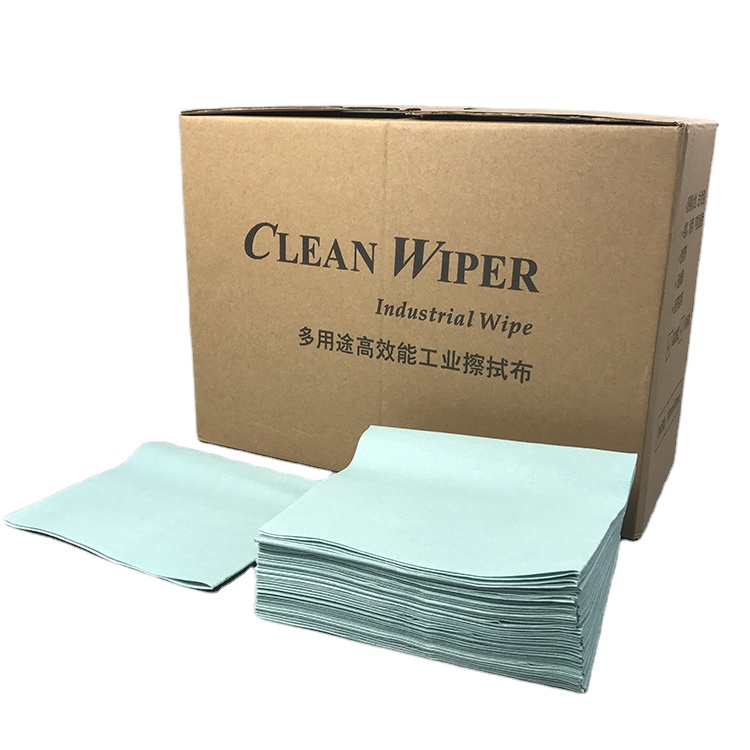
Wipers, swabs, and mops must be compatible with the cleaning solution and the surface being cleaned. They should have low particle and fiber release, low extractables, and, where needed, ESD properties. For ISO 7, a cleanroom-grade polyester knit wiper is often sufficient. Foam swabs are common for precision cleaning of sensors, printheads, and optical surfaces. Sticky mats at entrances and sticky rollers for garments help control foot and clothing-borne particles.
- Wipers: sealed-edge polyester or microfiber, low lint, compatible with IPA.
- Swabs: foam or knitted polyester tips with handles that do not shed.
- Gloves: nitrile or PU-coated nylon with ESD control.
- Sticky mats: 30 to 60 layer peel-off mats at gowning entrances.
Procurement Risks That Show Up in Certification
Class 10000 compliance is not a one-time event. It is maintained through daily habits and repeatable consumables. The following issues appear frequently during NEBB certification or internal audits.
- Fiber shedding from generic wipes: A low-cost wipe may pass visual inspection but release thousands of fibers during wiping. Those fibers register as particles at 0.5 µm and larger.
- Outgassing from packaging: Consumables packed in standard polyethylene bags can release volatile organic compounds into the cleanroom. Double-bagging and cleanroom-compatible packaging reduce this risk.
- Ion contamination from gloves and garments: In electronics areas, static discharge can damage components even when particle counts pass. Surface resistivity and static decay testing matter.
- Inconsistent lot-to-lot quality: A supplier may provide a good sample, then ship a different lot with higher particle counts. Batch testing and certificates of analysis are essential.
One practical way to reduce risk is to standardize on consumables that are designed for the cleanroom class and documented with test data. For example, ESD wipers are engineered to control static while cleaning sensitive surfaces. Their construction and edge treatment affect both particle release and charge generation. You can read more about how ESD wipers function in controlled environments before adding them to a specification.
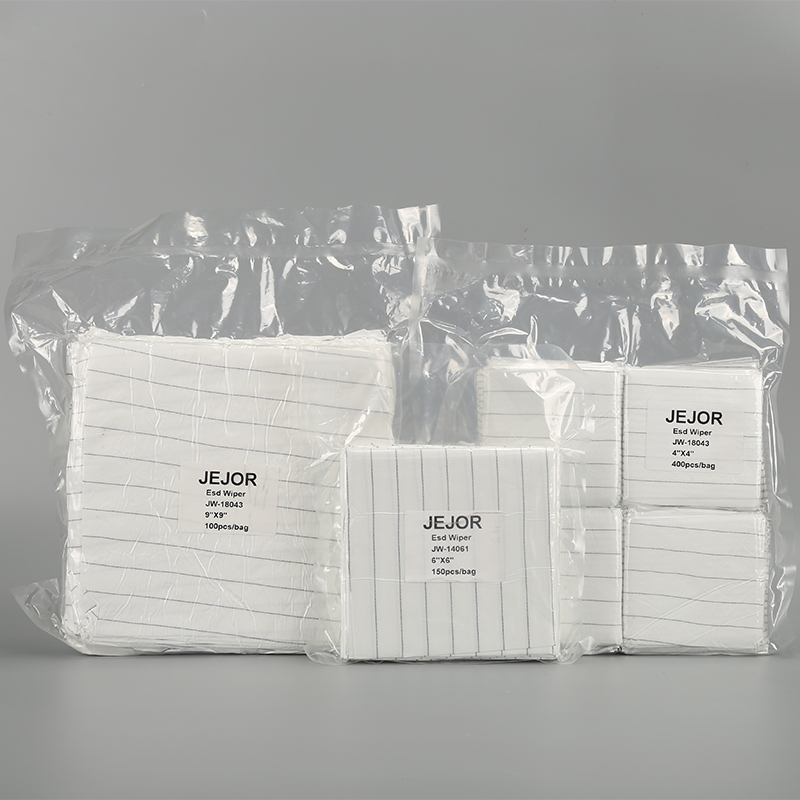 JW-18043 Microfiber ESD WiperMade of polyester or microfiber fiber and high-performance permanent conductive fibers through a special process knitted or woven.View Product →
The cost of a failed certification is almost always higher than the price difference between a commodity wipe and a validated cleanroom wipe. A single re-test, production shutdown, or customer audit finding can erase the savings from a full year of consumable purchases.
Matching Consumables to Class 10000 Zones
Not every area inside a Class 10000 cleanroom has the same contamination risk. A workable procurement plan divides the room into zones and assigns consumables accordingly.
Gowning and Entry
Use sticky mats, ESD shoe covers, and a garment set that includes a hooded coverall, face mask, and gloves. The goal is to prevent particles from entering with people and to control static before anyone reaches the production area.
General Work Surfaces
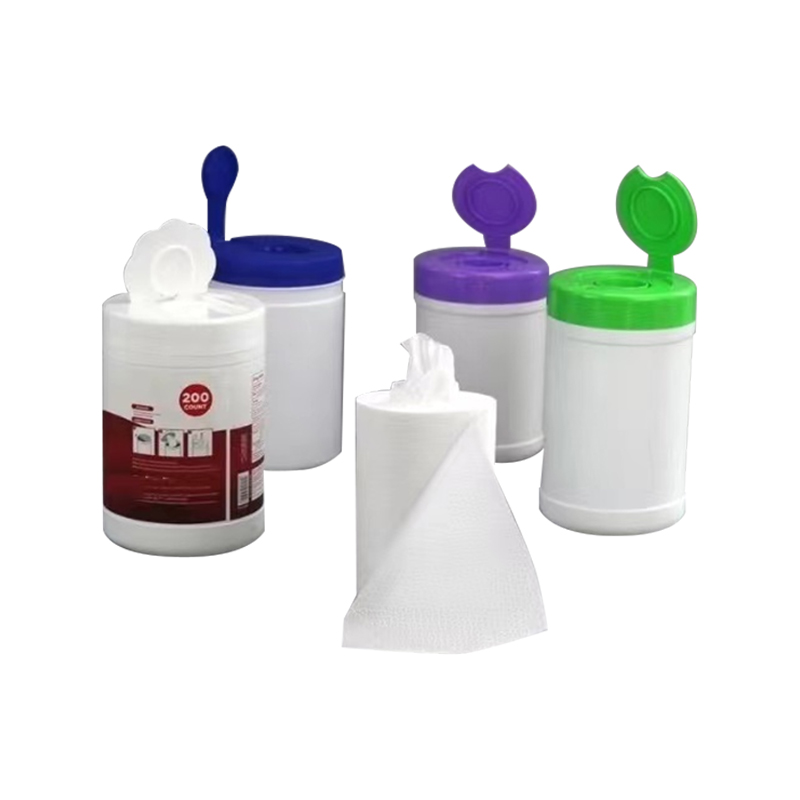
Polyester or microfiber wipers with sealed edges are appropriate for benches, carts, and equipment exteriors. Pre-wetted wipes can improve consistency, but the liquid must be compatible with the surface and low in particles.
Precision Cleaning
Foam or polyester swabs are used for sensors, printheads, lenses, and connectors. The swab tip must hold the cleaning solution without dripping and must not leave fibers or adhesive residue. For critical optical surfaces, a lint-free polyester swab is often the better choice than a generic cotton swab.
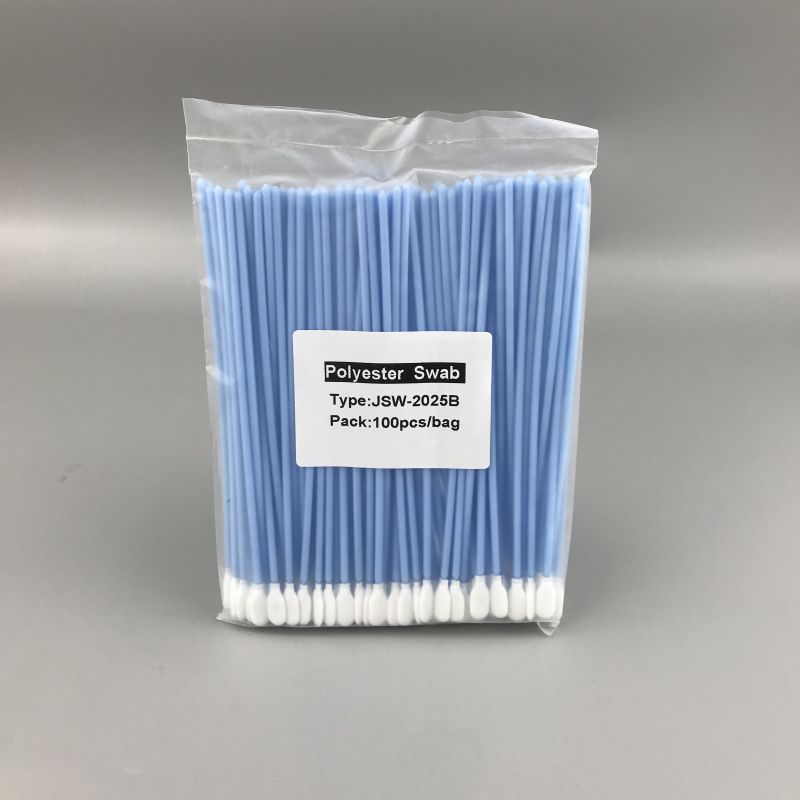 JSW-2025C Lint Free Polyester Cleaning SwabLint free polyester cleaning swab is produced using automated processes that thermally bond knitted polyester fibers. They exhibit strong resistance to solvents and ar...View Product →
Floors and High-Touch Surfaces
Mops with cleanroom-compatible heads and handles reduce particle resuspension. Sticky rollers remove particles from garments without generating static. In ESD-protected areas, the roller should be antistatic or conductive.
Supplier Verification and Documentation
When you qualify a consumable supplier for Class 10000, ask for more than a catalog. The following documents and tests are a reasonable baseline.
- Particle shedding test data at 0.5 µm and larger, using a method consistent with IEST or ISO 14644-1.
- Fiber release and extractables data for wipers and swabs.
- Surface resistivity and static decay for garments, gloves, and mats.
- ISO 9001 quality management certification and traceable lot numbers.
- Cleanroom-compatible packaging details, including bag material and double-bagging options.
- Certificates of analysis for each shipment, not just the initial sample.
A supplier that manufactures in its own controlled environment, such as an ISO Class 5 or Class 6 cleanroom, is more likely to deliver consistent low-particle consumables. If the supplier also holds NEBB certification for its cleanroom and follows IEST practices, the documentation trail is usually stronger. To discuss specific Class 10000 requirements or request samples, you can request a quote and share your particle limits, ESD targets, and cleaning chemicals.
FAQ: Class 10000 Cleanroom Consumables
Is Class 10000 the same as ISO 7?
Yes. Under the older FED-STD-209E, Class 10000 allowed 10,000 particles per cubic foot at 0.5 µm and larger. ISO 14644-1 calls this ISO 7, with a limit of 352,000 particles per cubic meter at the same size.
How many air changes per hour does a Class 10000 room need?
Most designs use at least 60 air changes per hour. Some facilities run higher rates to recover faster after personnel movement or equipment loading. The exact number depends on the heat load, room layout, and particle generation rate.
Do I need ESD consumables in a Class 10000 cleanroom?
Only if static discharge can damage the product or attract particles. Electronics, semiconductor, and precision assembly areas usually require ESD-safe garments, gloves, and wipers. Non-ESD cleanrooms may use standard low-lint consumables.
How often should cleanroom wipers and swabs be replaced?
Replace wipers when they become visibly soiled, after cleaning a high-risk surface, or at the end of a shift in critical areas. Swabs are typically single-use. Sticky mats should be peeled when the top layer is saturated, often several times per shift at busy entrances.
Can I use ISO 5 consumables in a Class 10000 room?
Yes, but it is usually not necessary. ISO 5-grade consumables may cost more without improving overall cleanliness if the room's air handling and gowning procedures are already the limiting factors. Match the consumable to the zone and the product risk.
Start with the Class, Then the Consumable
Class 10000 is a practical, widely used cleanroom classification. The air handling system is well understood, and the particle limits are achievable. The variable that most often decides success is the consumable program: wipers, swabs, gloves, garments, and mats that either support the ISO 7 environment or undermine it. Before you approve a purchase order, confirm the particle limits, ESD requirements, and cleaning chemistry. Then ask for test data and lot-level documentation. A supplier that can provide both the product and the evidence will make your next NEBB certification far less stressful.