

 中文简体
中文简体 Español
 русский
 Deutsch
 Français
Content
- 1 What Belongs on a Cleanroom Checklist
- 2 Entry and Gowning: The First Ten Minutes
- 3 Consumables: Wipers, Swabs and the Details That Decide Yield
- 4 Cleaning and Disinfection: Sequence Beats Effort
- 5 Contamination Control and ESD: Mats, Rollers and Grounding
- 6 Monitoring and Documentation: Turning Checks into Evidence
- 7 Sourcing Checks That Keep the Checklist Followable
- 8 Frequently Asked Questions
Shift change in an ISO Class 7 suite. The particle counter is green, the air handlers are running, and the wall-mounted checklist says gowning complete. Ten minutes later an operator sets a folded wiper down on a bench, uses it twice, and goes back over a surface that was already cleaned. Classification testing passed last quarter, and the process is still losing yield.
That gap is what a useful cleanroom checklist closes. The short answer: build it in five layers, covering entry and gowning, consumables and materials, the cleaning and disinfection sequence, contamination and ESD control hardware, and monitoring with documentation. Anything that does not fit one of those layers usually belongs in a standard operating procedure, not in a sheet people sign at the door.
What follows is how to write each layer, the tolerances that make the items verifiable, and the points where purchasing decisions decide whether the checklist can be followed at all.
What Belongs on a Cleanroom Checklist
Decide the layer before you write the item. Mixing layers is why checklists grow past three pages and then stop being completed honestly.
| Layer | Typical items | Evidence kept | Failure prevented |
|---|---|---|---|
| Entry and gowning | Donning order, garment fit, glove overlap, tacky mat at airlock | Signed gowning log per entry | Human-borne particles and fibre ingress |
| Consumables | Wiper grade, swab tip type, solvent compatibility, lot traceability | Certificate of analysis and lot number | Particle, extractable and ionic contamination |
| Cleaning and disinfection | Direction of work, one wipe per pass, dwell time, chemistry rotation | Cleaning record with time and zone | Residue and cross-contamination |
| Contamination and ESD | Sticky mat layers, rollers, wrist strap tests, footwear resistance | Readings per operator and station | Static damage and tracked-in debris |
| Monitoring and records | Particle counts, pressure differential, humidity, settle plates | Trend charts and deviation reports | Undetected drift and failed audits |
Frequency is a separate column in practice. Some items apply at every entry, some once per shift, some weekly, and environmental monitoring follows a fixed calendar rather than a task sequence. If an item has no named owner and no signature field, it will be skipped on the busiest day of the quarter.
Entry and Gowning: The First Ten Minutes
Almost every excursion traced back through particle data ends in the gowning room. These are the items that repay a hard check:
- Donning order: hair cover, mask, hood, coverall or gown, shoe covers, and gloves last so cuffs overlap the glove.
- Fit check: cuffs reach the glove without a gap when the arm bends, and no skin is visible at the wrist or neck.
- Fabric condition: seams, zips and cuffs are inspected for pilling, thinning or loose threads.
- Footwear: ESD shoes or heel straps are grounded and their resistance verified, not assumed.
- Entry mat: the top sticky layer is intact, flat, and not curled at the edges.
- Log: name, time, garment number, and the result of any test performed at the door.
Garment selection belongs in this layer too. Reusable garments with conductive yarn need conductivity verification after each laundering cycle, because the network degrades quietly. Hooded designs that cover the neck and part of the face remove more exposed skin than a gown alone, which matters most where operators move between ESD-sensitive stations.
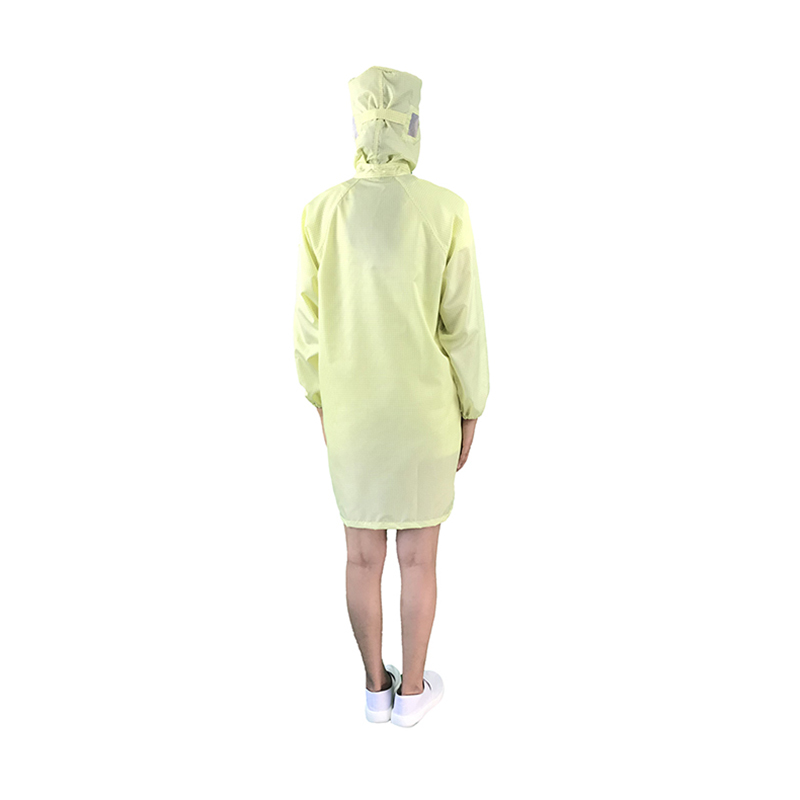 Unisex Anti-Static ESD Gown With Hood and CapHooded unisex ESD gown in polyester-conductive fabric, available in multiple grid options, sizes, and colors for cleanroom, factory, and pharmacy use.View Product →
Consumables: Wipers, Swabs and the Details That Decide Yield
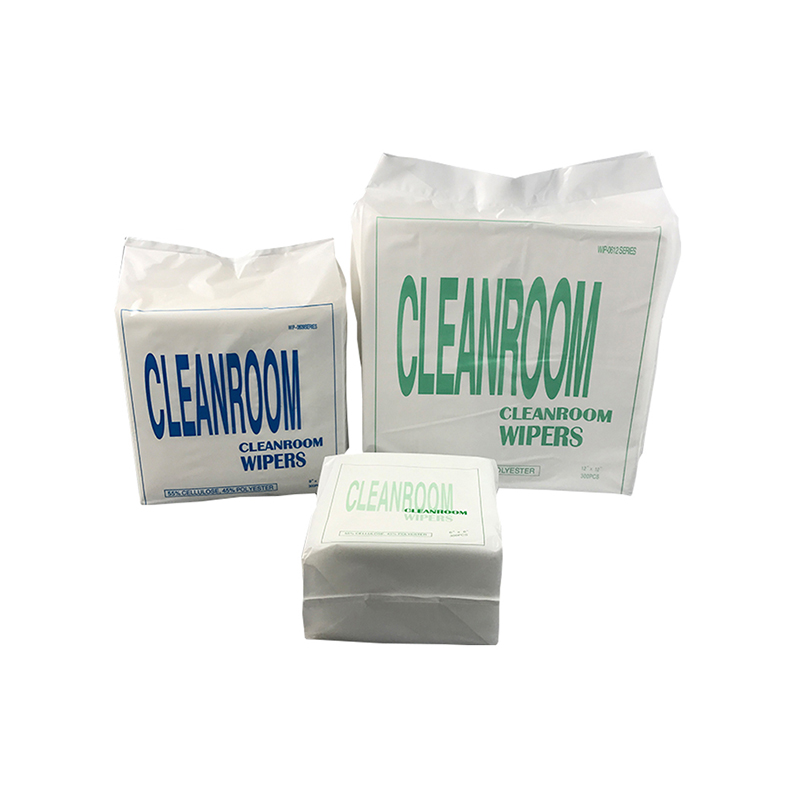
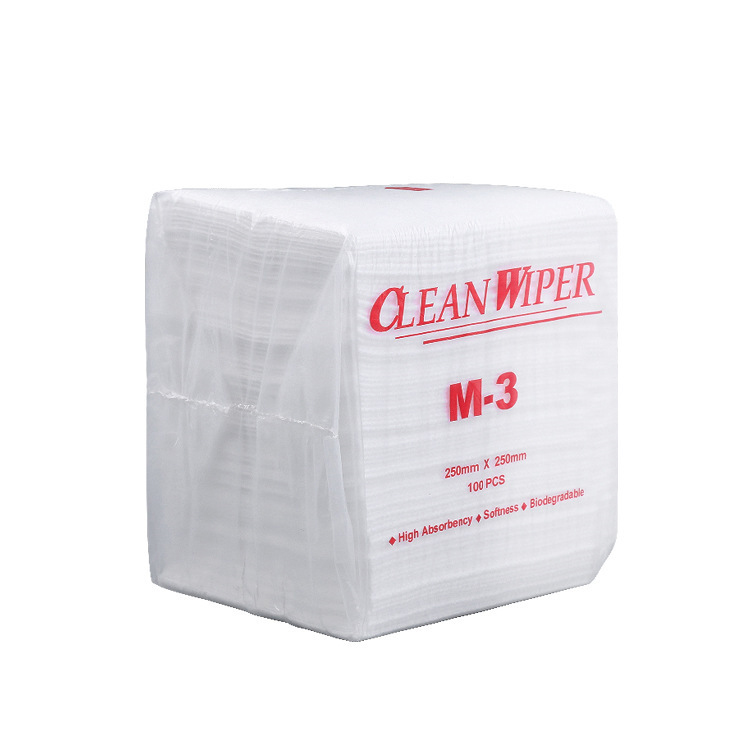
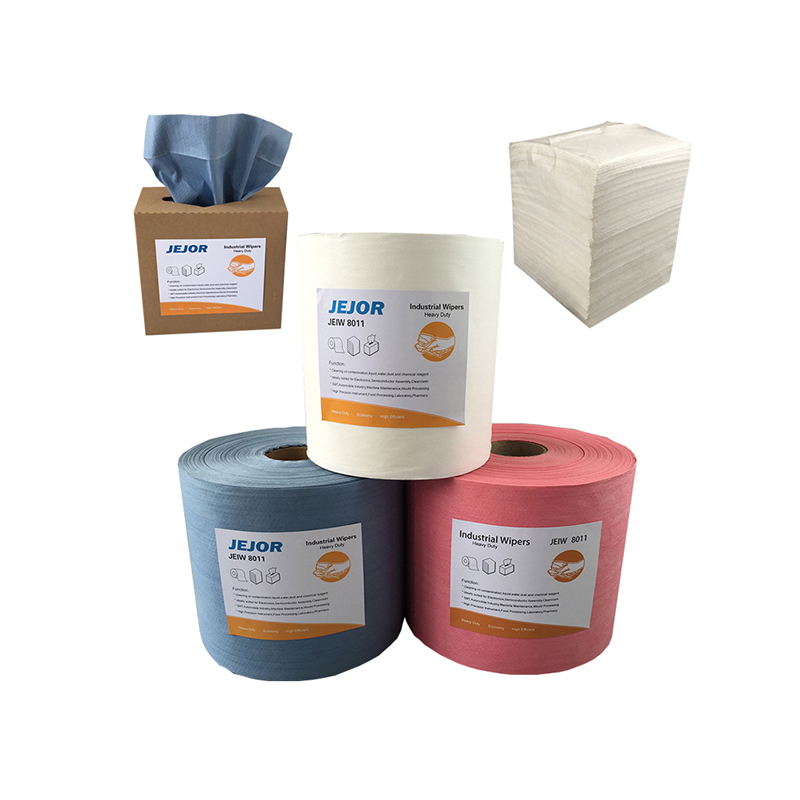
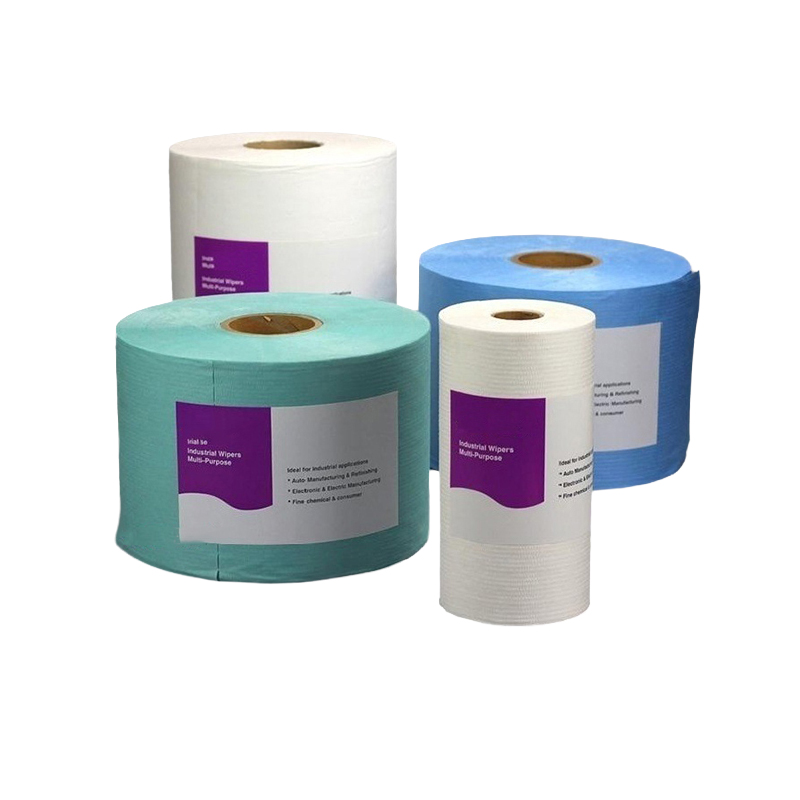
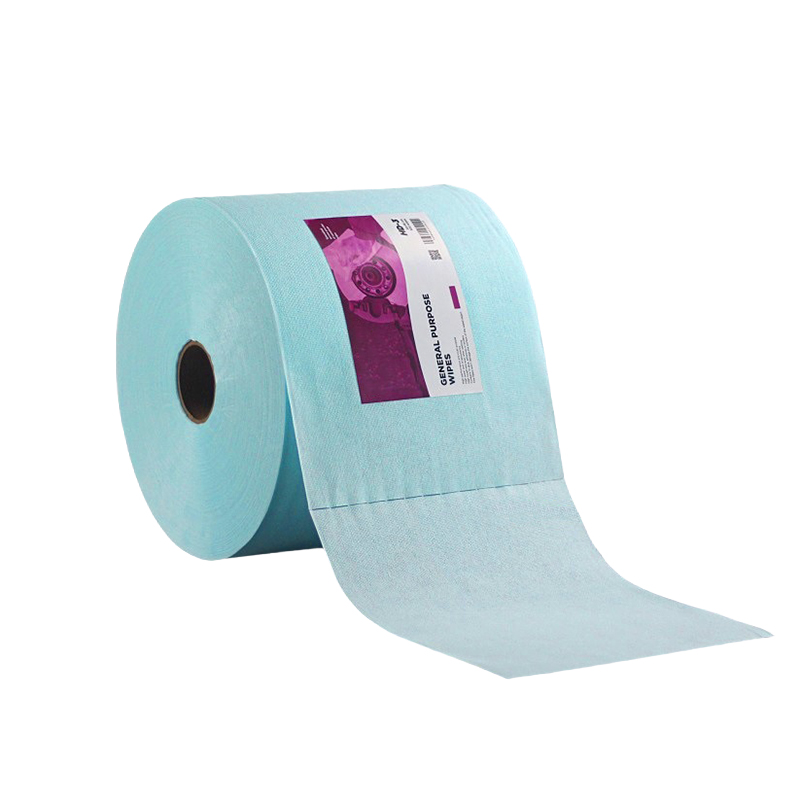
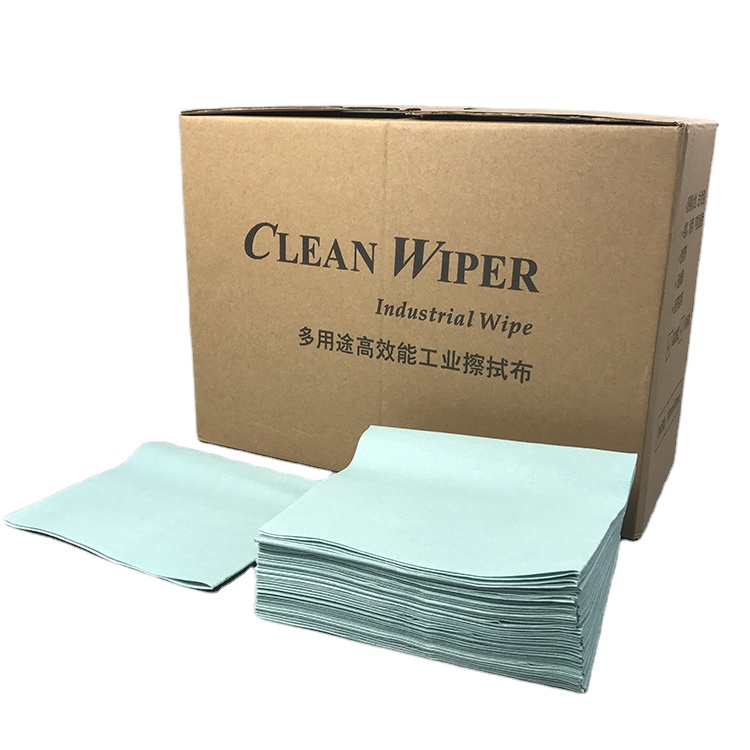
Buy wipers by construction and edge treatment before price. Cellulose wipes wetted with IPA shed fibre; a laser-sealed knit or a two-ply polyester wiper releases far fewer particles, and the difference shows up in wipe-down particle counts rather than on a datasheet.
- Material: polyester and microfiber hold up better under solvent than cellulose or mixed pulp.
- Edge: sealed edges release fewer loose fibres than simple cut edges.
- Construction: knitted, nonwoven and two-ply formats absorb differently and suit different tasks.
- Chemistry: confirm compatibility with the solvent actually used, plus the extractable level the process can tolerate.
- Packaging: individually bagged or cleanroom-laundered packaging protects the wiper between the store and the bench.
The behaviour that matters most is wet cleaning performance, not the dry specification, as discussed in this note on particle release from cleanroom wipers during wiping.
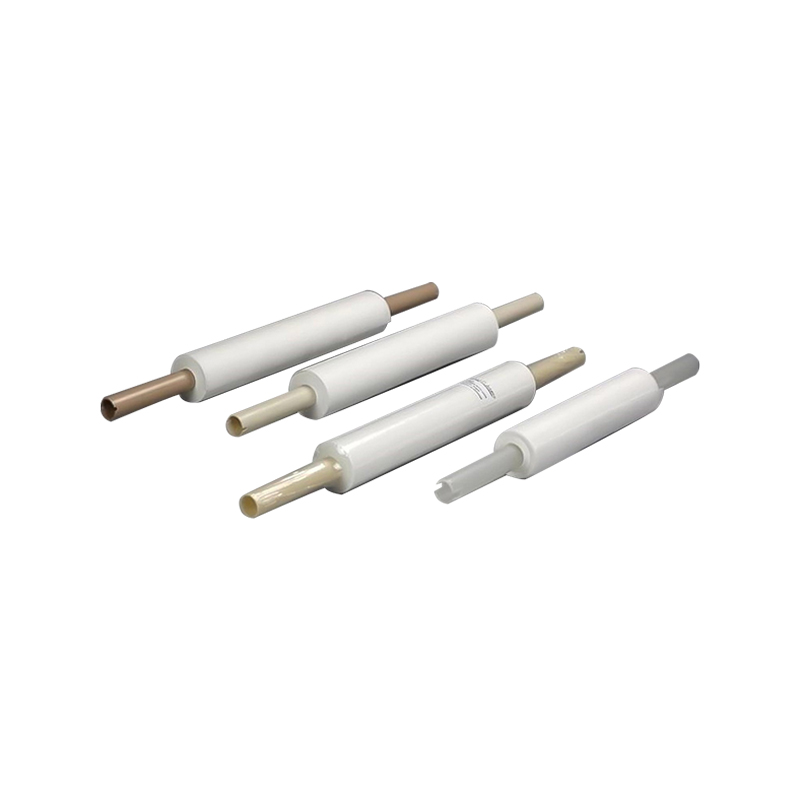
Swabs follow the same logic with a different geometry. Foam tips hold solvent and conform to curved surfaces, PU tips resist abrasion on printheads, and sharp or rectangular tips reach recessed sensor cavities where a round tip cannot make full contact. Selecting by tip material and shape, rather than by stick length, is what makes a precision cleaning step repeatable.
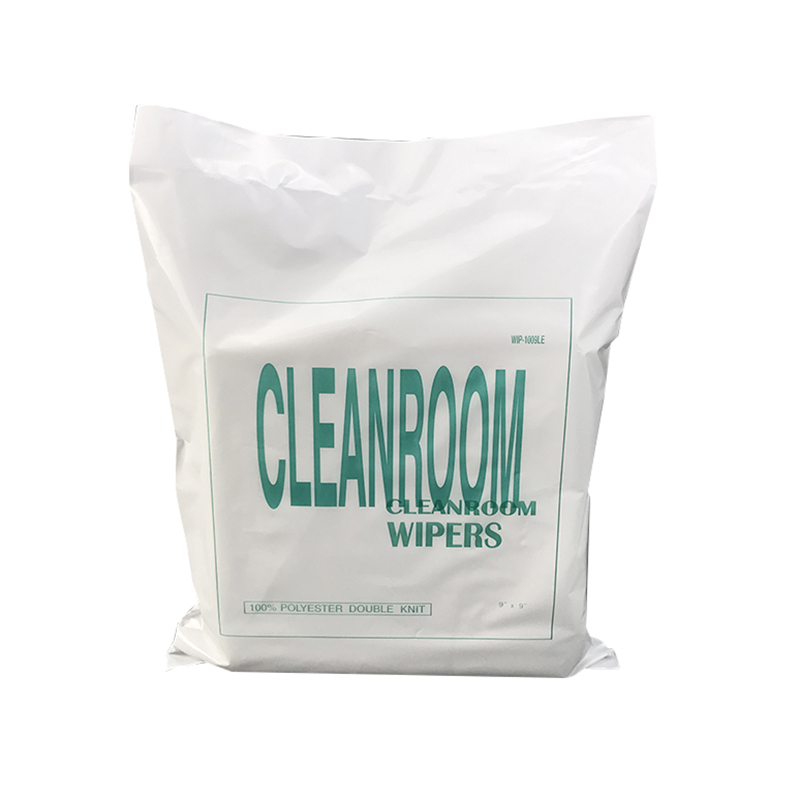
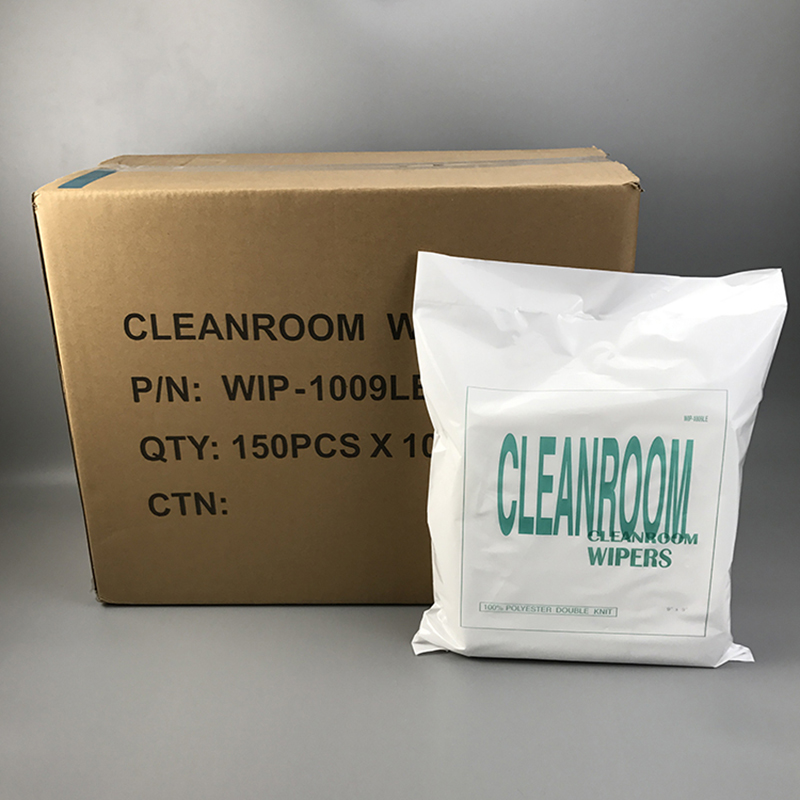 1009LE Polyester Double-Knit Cleanroom WiperPolyester double-knit wiper for ISO 5 cleanrooms, offering low particles and extractables, thermal-cut edges, and good solvent sorbency for critical wiping.View Product →
Cleaning and Disinfection: Sequence Beats Effort
Sequence, not scrubbing pressure, decides the result. Write the order into the checklist as numbered steps so it can be audited line by line.
- Work from the highest surface downward, from the furthest point toward the exit.
- Use overlapping unidirectional strokes and never return over a cleaned area with the same wipe face.
- One wipe, one surface; fold or replace rather than re-dipping into the solution.
- Respect the dwell time stated for the disinfectant before any dry wipe.
- Rotate chemistries on the defined schedule to avoid selecting for resistant organisms.
- Record zone, time, chemistry, operator, and any deviation at the moment it is found.
Two tolerances cause most failures. The first is dwell time, which is shortened when a shift is behind schedule and quietly removes the claimed log reduction. The second is wipe reuse, which redistributes contamination instead of removing it. Both are visible only if the checklist forces a number or a signature at the point of work.
Contamination Control and ESD: Mats, Rollers and Grounding
Foot traffic is the largest single source of particles in most suites, so the entry system is a consumable item, not a piece of furniture.
- Sticky mats are counted in layers: peel one sheet at a time, and replace the pad when the count reaches its limit or the surface stops being tacky.
- Sticky rollers handle wheeled carts, tool cases and trolley wheels that never touch a mat.
- Antistatic table mats and floor mats are verified as grounded, not merely installed.
- Wrist straps are tested at the start of each shift, and heel straps are checked for correct fit over the shoe.
- Footwear resistance is measured on a schedule, because conductive compounds age with wear.
- Ionizers are checked for balance and decay time after any filter change or relocation.
A mat that curls at the edge stops capturing debris on the first day it lifts, and the checklist should require that observation rather than a simple tick. Layer counting, edge condition and adhesion are the three items that keep an entry system working.
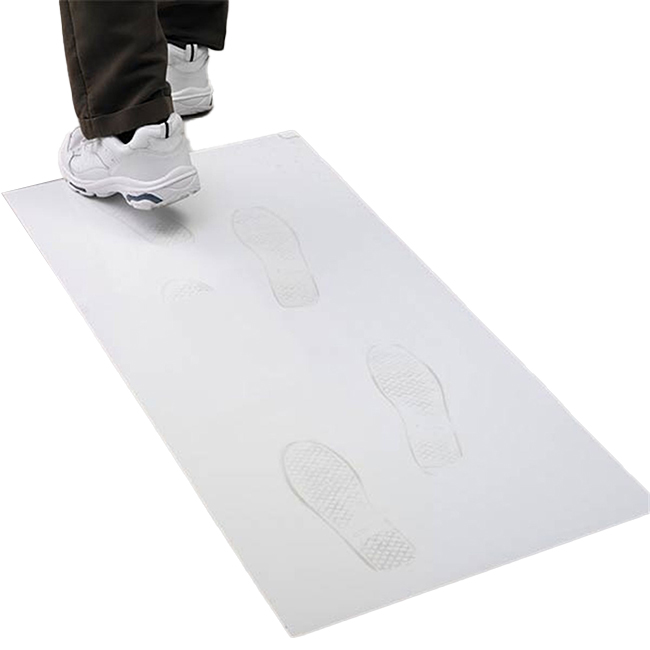 Disposable Multi-Layer Sticky Mat for Cleanroom EntrySelf-adhesive polyethylene sticky mat with 30 or 60 removable layers, available in multiple tack levels, sizes, and colors for cleanroom entry contamination control.View Product →
Monitoring and Documentation: Turning Checks into Evidence
Monitoring items need numbers, not ticks. A recorded value can be trended, challenged and defended during an audit; a tick cannot.
- Particle counts taken both at rest and in operation, at the sample points defined for the room class.
- Pressure differential between adjacent zones, typically around 10 to 15 pascals, recorded at fixed intervals.
- Temperature and relative humidity within the range the process and the product require.
- Microbial settle plates or active air samples where bioburden control applies.
- Air velocity for unidirectional flow zones, checked after filter or diffuser work.
Records That Survive Review
Records should be attributable, legible, contemporaneous, original and accurate. In practice that means writing the value at the instrument rather than at the end of the shift, using paper and pens that do not shed fibre, and noting the consumable lot number beside the task. Cleanroom-compatible notebooks, pens and printing paper exist for exactly this reason: ordinary office stationery is a particle source that also smudges under glove contact.
Every deviation needs a line in the same document. A checklist that records only conforming results cannot show what was done when a differential pressure drifted or a wiper lot failed incoming inspection.
Sourcing Checks That Keep the Checklist Followable
A checklist fails when the consumable cannot hold the specification written next to it. Before printing the final version, confirm how each item is made:
- Lot number and certificate of analysis on every delivery, not on request only.
- Particle, extractable and ionic data relevant to the room class in use.
- Packaging integrity and cleanroom-compatible outer wrapping.
- Lot-to-lot consistency, which matters more than a single impressive test report.
- Whether the supplier manufactures the product or resells it, since that determines how fast a specification question can be answered.
As a source manufacturer working from ISO Class 5 to 7 cleanroom workshops, JEJOR produces wipers, swabs, nonwoven wipes, sticky mats and rollers, garments, gloves and ESD footwear, with wiper manufacturing supported by an 18 MΩ·cm ultrapure water system, 128 automated production units and 100% outgoing inspection. The company operates a 30,000 m² ultra-clean park in Shuyang, holds ISO 9001, ISO 14001, ISO 45001, NEBB, CE, SGS and RoHS certifications alongside more than 30 patents, and supports OEM, ODM and OBM customization of size, material and function. For buyers drafting a consumable specification, requesting a quotation and technical data sheet is a faster route than reverse-engineering a product from a catalogue photo.
Frequently Asked Questions
How often should a cleanroom checklist be reviewed?
Review the content annually and after any deviation, audit finding or process change. The frequency tables inside it should be revised whenever monitoring trends shift, rather than on a fixed calendar.
Can one checklist cover both ISO Class 5 and ISO Class 7 areas?
Gowning and consumable items are broadly similar, but particle limits, airflow expectations and monitoring intervals are not. Keep one document with separate tabulated limits instead of two documents that gradually drift apart.
What should never be skipped in a gowning check?
Glove and cuff overlap, footwear verification, and a visible fit check for exposed skin. These three items account for a large share of human-borne contamination findings in routine audits.
A cleanroom checklist earns its place when it is short enough to be completed honestly and specific enough to be audited. Start with the five layers, give every item an owner, a frequency and a numeric tolerance, and let purchasing hold suppliers to the same standard the operators are held to. The document on the wall should describe the room you actually run.