

 中文简体
 Español
 русский
 Deutsch
 Français
Content
A pharmaceutical fill line in Suzhou, a semiconductor fab in Singapore, and an automotive paint booth in Germany all use the same shorthand for contamination control: ISO 5, ISO 7, ISO 8. That label is not marketing language. It is a numeric statement about how many airborne particles of a given size are allowed per cubic meter of air. The current global reference is ISO 14644-1:2015, which defines nine cleanroom classes. The lower the number, the tighter the limit. Most commercial projects do not need ISO 1 or ISO 2. They need a defensible ISO 5, 6, 7, or 8 classification that matches the product, the process, and the people inside the room. Get that match wrong and you either overspend on filtration or fail an audit.
What ISO 14644-1 Actually Classifies
ISO 14644-1 does not certify a room as clean in a general sense. It sets maximum allowable concentrations for airborne particles at specified sizes. The 2015 revision streamlined the particle sizes used for classification. For ISO 1 through ISO 9, the standard uses thresholds from 0.1 µm to 5 µm, depending on the class. A class number is tied to a sampling method, a defined occupancy state, and a particle counter. Without those details, ISO 7 is incomplete.
The standard recognizes three occupancy states: as-built, at-rest, and operational. A room can meet ISO 7 at rest but fail operational if gowning, equipment, or airflow is poorly managed. That is why ISO classes should be written with the state spelled out, such as ISO 7 at rest or ISO 5 operational for critical zones.
| ISO Class | ≥0.5 µm particles/m³ | ≥5 µm particles/m³ | Fed Std 209E equivalent | Typical use |
|---|---|---|---|---|
| ISO 3 | 35 | Not specified | Class 1 | Semiconductor lithography |
| ISO 4 | 352 | Not specified | Class 10 | Advanced semiconductor |
| ISO 5 | 3,520 | 29 | Class 100 | Sterile fill, GMP Grade A/B |
| ISO 6 | 35,200 | 293 | Class 1,000 | Medical device, electronics |
| ISO 7 | 352,000 | 2,930 | Class 10,000 | GMP Grade C, optics |
| ISO 8 | 3,520,000 | 29,300 | Class 100,000 | GMP Grade D, packaging |
| ISO 9 | 35,200,000 | 293,000 | Not applicable | Controlled environment |
The Classes Most Projects Actually Use
If you are buying a cleanroom or specifying consumables, the practical universe is narrower than nine classes. ISO 5, ISO 6, ISO 7, and ISO 8 cover the majority of electronics, pharmaceutical, medical device, and automotive applications. In EU GMP, Grade A and B areas are typically ISO 5 at rest, Grade C maps to ISO 7, and Grade D maps to ISO 8. Semiconductor front-end lithography may demand ISO 3 or ISO 4 in critical areas, while back-end assembly often runs ISO 6 or ISO 7.
The difference between ISO 7 and ISO 8 is often one of airflow and gowning discipline, not just filter count. ISO 7 typically uses 60 to 150 air changes per hour with HEPA-filtered supply air; ISO 8 may use 20 to 60 air changes per hour. ISO 5 requires laminar flow and much higher air change rates, often 240 to 600 air changes per hour in critical zones. Those numbers drive energy cost, ceiling design, and maintenance schedules.
This is where consumables and garments become part of the classification. A room can have the correct HEPA filters and still fail particle counts because operators shed particles, wipers release fibers, or packaging brings in contamination.
Gowning, Wipers, and the Consumables That Protect the Class
ISO class is a system property, not a single equipment rating. The people, garments, and disposable products inside the room either support the classification or undermine it. For ISO 5 to ISO 7 environments, the standard gowning package includes coveralls, hoods, booties, face masks, and gloves made from low-particle, antistatic materials. The garment design matters: a hooded jumpsuit with a covered zipper and snug cuffs reduces particle escape better than a loose smock.
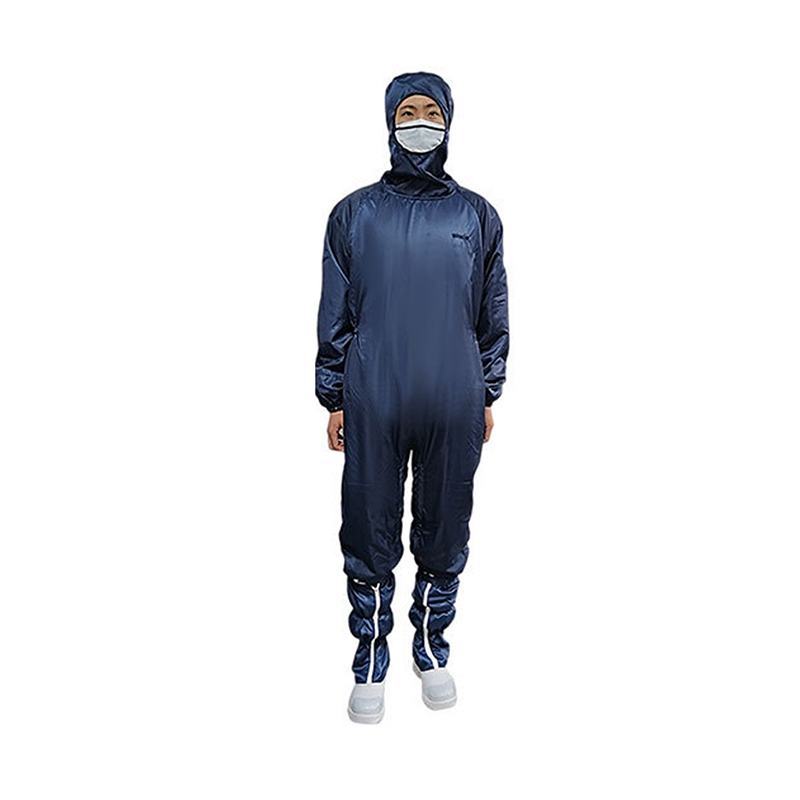 Anti-Static Hooded Jumpsuit Coverall for Cleanroom ESD ProtectionFull-body anti-static coverall with conductive fiber, hooded zipper design, and XS–6XL sizes for electronics, cleanroom, and pharmacy gowning.View Product →
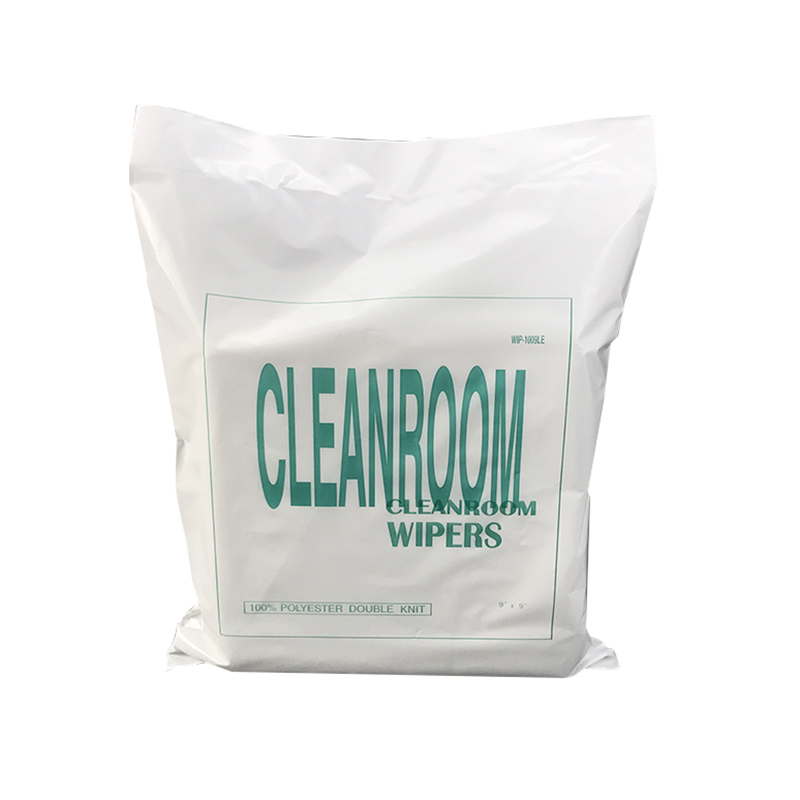
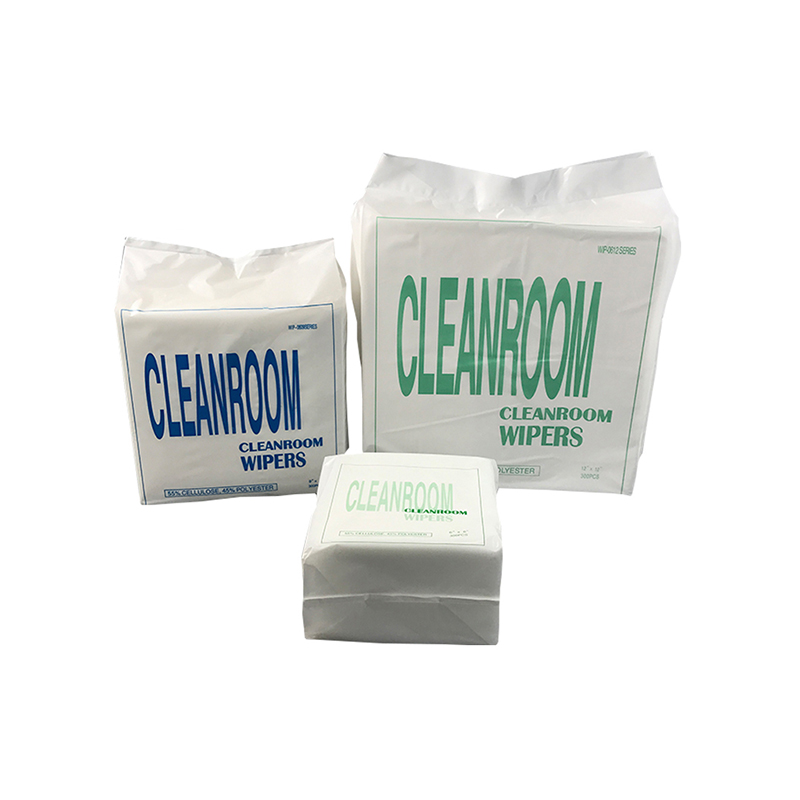
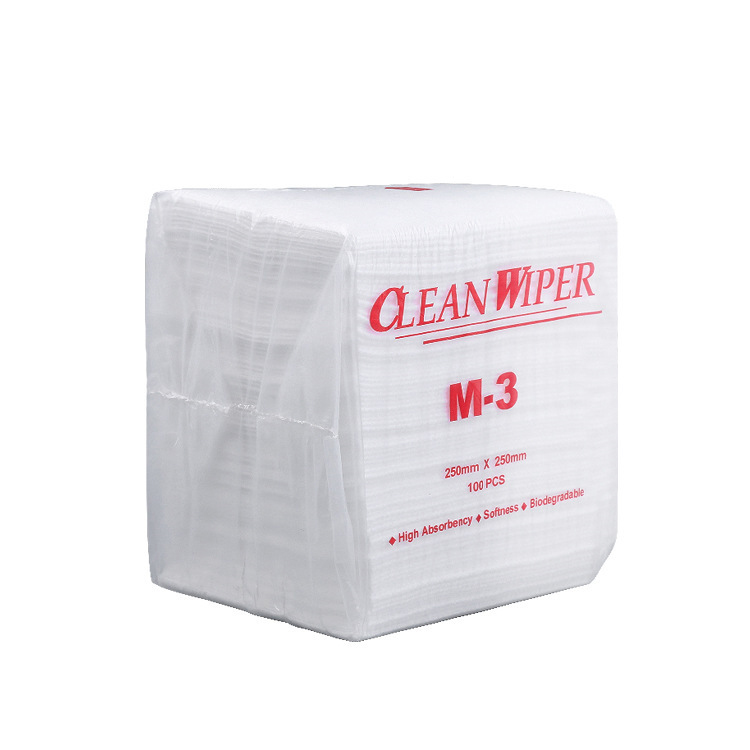
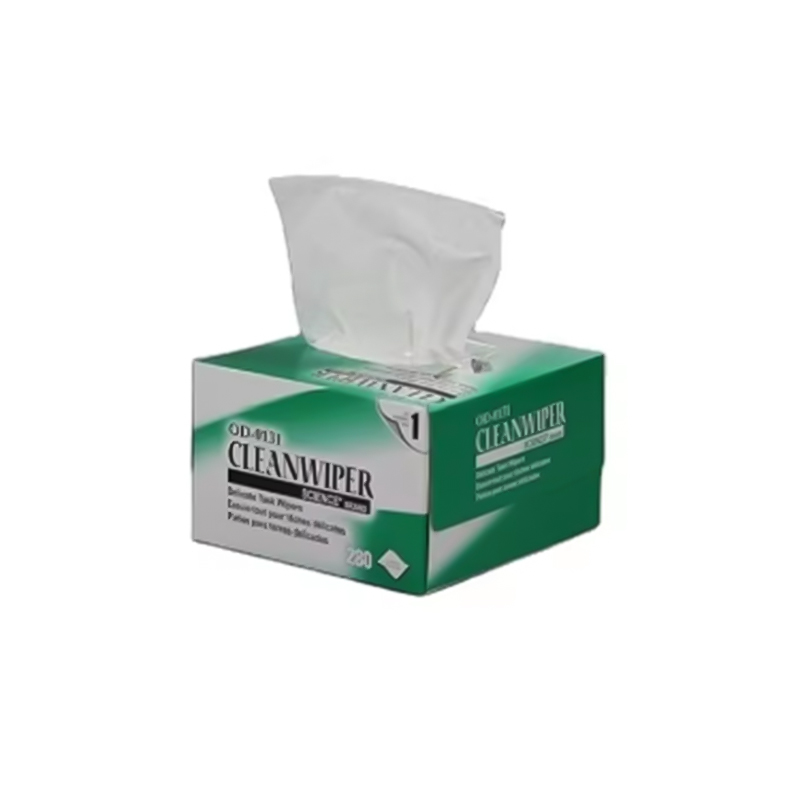
Cleaning consumables should be selected by the same logic. A cleanroom wiper must have low extractables, low particle shedding, and compatibility with the cleaning solution. For ISO 5 and ISO 6 environments, nonwoven or microfiber wipers with sealed edges are common. For precision surfaces such as camera sensors, printheads, or LCD glass, a foam or polyester swab gives controlled contact and low lint. If you want to see how wiper construction affects particle release, this article explains the mechanism: how wipers release particles.
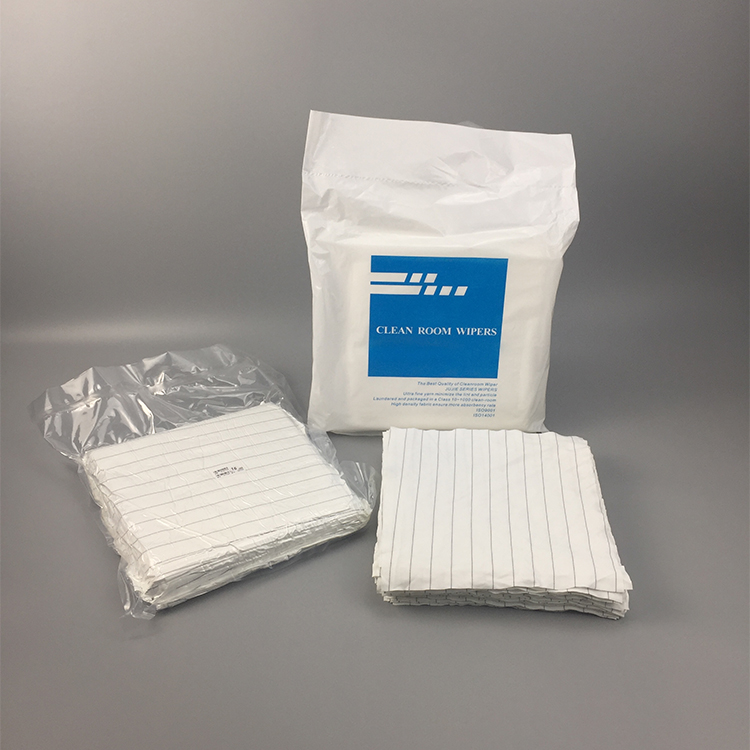 JW-16043 Microfiber ESD Cleanroom WiperAnti-static microfiber wiper with conductive fibers, sealed edges, and cleanroom packaging for microelectronics, optoelectronics, and precision instrument cleaning.View Product →
Entry systems also matter. Sticky mats at the airlock remove shoe-borne particles before operators enter. Adhesive rolls, ESD shoes, and antistatic table mats reduce static-driven particle attraction. In ISO 7 and ISO 8 rooms, disposable shoe covers and nonwoven face masks are often sufficient. In ISO 5 areas, full ESD garments, boots, and gloves are usually part of the validated gowning program.
For swab-based cleaning, tip geometry and material affect the result. A foam tip can conform to a sensor surface, while a polyester tip is better for lint-sensitive glass. The choice should be documented in the cleaning standard operating procedure.
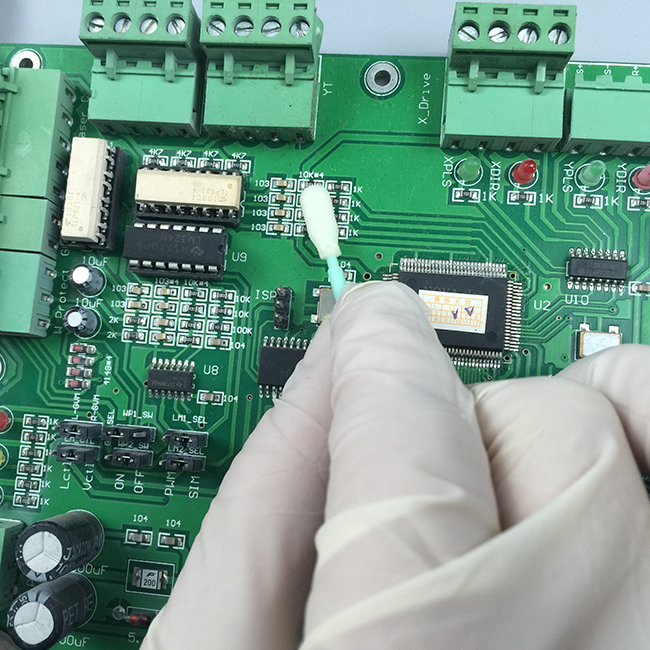 JSW-202BH5 Foam-Tip Cleanroom Swab for Precision CleaningOpen-cell foam swab on polypropylene shaft for cleaning electronics, printers, optical instruments, camera lenses, and solvent printheads.View Product →
None of these products change the ISO class on their own. They prevent the room from drifting out of class between certifications.
Testing, Monitoring, and Common Procurement Mistakes
A cleanroom classification is a snapshot in time. ISO 14644-1 requires particle counting at defined sample locations, with a minimum number of sample points based on room area. The room must also meet airflow, pressure differential, and recovery requirements from ISO 14644-3. In regulated environments, qualification follows installation qualification, operational qualification, and performance qualification protocols. Reclassification is triggered by HVAC changes, layout changes, major maintenance, or repeated monitoring failures.
Procurement teams often treat ISO class as a simple label. That creates three common risks. First, a supplier quotes ISO 7 without stating the occupancy state or test method. Second, a room is built to ISO 7 at rest but never validated for operational conditions. Third, consumables and garments are purchased on price alone, then fail particle or extractable limits during validation.
A better specification includes the class, the particle size thresholds, the occupancy state, the test standard, and the expected air change range. It also names the gowning level and the cleaning consumables that will be used. That package is what auditors and quality teams can verify.
Frequently Asked Questions
What is the difference between ISO 5 and ISO 7?
ISO 5 allows 3,520 particles at 0.5 µm and larger per cubic meter and 29 particles at 5 µm and larger. ISO 7 allows 352,000 particles at 0.5 µm and larger and 2,930 particles at 5 µm and larger. ISO 5 usually requires laminar flow and higher air change rates. ISO 7 is common in cleanrooms that need strong but less stringent control, such as GMP Grade C.
Is ISO 8 the same as Class 100,000?
Yes, ISO 8 is approximately equivalent to the old Fed Std 209E Class 100,000. In EU GMP, ISO 8 at rest is often used for Grade D areas.
How often should a cleanroom be reclassified?
ISO 14644-1 does not set a fixed frequency for reclassification in all industries. Many facilities test annually, but the trigger should also include HVAC modifications, layout changes, significant maintenance, or repeated environmental monitoring failures. Pharmaceutical and medical device cleanrooms may follow a risk-based requalification schedule.
Do cleanroom consumables affect ISO classification?
They do not change the class number, but they affect whether the room stays within its particle limits. Low-lint wipers, appropriate swabs, ESD garments, and sticky mats reduce particle generation and static attraction. Choosing the wrong consumable can cause operational particle counts to exceed the class limit.
If you are specifying a new cleanroom or reviewing an existing one, start with the process requirement and work backward to the ISO class. Then select the gowning, wipers, swabs, and ESD controls that protect that class during real operations. If you need help matching consumables to an ISO 5, 6, 7, or 8 environment, contact us with your room classification and process details.