

 中文简体
中文简体 Español
 русский
 Deutsch
 Français
Content
- 1 Start With the ISO Classification, Not the Catalog Page
- 2 Four Factors That Decide the Right Cover Beyond the Room Class
- 3 Antistatic, Disposable, or Reusable: Picking the Category
- 4 Shoe and Footwear Protection Product Line
- 5 Getting the Sizing and Donning Sequence Right
- 6 Testing Frequency and Replacement Signals
- 7 Rounding Out the Gowning Kit Around the Shoe Cover
The shoe cover that fits your cleanroom depends on three things at once: the ISO classification of the room, whether static electricity is a threat to the product on the line, and how often the cover needs to be replaced without slowing down gowning. For ISO Class 5 and 6 electronics or pharmaceutical rooms, a conductive antistatic shoe cover with a static dissipation path is the correct default. For ISO Class 7 and 8 general cleanrooms, labs, or food workshops, a disposable polypropylene or PE cover is usually sufficient. Everything below explains how to narrow that choice down to a specific material, height, and sole design.
Start With the ISO Classification, Not the Catalog Page
Choosing a cover by price or by whatever a supplier lists first is the most common sizing mistake. The classification of the room sets a hard floor on particle release and, in static-sensitive rooms, on surface resistance. Suzhou Jujie Electron Co., Ltd, a Cleanroom Shoe Cover Manufacturer, builds its Cleanroom Shoe Cover range around exactly this logic: cleanrooms constructed to ISO Class 5 and Class 6 standards get a different bottom-of-shoe strategy than a Class 7 or 8 packaging room.
| ISO Class | Common Setting | Recommended Cover | Typical Reuse |
| ISO 4 - ISO 5 | Semiconductor, chip packaging, aseptic fill | Conductive antistatic cover, low-particle fabric | Up to 50 wear cycles |
| ISO 6 | Electronics assembly, optics, lithium battery | Antistatic cover or reusable polyester cover | Up to 50 wear cycles |
| ISO 7 | Medical device assembly, general laboratory | Disposable PP or PE cover, non-skid sole | Single use |
| ISO 8 | Packaging, food processing, general gowning | Disposable non-woven cover | Single use |
Four Factors That Decide the Right Cover Beyond the Room Class
Once the classification narrows the category, four practical factors decide which specific product actually works on the floor.
- Material and particle shedding. Ultrafine conductive fiber blends shed fewer particles than plain polypropylene, which matters once a room is at ISO 6 or tighter.
- Sole traction. Rooms with sticky mats at the entrance need a sole that will not tear or degrade after repeated contact; textured non-skid rubber outlasts a flat laminated sole on polished epoxy floors.
- Static dissipation path. A cover only controls static if its resistance sits within an acceptable range and the wearer is also grounded through antistatic socks, flooring, or footwear — the cover alone is not the full circuit.
- Height and closure. Ankle-height covers suit seated or short-duration work; mid-calf or boot-style covers suit staff who kneel, bend, or work near splash sources.
Antistatic, Disposable, or Reusable: Picking the Category
These three categories solve different problems, and mixing them up is the second most common ordering error after ignoring ISO class. Antistatic covers exist to move static charge to ground and protect static-sensitive components; disposable covers exist for basic physical isolation at low cost; reusable covers exist to cut per-use cost over long shifts.
| Type | Core Material | Typical Lifespan | Best Fit |
| Antistatic | Conductive fiber and wear-resistant fabric composite | Up to 50 wears, retested periodically | Chip fabs, semiconductor packaging, optoelectronics |
| Disposable | PE plastic or non-woven polypropylene | Single shift, single use | Hospitals, general labs, food workshops |
| Reusable | Washable polyester or nylon | Up to 100 wash cycles | R&D staff and line workers with frequent donning |
A useful rule of thumb: if a static event could scrap a wafer, board, or battery cell, the room needs an antistatic cover, not a disposable one, regardless of how clean the disposable cover claims to be.
Shoe and Footwear Protection Product Line
The following covers this selection guide with actual product references — antistatic shoe covers for static-sensitive rooms, disposable covers for general use, and antistatic slipper and boot styles for staff who need dedicated cleanroom footwear rather than a cover worn over street shoes.
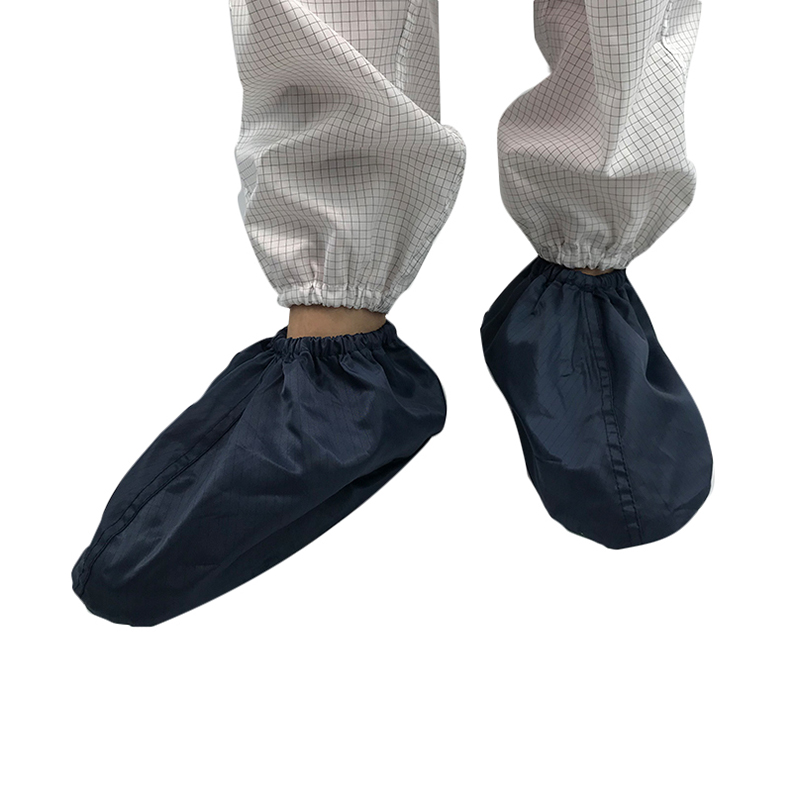
ESD Shoe Cover
Antistatic Cover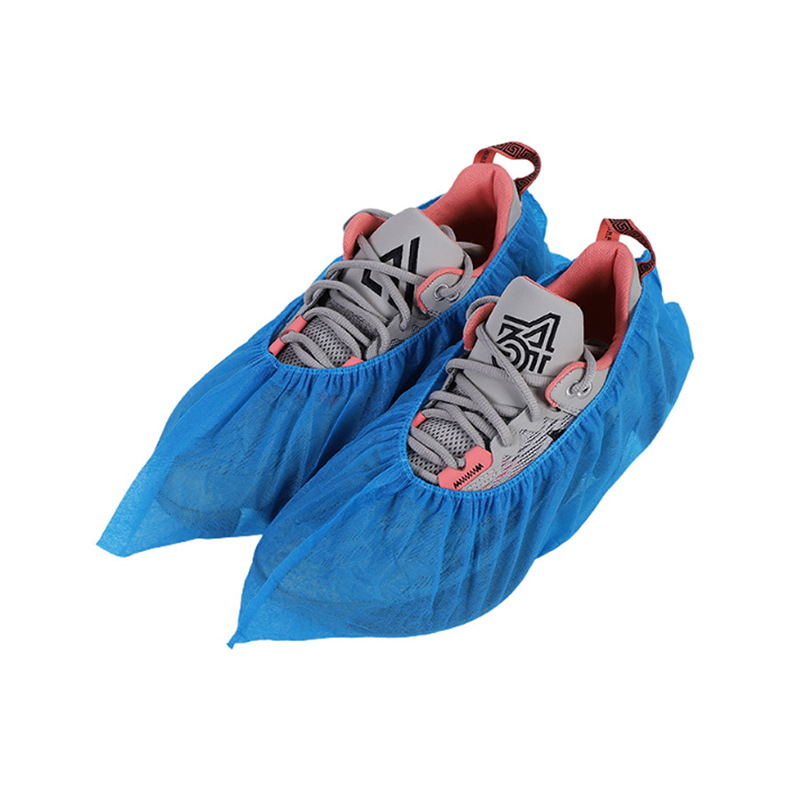
Disposable Shoe Cover
Single-Use Cover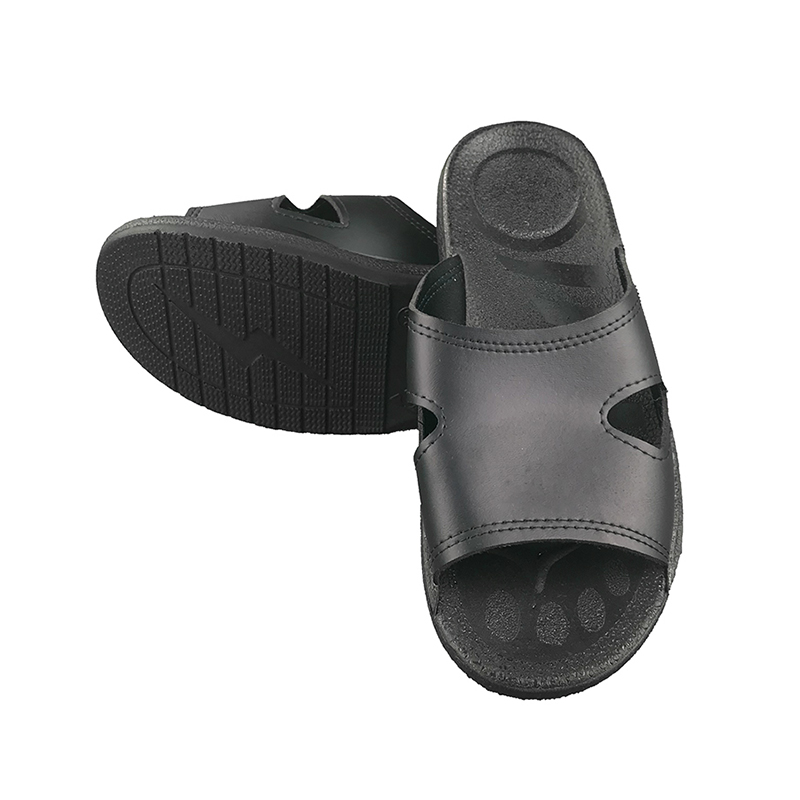
JS-009 ESD Slipper
Antistatic Shoes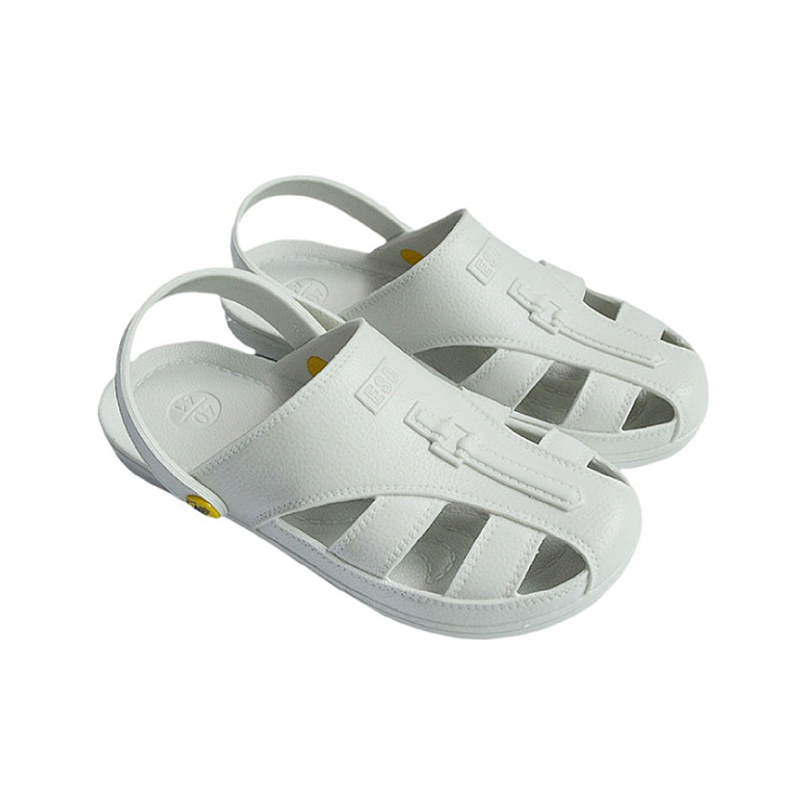
JS-010 White ESD Slipper
Antistatic Shoes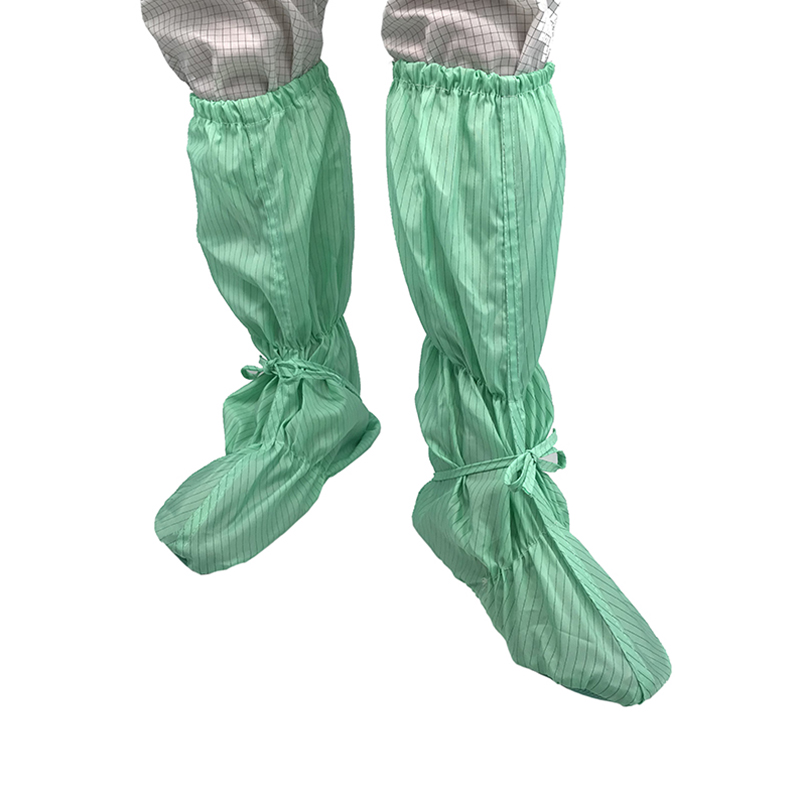
JS-013 ESD Boots
Antistatic BootsGetting the Sizing and Donning Sequence Right
An oversized cover drags on the floor and picks up contamination near the seam line; an undersized one splits at the elastic within a shift. Measure across the widest point of the work shoe, not the person's shoe size, since safety boots and antistatic shoes are often bulkier than street shoes.
- Sit or use a gowning bench so the sole never touches the clean side of the demarcation line while the cover goes on.
- Pull the cover fully over the heel before stepping past the line, checking that the elastic sits above the ankle bone.
- For antistatic covers, confirm contact between the conductive sole area and the foot or antistatic sock before entering the room.
- Remove covers by rolling them inside out at the exit bench so the outer, contaminated surface never touches bare hands or the clean floor.
Testing Frequency and Replacement Signals
Antistatic covers lose conductivity gradually, and disposable covers fail visibly. Both need a defined check schedule rather than a judgment call at the door.
| Check | Frequency | Failure Signal |
| Surface resistance test | Every 6 to 12 months | Reading falls outside the qualified range |
| Sole wear inspection | Daily visual check | Smooth patches where the non-skid texture has worn away |
| Seam and elastic check | Each donning | Loose stitching, torn elastic, or visible splits |
| Wash and reprocess cycle | Per manufacturer wash-count rating | Fabric pilling or shrinkage after laundering |
Rounding Out the Gowning Kit Around the Shoe Cover
A shoe cover only controls contamination from the floor up; the rest of the gowning kit needs to match the same ISO class and static requirement. Facilities sourcing an Antistatic Shoes Manufacturer for slipper or boot-style footwear typically pair it with Antistatic Clothing from an Antistatic Clothing Manufacturer, an Antistatic Cap from an Antistatic Cap Manufacturer, and Antistatic Gloves sourced from an Antistatic Gloves Manufacturer so the entire body has a consistent static dissipation path. A Cleanroom Face Mask from a qualified Cleanroom Face Mask Manufacturer completes the upper-body barrier.
At the room entrance, a Sticky Mat from a Sticky Mat Manufacturer or a continuous Sticky Roller supplied by a Sticky Roller Manufacturer removes loose particles from the sole before the wearer steps past the demarcation line, extending the working life of the shoe cover itself. Workbenches and equipment inside the room are typically maintained with a Cleanroom Wiper or Nonwoven Wipes for general surfaces, a Clean Swab for tight or recessed areas, and an Antistatic Mat at static-sensitive workstations, with an Antistatic Tweezer for handling small charge-sensitive parts. Sourcing the shoe cover and this supporting kit from one factory keeps material specifications and reorder cycles aligned across the whole gowning process.