

 中文简体
中文简体 Español
 русский
 Deutsch
 Français
Content
- 1 Why Full Hair Coverage Is Not Optional in Static-Sensitive Areas
- 2 Step-by-Step: Tucking Hair Fully Under Each Cap Style
- 3 Matching Cap Style to Hair Length and Work Area
- 4 Antistatic Cap and Glove Product Series
- 5 Common Mistakes That Let Hair Escape
- 6 Washing and Care Without Losing Antistatic Performance
- 7 Selecting a Cap That Fits Properly From the Start
To wear an antistatic cap without exposing your hair, gather all hair first, tuck every strand — including the hairline at the temples, the nape, and any fringe — fully under the elastic band or drawstring before the cap is smoothed down, and confirm the seal in a mirror or with a second person. Short and medium hair usually stays hidden inside a standard mushroom-style cap, but hair below shoulder length needs a two-step approach: tie or coil the hair close to the scalp first, then use a shawl-style cap that extends over the neck and shoulders so no loose ends can slip out during movement.
Why Full Hair Coverage Is Not Optional in Static-Sensitive Areas
A single loose hair does more damage than most operators expect. Human hair sheds naturally throughout a shift, and each strand can carry skin flakes, oils, and cosmetic residue that add particles to the air stream right above sensitive components. In a static-sensitive workspace, the concern is twofold: particle contamination and triboelectric charging caused by hair rubbing against clothing or equipment surfaces. Both issues start at the exact point where a cap fails to seal — the hairline.
| Exposure Point | Typical Cause | Why It Matters |
| Front hairline / fringe | Cap pulled back too far, elastic sits above the brow | Fine hairs fall forward during head movement and bending |
| Sideburns and temples | Cap band too loose or wrong size for head shape | Short hairs escape under the band without being noticed |
| Nape of the neck | Mushroom-style cap used with long hair | Length beyond the cap's edge cannot be contained |
| Behind the ears | Cap adjusted only from the front, back left unchecked | A common blind spot operators forget to inspect |
These four points explain most of the hair-exposure complaints raised during cleanroom or ESD workshop audits. Correcting them is less about the cap itself and more about the sequence used to put it on.
Step-by-Step: Tucking Hair Fully Under Each Cap Style
Mushroom-Style Antistatic Cap
- Comb hair back and, if it reaches the collar, secure it in a low, flat bun to avoid creating a bulge under the fabric.
- Hold the cap open with both hands and lower it from the crown toward the forehead, rather than pulling it up from the front.
- Position the front edge about two finger-widths above the eyebrows, then work the elastic backward along the hairline with your fingertips.
- Sweep loose strands at the temples and behind the ears inward with a flat hand before letting the elastic settle.
- Check the nape in a mirror; if any hair shows below the edge, lift the cap slightly and re-tuck rather than stretching the fabric further down.
Shawl-Style Antistatic Cap
- Twist or coil long hair against the scalp first — a low bun sits flatter than a ponytail and prevents pressure points.
- Place the cap over the crown so the cape section falls naturally over the shoulders on both sides.
- Draw the front band snugly across the hairline, then adjust the side panels so they overlap slightly at the back of the neck.
- Run a finger along the inside edge of the cape to catch any strands before they settle against the collar.
Peaked-Style Antistatic Cap
- Tuck hair upward and back as with a standard cap; the peak adds coverage at the front but does not replace a full tuck.
- Seat the peak level and centered before securing the rear elastic, so the cap does not need repeated readjustment later.
- Check both sides symmetrically, since a peaked design can make one-sided gaps harder to notice without a mirror.
Matching Cap Style to Hair Length and Work Area
| Hair Length | Recommended Style | Notes |
| Short (above collar) | Mushroom cap | Standard coverage is usually sufficient without pre-tying |
| Medium (shoulder length) | Mushroom cap with a low tie | A quick coil at the nape prevents the ends from sliding out |
| Long (below shoulder) | Shawl cap | Extended coverage handles length that a mushroom cap cannot |
| Thick or curly hair | Shawl cap, slightly looser elastic | Volume needs a wider internal space to avoid gaps at the band |
| Front-office or inspection areas | Peaked cap | Balances coverage with a more presentable appearance for visitors |
Antistatic Cap and Glove Product Series
Every style below is manufactured with the same fiber-to-conductive-wire ratio and cleanroom process controls, so switching between them for different hair lengths or work areas does not mean switching quality standards.
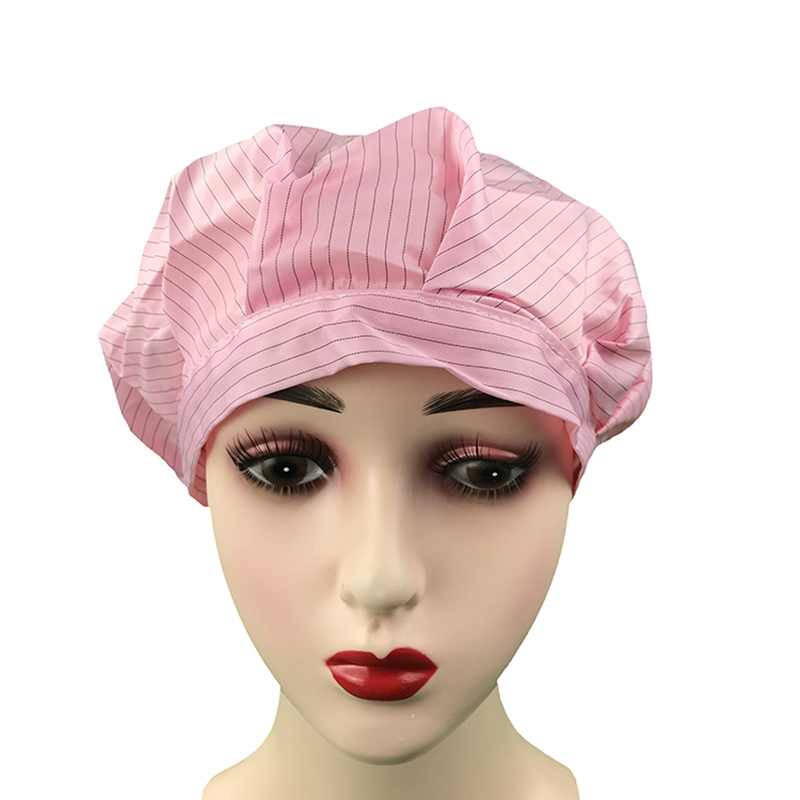
ESD Mushroom Cap
Antistatic Cap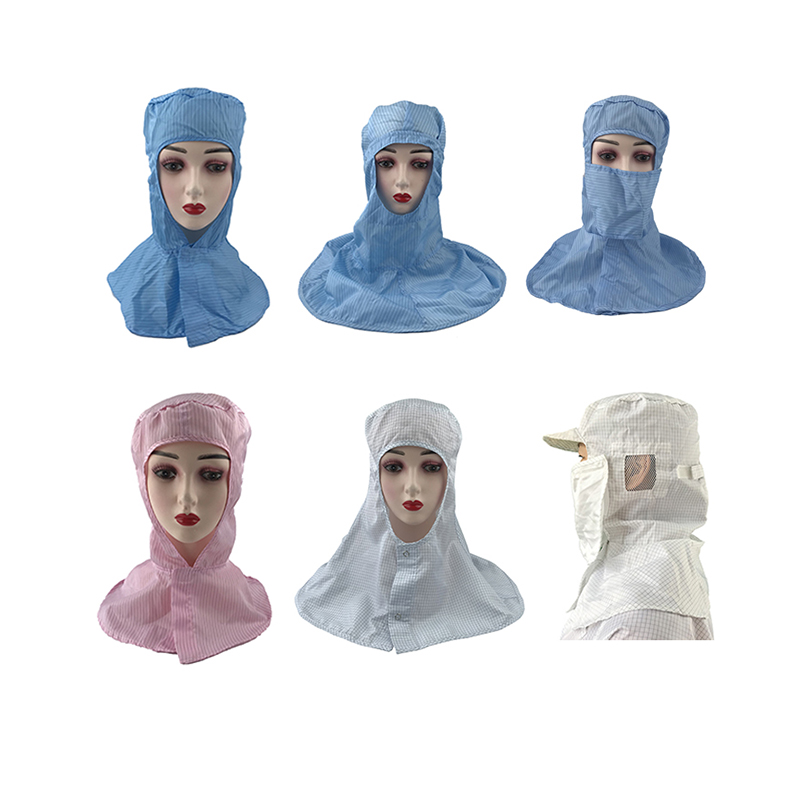
ESD Shawl Cap
Antistatic Cap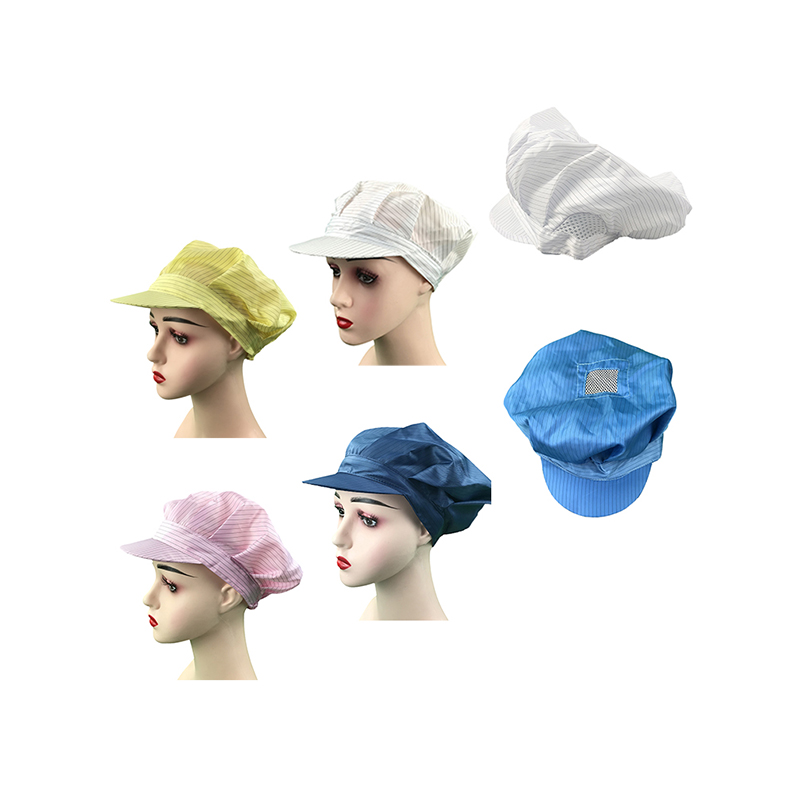
ESD Peaked Cap
Antistatic Cap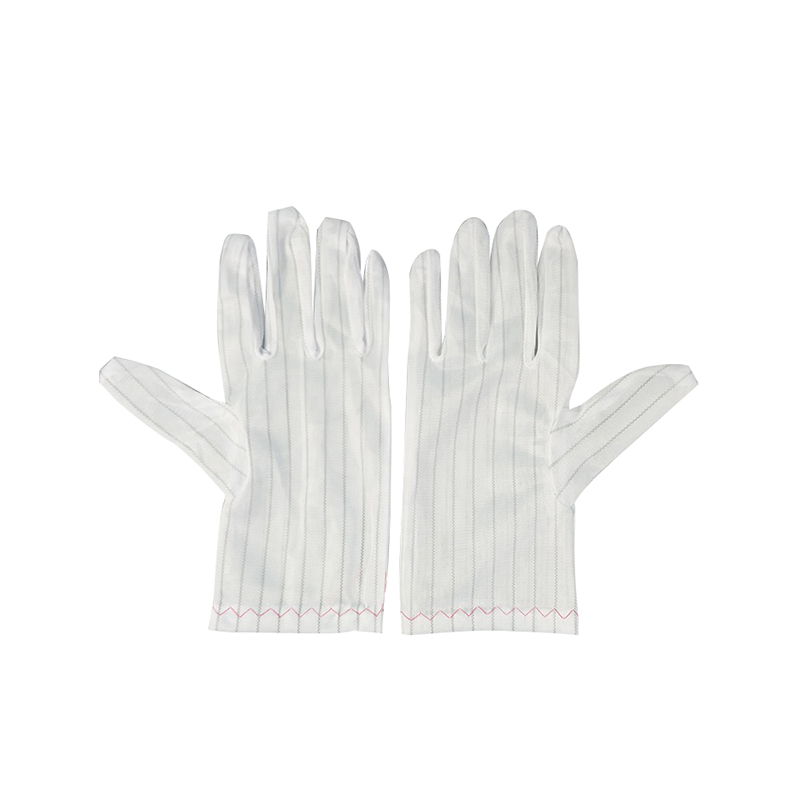
ESD Gloves
Antistatic Gloves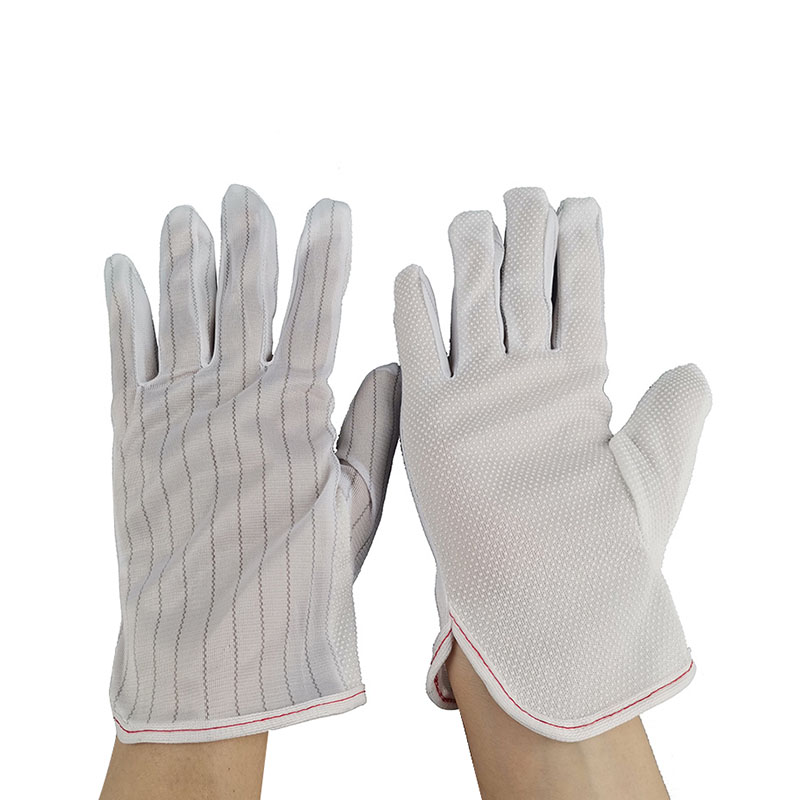
ESD Embossed Gloves
Antistatic GlovesCommon Mistakes That Let Hair Escape
- Putting the cap on after entering the gowning area instead of before, which skips the mirror check most facilities place at the entrance.
- Pulling the cap straight back from the forehead, which drags loose fringe forward instead of tucking it under.
- Choosing one universal size for every operator, when a band that is even slightly loose will not hold fine or freshly washed hair.
- Wearing a mushroom cap with hair well below the shoulders, treating it as full coverage when it was designed for shorter lengths.
- Skipping the back-of-neck check because the front of the cap looks correctly seated.
- Reusing a cap that has lost elasticity, since a stretched band no longer grips the hairline the way a new one does.
Washing and Care Without Losing Antistatic Performance
A cap that no longer conducts static properly cannot protect hair-adjacent particles from becoming a bigger problem — a static-charged strand is more likely to stand up and escape the band. Reusable antistatic caps made from a polyester and conductive-wire blend need specific care to keep both their shape and their conductive function intact.
- Hand wash or use a gentle machine cycle; avoid vigorous agitation or spin drying, which can distort the fabric or break the fine conductive threads.
- Use a neutral detergent and avoid bleach, strong alkalis, or fluorescent brighteners, all of which can degrade the conductive fibers over time.
- Keep water temperature at or below 40°C, since higher heat can shrink the polyester or accelerate wear on the conductive wire.
- Dry flat or in the shade rather than under direct sun or forced heat, to prevent fading and shape loss.
- Test antistatic performance with a static tester after every three to five washes, and retire the cap once performance drops noticeably.
Selecting a Cap That Fits Properly From the Start
Fit is what makes any tucking technique work in the first place. Most antistatic caps use a 98% polyester and 2% conductive-wire blend in a free-size format, with elastic that should sit firmly against the hairline without pinching. When sourcing caps for a team with varied hair types, it helps to request options across mushroom, shawl, and peaked styles, in multiple colors for role identification, from a manufacturer that can also supply matching antistatic clothing and antistatic gloves so the whole gowning set meets the same conductivity standard. Facilities producing under ISO Class 5 and Class 6 conditions typically test each batch for particle release and static dissipation before it ships, which is worth confirming with any antistatic cap manufacturer before placing a bulk order.