

 中文简体
中文简体 Español
 русский
 Deutsch
 Français
Content
- 1 Anti Static Gloves: The Core Equipment for Personnel Electrostatic Control
- 2 Packaging and Transportation Consumables: Building Electrostatic Isolation Barriers
- 3 Environmental Control Consumables: Eliminating Static Accumulation at the Source
- 4 Cleaning Consumables: Balancing Cleanliness and Electrostatic Control
- 5 Procurement and Quality Control Essentials: Ensuring Consumable Performance Standards
- 6 Industry Trends: Intelligent and Green Development in Parallel
Anti Static Consumables Series are the critical material systems for reducing electrostatic discharge (ESD) risks in electronics manufacturing, semiconductor packaging, and precision instrument industries. From personnel protective gloves to environmental control materials, a comprehensive anti-static consumables system can reduce electrostatic damage rates in production by over 90%, serving as the first line of defense for product yield and reliability.
Anti Static Gloves: The Core Equipment for Personnel Electrostatic Control
In electronics manufacturing workshops, the human body is one of the primary sources of static electricity. A typical person can generate static voltages up to 3,000 to 5,000 volts while walking, while modern CMOS chips often have voltage tolerance thresholds below 100 volts. Anti-static gloves safely channel human body static electricity into the grounding system through built-in conductive fibers or surface coatings, maintaining resistance values stable within the range of 10⁶ to 10⁹ ohms.
Main Material Types and Application Scenarios
| Material Type | Core Characteristics | Typical Applications | Resistance Range |
|---|---|---|---|
| PVC Gloves | Waterproof, smooth surface, dust-resistant | Electronic assembly, semiconductor testing | 10⁶–10⁹Ω |
| Nitrile Gloves | Oil-resistant, chemical-resistant, excellent elasticity | Precision soldering, chip packaging | 10⁶–10⁹Ω |
| PU Coated Gloves | Lightweight, breathable, sensitive touch | High-precision assembly, optical inspection | 10⁶–10⁸Ω |
| Knitted Conductive Gloves | Cotton base + conductive yarn, comfortable and durable | Long-duration work, general protection | 10⁵–10⁷Ω |
Taking nitrile material as an example, its oil-resistant properties make it particularly outstanding in wave soldering and reflow soldering processes. Experimental data shows that after using qualified anti-static nitrile gloves, the electrostatic damage complaint rate in soldering processes dropped from 0.8% to below 0.05%.
Packaging and Transportation Consumables: Building Electrostatic Isolation Barriers
Components also face electrostatic threats during storage and transportation. Anti-static packaging consumables form electromagnetic shielding layers through metallized films or conductive coating technologies, achieving shielding effectiveness of over 99%, effectively blocking external electrostatic fields from interfering with internal sensitive devices.
Key Packaging Consumable Types
- Anti Static Shielding Bags: Multi-layer composite structure with abrasion-resistant polyester outer layer, aluminum foil shielding middle layer, and anti-static polyethylene inner layer, with surface resistance controlled at 10⁴ to 10⁶Ω.
- Anti Static Bubble Bags: Add conductive coatings on top of cushioning protection, suitable for transportation protection of fragile precision devices.
- Anti Static Blister Trays: Made of conductive PS or PP materials with surface resistance of 10⁴ to 10⁶Ω, used for batch turnover of standardized components such as chips and LEDs.
In semiconductor packaging and testing, IC chips packaged in standard anti-static shielding bags showed zero electrostatic failure rate after 72-hour transportation vibration tests, while the comparison group without protective packaging had a failure rate as high as 2.3%.
Environmental Control Consumables: Eliminating Static Accumulation at the Source
In addition to personnel and material protection, electrostatic control of the production environment is equally critical. Environmental anti-static consumables maintain the overall electrostatic potential of the workshop within safe thresholds by altering spatial electrostatic distribution characteristics.
Core Environmental Control Solutions
- Anti Static Flooring: Made of conductive PVC or epoxy resin with system resistance of 10⁵ to 10⁸Ω, used with grounding copper strips to discharge static electricity generated by personnel walking to the ground within 0.1 seconds.
- Ionizing Blowers: Emit positive and negative ions to neutralize static electricity on object surfaces, suitable for non-contact precision workstations, with balance voltage controlled within ±50 volts.
- Anti Static Workbench Mats: Dual-layer structure with dissipative top layer and conductive bottom layer, forming a complete personal grounding circuit when used with wrist straps.
- Anti Static Cleanroom Garments: Made of polyester filament with embedded conductive fibers, with surface charge density below 0.6μC/piece, maintaining low dust generation and low static performance in ISO Class 5 cleanrooms.
After a certain LCD panel manufacturer implemented a full set of environmental anti-static consumables, the average electrostatic potential in the workshop dropped from 1,200 volts to below 80 volts, product yield improved by 1.8 percentage points, and annual economic benefits exceeded tens of millions.
Cleaning Consumables: Balancing Cleanliness and Electrostatic Control
In high-end electronics manufacturing, cleaning operations themselves may introduce static electricity or particulate contamination. Anti-static cleaning consumables are designed with special materials that do not generate additional static electricity during wiping and adsorption processes while avoiding secondary contamination.
Key Cleaning Consumable Categories
| Product Name | Material | Surface Resistance | Particle Generation | Primary Use |
|---|---|---|---|---|
| Anti Static Wipes | Polyester + Conductive Yarn | 10⁶–10⁹Ω | ≤0.3mg/piece | Precision lens, wafer wiping |
| Anti Static Swabs | Conductive plastic handle + lint-free cotton tip | 10⁴–10⁶Ω | ≤0.1mg/piece | Narrow spaces, contact cleaning |
| Anti Static Sticky Rollers | Conductive PE film | 10⁵–10⁷Ω | ≤0.05mg/cm² | Workstation, equipment surface dust removal |
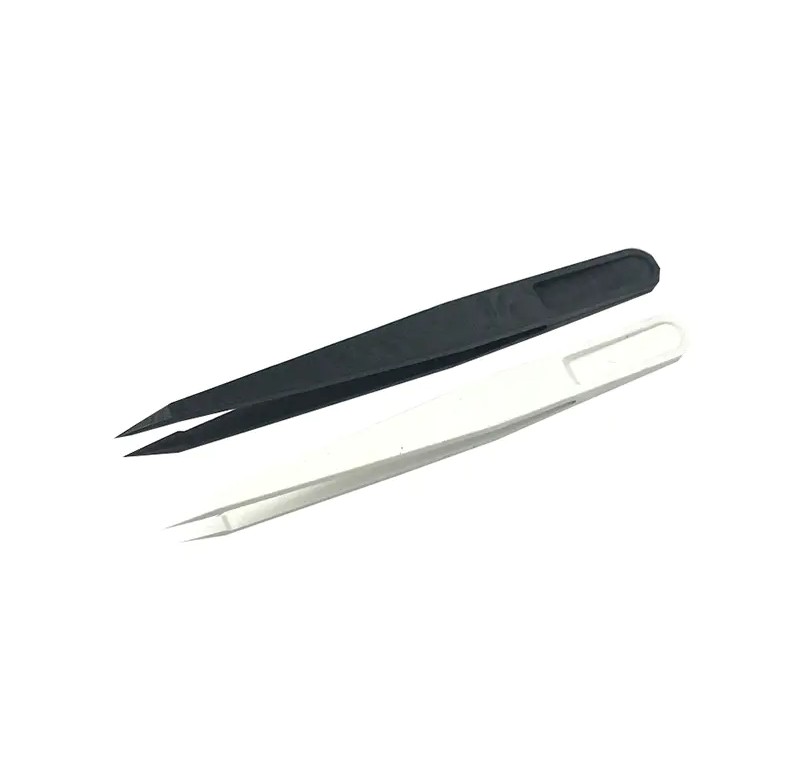
| Anti Static Vacuum Pickup Tools | Conductive POM + ESD silicone suction cup | 10⁴–10⁶Ω | Zero particle generation | Chip pickup, SMT operations |
In wafer post-dicing cleaning processes, replacing ordinary wiping materials with anti-static wipes reduced particle residue defects caused by electrostatic adsorption by 67%, significantly improving the reliability of subsequent packaging processes.
Procurement and Quality Control Essentials: Ensuring Consumable Performance Standards
The performance consistency of anti-static consumables directly impacts protection effectiveness. The following indicators should be prioritized during procurement and usage:
Key Testing Parameters
- Surface Resistance / Volume Resistance: Tested with a megohmmeter according to ASTM D257 standards to ensure values are within declared ranges.
- Static Decay Time: The time to decay from 1,000 volts to 100 volts should be less than 2 seconds, meeting MIL-STD-3010 requirements.
- Cleanliness Level: Tested with liquid particle counters, consumables for ISO Class 5 environments should meet ≥0.5μm particle counts ≤100 per cubic meter.
- Shielding Effectiveness: For shielding bag consumables, verify attenuation capability reaches 40dB or above using electrostatic field testers.
Additionally, storage conditions for consumables are equally critical. Anti-static gloves should be stored away from light in environments with relative humidity of 40%–60% to prevent conductive coating aging from drying or UV exposure. It is recommended to randomly inspect 5% of samples from each batch for resistance retesting and establish traceable quality records.
Industry Trends: Intelligent and Green Development in Parallel
As electronic components evolve toward 7nm and below process nodes, electrostatic protection requirements are becoming increasingly stringent. The anti-static consumables industry is moving in two major directions:
Technology Evolution Directions
- Smart Monitoring Integration: Next-generation anti-static wrist straps and workbench mats will embed micro-sensors to monitor grounding resistance and electrostatic potential in real-time, with data uploaded to MES systems via IoT for digital management of protection status.
- Bio-based Material Substitution: Replace petroleum-based plastics with polylactic acid (PLA) and bio-based nylon to develop biodegradable anti-static packaging, targeting a 30% reduction in industry carbon footprint before 2030.
- Nano-coating Technology: Use graphene or carbon nanotube conductive coatings to improve resistance uniformity to within ±5% while maintaining transparency and flexibility.
According to industry forecasts, the global anti-static consumables market will exceed $4.5 billion by 2028, with a compound annual growth rate maintained at around 6.5%. The Asia-Pacific region, leveraging semiconductor and electronics manufacturing clusters, will contribute over 55% of market growth.