

 中文简体
中文简体 Español
 русский
 Deutsch
 Français
Content
The right swab tip material depends on three factors working together: what surface you are cleaning, whether particle or fiber shedding is a risk, and what solvent or chemical the swab needs to hold. For most electronics, optics, and cleanroom work, a closed-cell foam tip is the safest default because it sheds almost no particles and resists common solvents. For tighter gaps such as connector pins, circuit board joints, or PCB solder points, a polyester-tip swab offers more rigidity and precision. Cotton tips remain useful only for general, non-critical wiping where occasional fiber loss is not a concern.
Foam, Polyester, or Cotton: A Direct Comparison
Each tip material behaves differently once it touches a real surface. The table below breaks down the three most common options side by side, based on particle generation, absorbency, and typical solvent tolerance.
| Tip Material | Particle Shedding | Absorbency | Solvent Resistance | Best Fit |
|---|---|---|---|---|
| Closed-cell Foam | Very low, lint-free | High, holds IPA and cleaning fluids well | Good with most common solvents | Screens, lenses, sensors, ISO Class 5 to 7 rooms |
| Polyester Knit | Low, minimal fiber loss | Moderate | Strong, handles harsher chemicals | Solder joints, connector pins, tight gaps |
| Cotton | Higher, prone to shedding fibers | High but uneven | Weak, breaks down with strong solvents | General wiping, non-critical surfaces |
Match the Tip Material to Your Application
Choosing by industry or task is often faster than comparing raw material specs. Below are typical scenarios and the tip material that consistently performs best in each one.
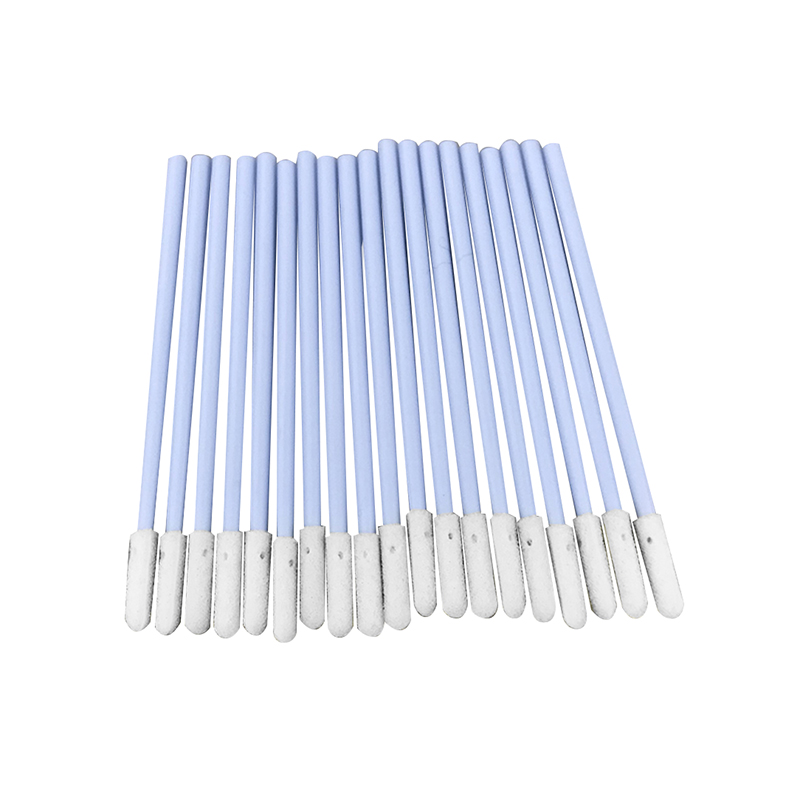
- Mobile device and touchscreen cleaning: a soft foam tip absorbs oil without scratching glass or coated surfaces.
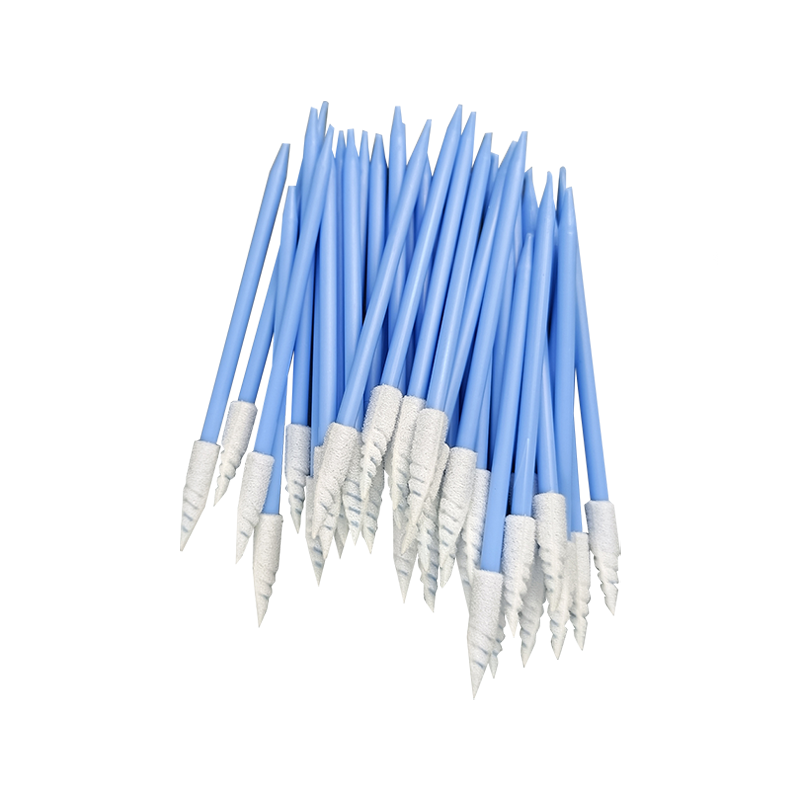
- Printer head maintenance: a shaped foam swab removes dried ink from nozzles without leaving fibers that clog the head.
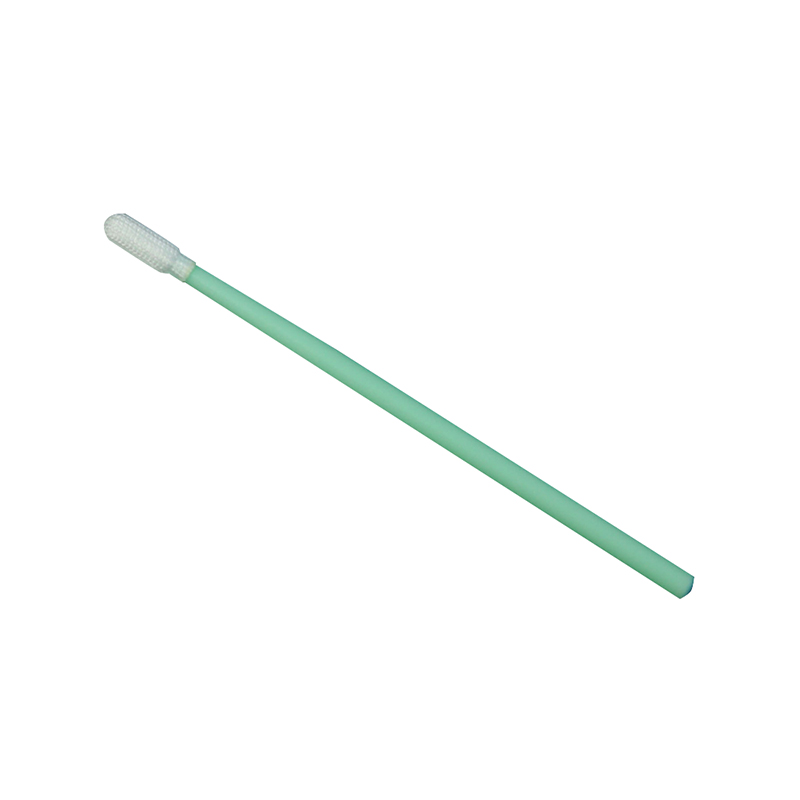
- PCB and solder joint cleaning: a firmer polyester tip gets between components without bending or fraying.
- Optical lenses and camera sensors: a fine foam or polyester tip avoids the streaking that cotton fibers can cause.
- Medical device post-sterilization wiping: a chemical-resistant polyester tip holds up against sterilant residue.
- General cleanroom surface dusting: either foam or polyester works, chosen mainly by the room's ISO classification.
Four Criteria That Actually Decide the Choice
Beyond the material name, four practical measurements determine whether a swab is suitable for a controlled environment. Suppliers list these on technical datasheets, and it is worth checking each one before ordering in bulk.
Particle Count
Swabs rated for ISO Class 5 or Class 6 cleanrooms are tested with a liquid particle counter to confirm they release minimal residue under friction.
Tip Hardness
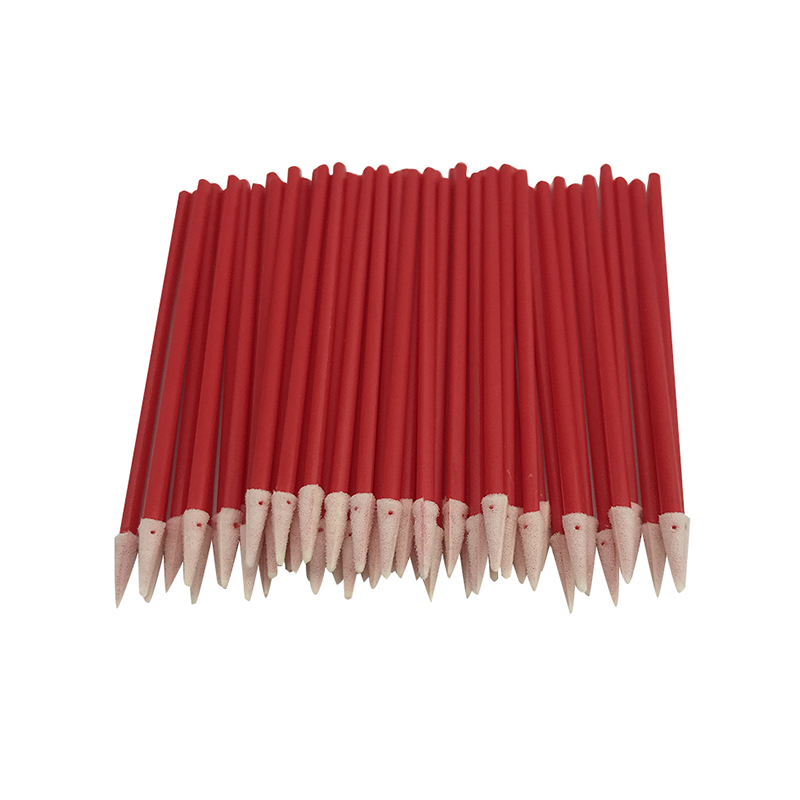
Softer foam protects coated glass and film, while a firmer polyester or pointed foam tip is needed to reach recessed or narrow gaps without bending.
Handle Material
Antistatic polypropylene handles are preferred near sensitive electronics, since a standard plastic handle can build up static charge during wiping.
Chemical Compatibility
Confirm the tip material does not degrade in the solvent being used; some foams soften in strong ketones while polyester holds up better.
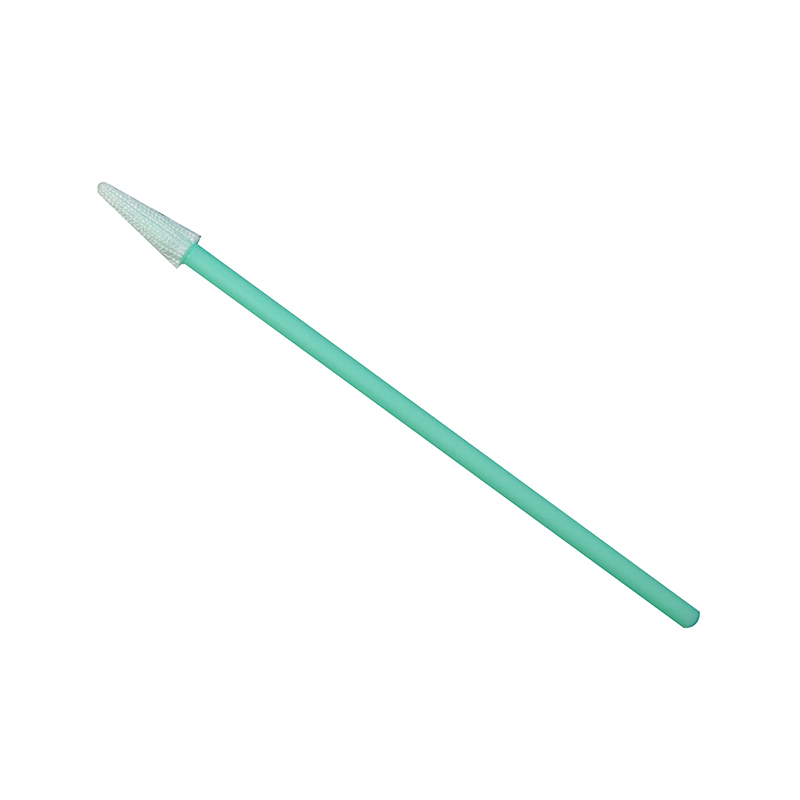
Explore Clean Swab Options by Tip Type
The product range below groups common tip styles so you can compare shapes and materials before requesting samples.
Common Mistakes When Selecting a Swab
Most complaints about swabs come down to a mismatch between tip material and task rather than a defective product. Watch for these recurring issues.
| Mistake | Consequence | Fix |
|---|---|---|
| Using cotton swabs near open circuit boards | Loose fibers cause shorts or contamination between components | Switch to a polyester or foam tip rated for electronics |
| Choosing a soft foam tip for tight connector pins | Tip bends or tears before reaching the contact point | Use a firmer polyester or pointed foam tip instead |
| Ignoring solvent compatibility | Tip softens, sheds, or leaves residue mid-wipe | Check the datasheet for the specific solvent in use |
| Buying a general-purpose handle for a cleanroom | Static buildup attracts dust back onto the cleaned surface | Select swabs with an antistatic handle for ISO-rated rooms |
Quick Reference by Industry
If time is limited, this shortlist reflects the tip material most commonly specified across major industries that rely on precision cleaning.
- Semiconductor and electronics manufacturing: foam tip with an antistatic handle, tested to ISO Class 5.
- Medical device assembly: polyester tip, chemical-resistant, validated for post-sterilization use.
- Optics and camera module production: fine foam tip, low particle count, minimal residue.
- Printer and imaging equipment servicing: shaped foam swab designed for nozzle and printhead geometry.
- General laboratory maintenance: foam or polyester tip depending on the surface being cleaned.