

 中文简体
中文简体 Español
 русский
 Deutsch
 Français
Content
Cleanroom swabs are precision cleaning tools built from low-shedding materials such as polyester, foam, or sterilized cotton, produced and packaged inside ISO-classified cleanrooms so they release almost no fibers or particles. Regular swabs, by contrast, are made with ordinary cotton or loose-weave heads and packed in standard rooms, which means they shed fibers, carry higher particle counts, and are not suitable for electronics, semiconductor, medical device, or optical work. The difference comes down to three things: tip material and construction, the cleanroom environment where they are manufactured and packed, and the level of particle and fiber testing each batch goes through before it ships.
What Makes a Swab a "Cleanroom" Swab
A cleanroom swab is engineered so that using it does not leave behind more contamination than it removes. The tip is heat-sealed or ultrasonically welded to the handle instead of glued, which stops adhesive residue from transferring onto sensitive surfaces. The handle itself is usually made from antistatic polypropylene so it will not generate an electrostatic discharge near circuit boards or wafers. Suzhou Jujie Electron Co., Ltd, for example, manufactures its clean swab range inside an 8,000 square meter lint-free workshop with ISO Class 5 and Class 6 cleanrooms that hold NEBB certification, and every batch is checked with infrared spectrometers and liquid particle counters before release.
This level of control matters because a single loose fiber can bridge two solder pads on a circuit board, scratch a lens coating, or introduce a foreign particle onto a wafer surface that later causes a device failure. Cleanroom swabs are designed to remove that risk at the source rather than requiring a secondary cleaning step afterward.
Cleanroom Swabs vs Regular Swabs
The table below lines up the two side by side across the factors that actually affect performance in a controlled environment.
| Factor | Cleanroom Swab | Regular Swab |
| Tip material | Polyester knit, medical-grade foam, or sealed cotton | Loose-wound raw cotton |
| Fiber shedding | Near zero, tested per batch | Common, not tested |
| Handle attachment | Heat-sealed or ultrasonically welded | Glued or crimped |
| Static control | Antistatic polypropylene handle | Standard plastic or paper handle |
| Manufacturing environment | ISO Class 5 or Class 6 cleanroom | Standard production room |
| Typical use case | Electronics, semiconductor, medical device, optics | General household or first-aid cleaning |
Swab Tip Materials and Where Each One Works Best
Not every cleanroom swab is built the same way. The tip material is chosen based on what it needs to touch, how much liquid it needs to hold, and how much friction the surface can tolerate.
Foam Tips
Soft, highly absorbent, and static-dissipative. Best for wiping phone screens, keyboard gaps, print heads, and laboratory instrument surfaces where scratching is a concern.
Polyester Tips
Firmer and chemical-resistant. Suited to circuit board solder joints, chip crevices, and post-sterilization cleaning of surgical instruments where residue cannot be left behind.
Sealed Cotton Tips
Cotton fiber contained inside a sealed sleeve so it cannot shed. Used for general disinfection and light dust removal where a softer touch is required.
Clean Swab Product Line
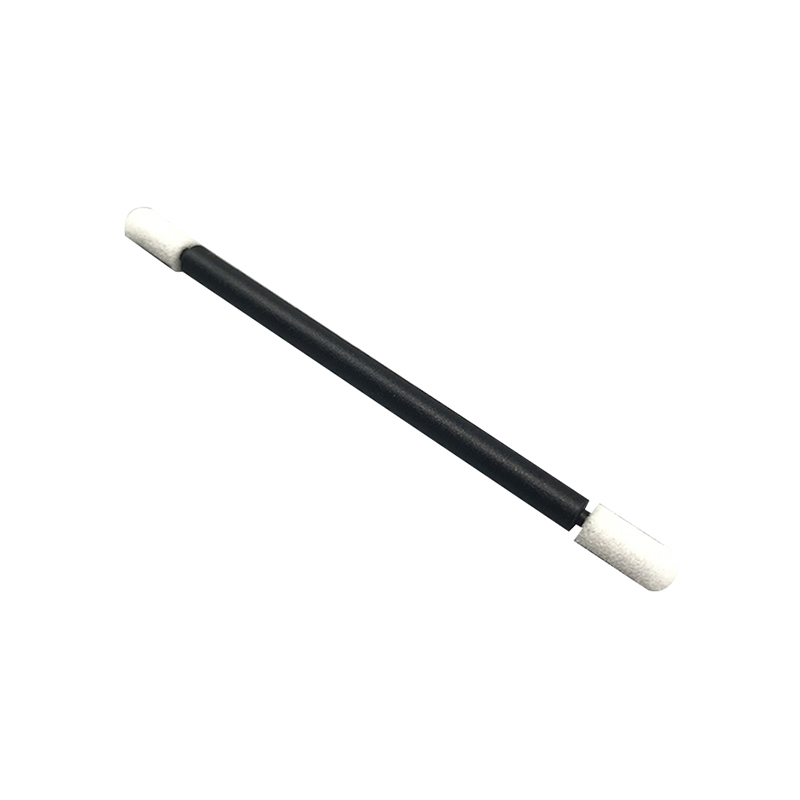
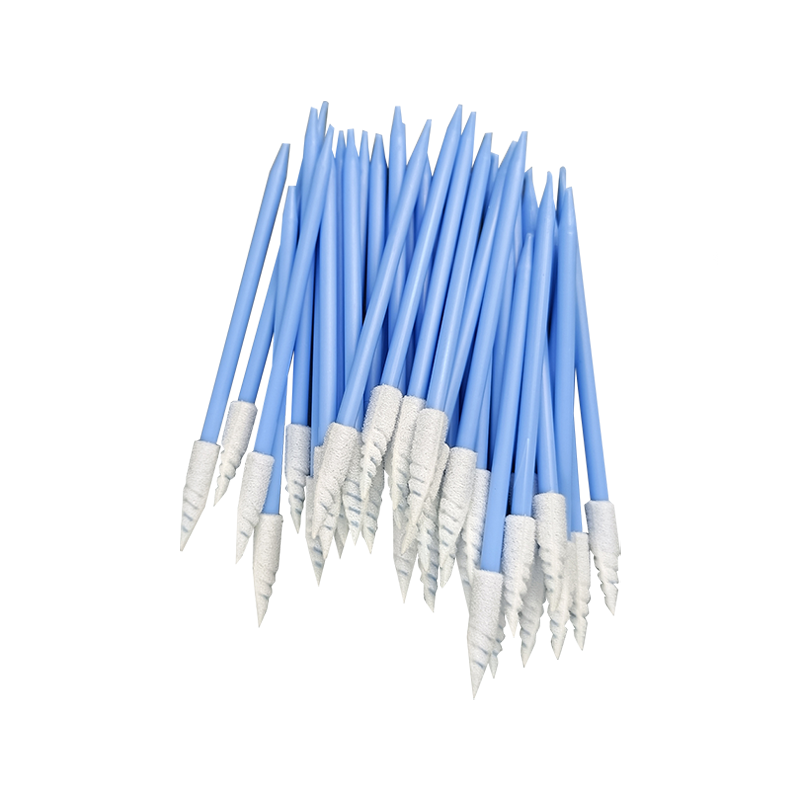
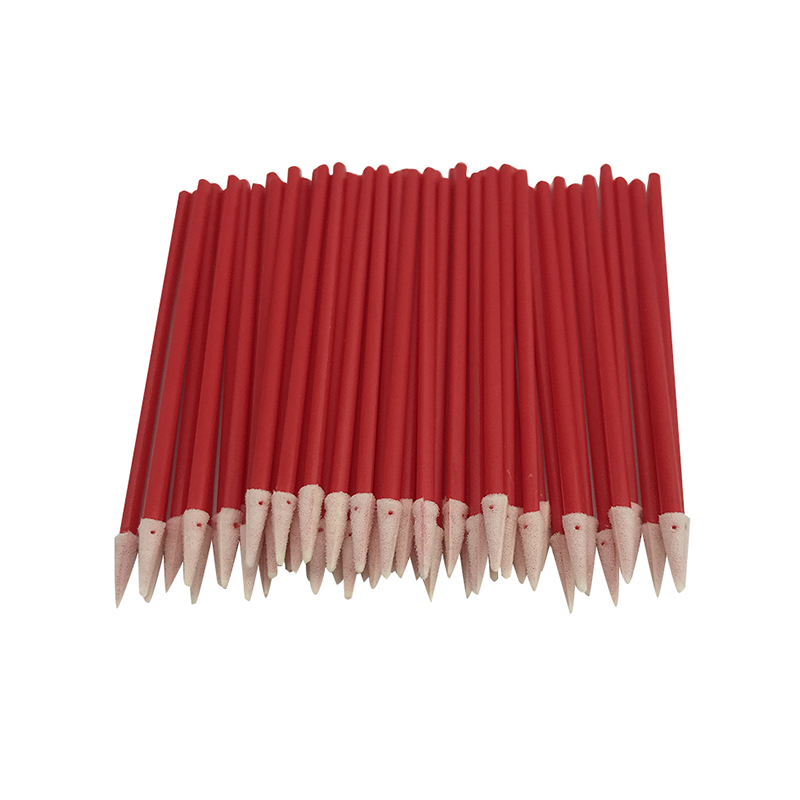
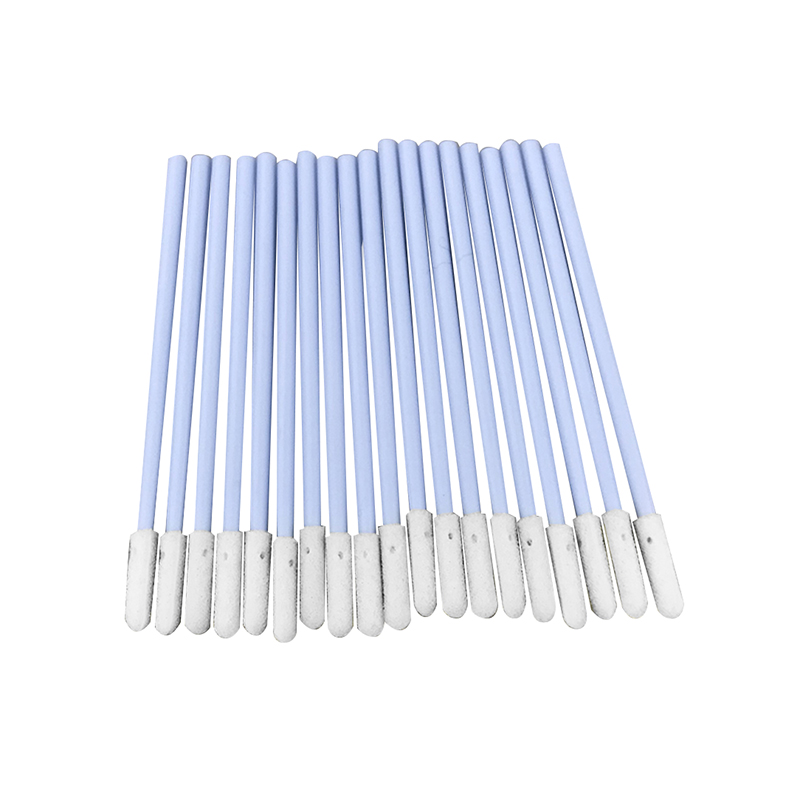
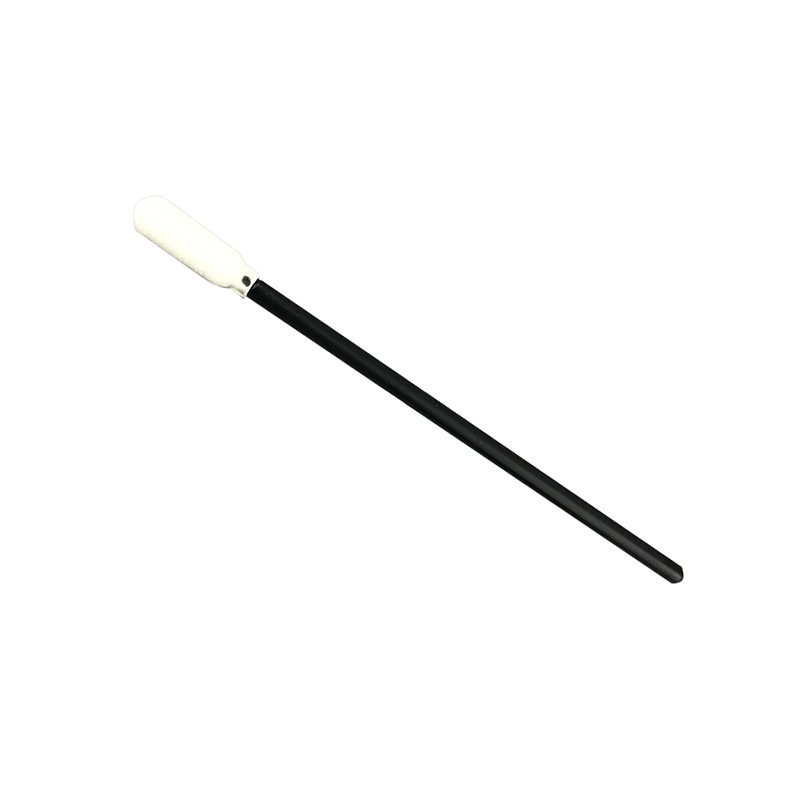
A closer look at commonly requested swab styles, each engineered for low particle generation and consistent tip quality across production batches.
Matching a Swab to Your Cleanroom Class
Selection should follow the classification of the room and the sensitivity of the surface being cleaned, not just personal preference.
| Environment | Recommended Swab | Reason |
| ISO Class 5 semiconductor | Sealed polyester tip | Lowest particle count, chemical-resistant |
| Medical device assembly | Sterile foam or polyester tip | Compatible with sterilization chemicals |
| Optical instrument service | Round or sharp tip foam swab | Streak-free, will not scratch coatings |
| Printer or print head service | Rectangle or print head foam swab | Shaped to reach nozzle channels |
Industries That Depend on Cleanroom Swabs
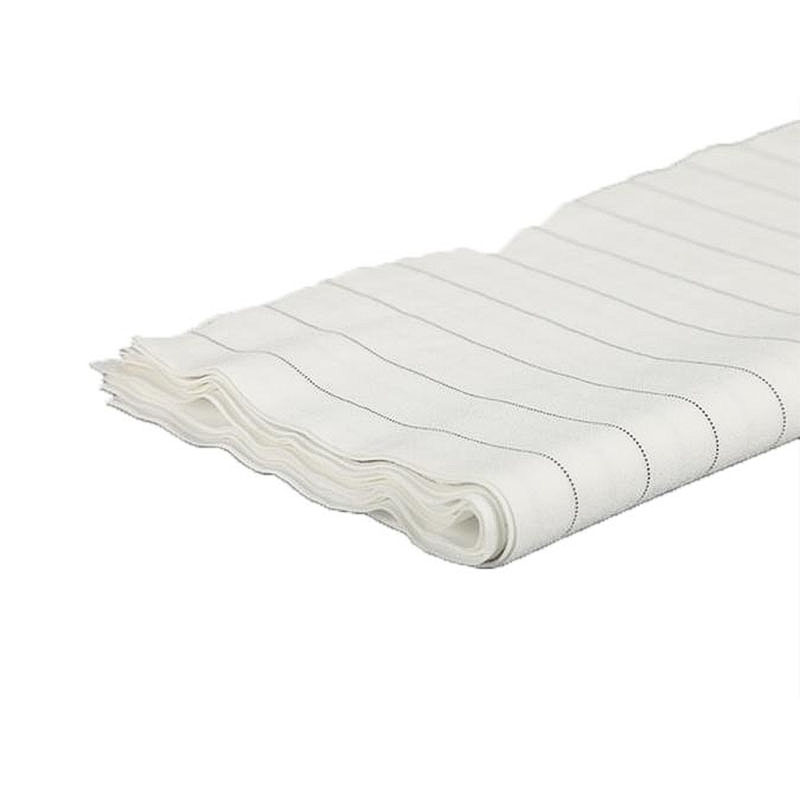
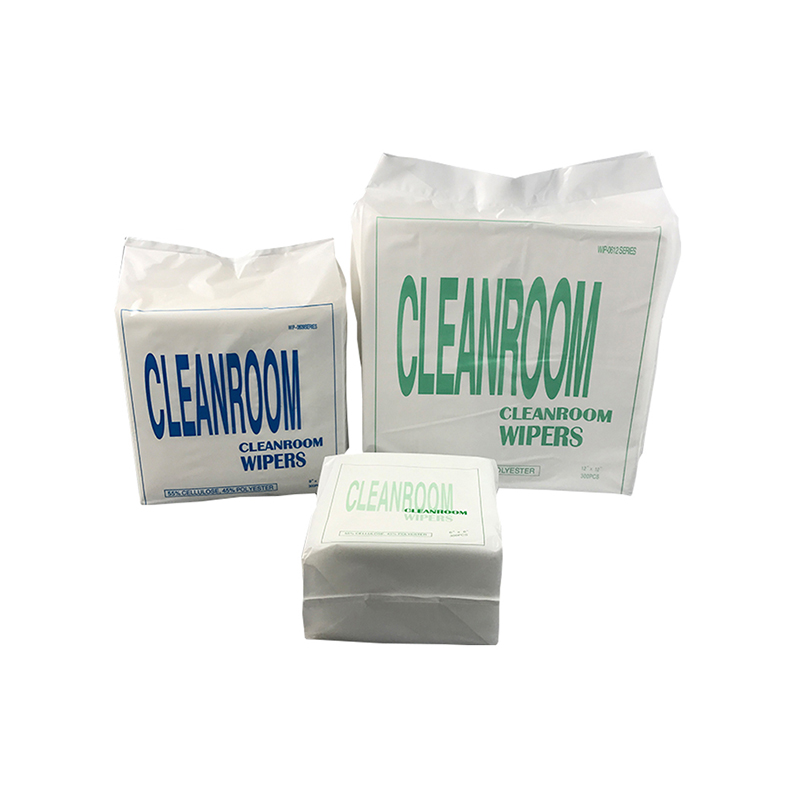
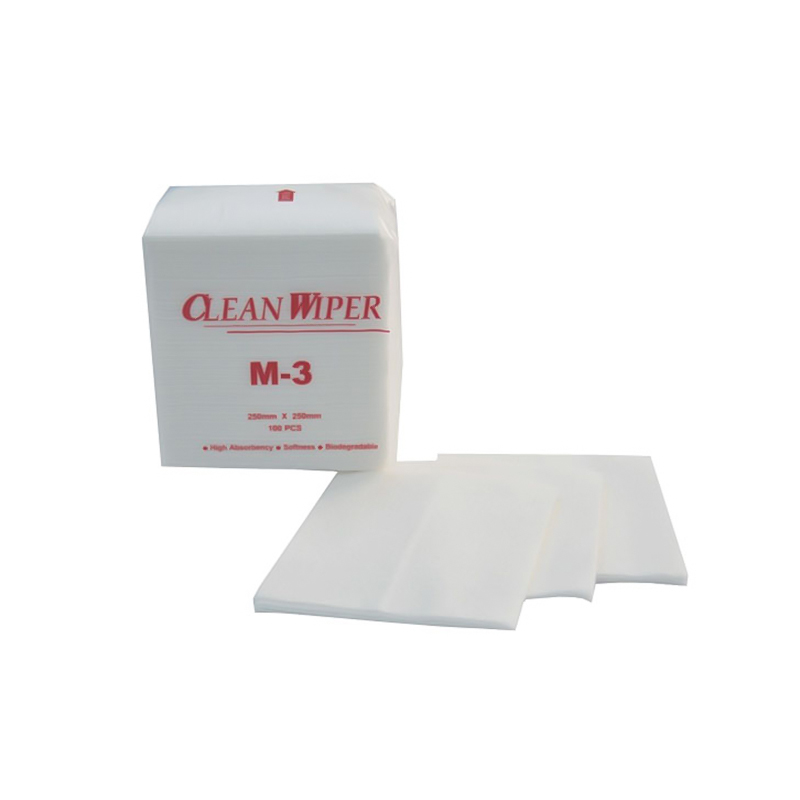
Cleanroom swabs rarely work alone. They are typically part of a wider contamination control protocol that includes a cleanroom wiper for larger surfaces, nonwoven wipes for general wipe-downs, a sticky mat or sticky roller at room entry points to trap loose particles, and personal protective items such as a cleanroom shoe cover, cleanroom face mask, antistatic clothing, antistatic shoes, antistatic cap, and antistatic gloves worn by operators inside the room.
- Electronics manufacturing: cleaning connector pins, keyboard assemblies, and circuit board solder joints, often alongside an antistatic mat and antistatic tweezer at the workstation.
- Semiconductor fabrication: wafer edge cleaning and equipment maintenance inside ISO Class 5 rooms.
- Medical device production: post-sterilization wipe-down of surgical instrument surfaces and packaging seals.
- Optics and photonics: lens, sensor, and mirror cleaning where scratch-free contact is required.
- Laboratory and pharmaceutical settings: instrument surface cleaning where static buildup could interfere with sensitive readings.
Common Questions
Can a regular cotton swab be used in a cleanroom by mistake?
It can be used physically, but it should not be, because the loose cotton fibers it sheds will register as contamination on particle counters and can bridge or scratch sensitive components.
Do cleanroom swabs need to be sterile?
Only when the application calls for it, such as medical device or pharmaceutical work. Electronics and optics cleaning typically requires low particle counts rather than sterility.
How is fiber shedding actually tested?
Manufacturers run batches through liquid particle counters and controlled wipe tests to confirm the tip releases no measurable fiber residue before the product is packaged and shipped.