

 中文简体
中文简体 Español
 русский
 Deutsch
 Français
Content
- 1 The ISO 14644 Series: More Than One Standard
- 2 ISO 14644-1:2015 Classification Table
- 3 Reading the Limits: Particle Size and Occupancy State
- 4 ISO 14644 and EU GMP Annex 1 Alignment
- 5 What the Classes Mean in Real Production
- 6 How Classification Testing and Monitoring Work
- 7 Consumables That Keep You in Class
- 8 Common Classification Mistakes and Procurement Risks
- 9 Frequently Asked Questions
At 09:32 on a normal production day, the particle counter in an optical lens facility reads 4,120 particles per cubic metre at 0.5 micrometres. The room is posted as ISO Class 5, and the limit is 3,520. In that moment, the quality supervisor must decide whether to halt the line. That is what ISO 14644 cleanroom classification explained in practical terms looks like: a defined, measurable particle budget, not a vague promise of cleanliness. The short version of what you need to know is this: ISO 14644-1:2015 defines nine classes of air cleanliness, each class step permits roughly ten times more particles than the previous one, and the class a facility needs depends on the process it runs and the contamination risk it can tolerate. The sections below explain the classification table, how testing works, where each class appears in real industries, and why consumables can make the difference between maintaining certification and failing an audit.
The ISO 14644 Series: More Than One Standard
ISO 14644 is a multi-part series, and "cleanroom classification" is only the first part. The parts most facility managers and procurement teams encounter are these:
- ISO 14644-1:2015 - Classification of air cleanliness by particle concentration.
- ISO 14644-2:2015 - Monitoring to provide evidence of cleanroom performance.
- ISO 14644-3:2019 - Test methods for measuring cleanroom performance.
- ISO 14644-4:2022 - Design, construction, and start-up of cleanrooms.
- ISO 14644-5:2004 - Operating practices for cleanrooms.
- ISO 14644-7:2004 - Separative enclosures such as isolators and mini-environments.
For daily certification work and routine control, Parts 1 and 2 are the ones you will quote in specifications and see in audit checklists. Parts 3 to 5 matter when you are designing, building, or operating a room. Regardless of which part applies to your project, the classification table in Part 1 is the shared language that everyone in the cleanroom industry uses.
ISO 14644-1:2015 Classification Table
ISO 14644-1:2015 sets maximum permitted concentrations of airborne particles in particles per cubic metre, organised by ISO class and particle size. The table below is the core of the standard and defines the nine ISO classes.
| ISO Class | ≥0.1 μm | ≥0.2 μm | ≥0.3 μm | ≥0.5 μm | ≥1 μm | ≥5 μm |
|---|---|---|---|---|---|---|
| ISO Class 1 | 10 | 2 | — | — | — | — |
| ISO Class 2 | 100 | 24 | 10 | 4 | — | — |
| ISO Class 3 | 1,000 | 237 | 102 | 35 | 8 | — |
| ISO Class 4 | 10,000 | 2,370 | 1,020 | 352 | 83 | — |
| ISO Class 5 | 100,000 | 23,700 | 10,200 | 3,520 | 832 | 29 |
| ISO Class 6 | 1,000,000 | 237,000 | 102,000 | 35,200 | 8,320 | 293 |
| ISO Class 7 | — | — | — | 352,000 | 83,200 | 2,930 |
| ISO Class 8 | — | — | — | 3,520,000 | 832,000 | 29,300 |
| ISO Class 9 | — | — | — | 35,200,000 | 8,320,000 | 293,000 |
Limits at ≥0.5 μm rise about tenfold with each ISO class step. ISO Class 1 has no specified limit at this particle size.
Three patterns are worth noticing. First, ISO Class 1 is the strictest class and ISO Class 9 the least strict; most industrial and pharmaceutical cleanrooms sit between ISO Class 5 and ISO Class 8. Second, for classes above ISO Class 6, the standard specifies limits only at 0.5 μm, 1 μm, and 5 μm because larger particles matter more in looser rooms. Third, each class step multiplies the limit by about ten, which means choosing a class is a cost decision as much as a quality decision.
Reading the Limits: Particle Size and Occupancy State
Whenever you see a class name, ask what particle size it refers to. An ISO Class 5 room allows 3,520 particles per cubic metre at 0.5 micrometres, and the same room allows only 29 particles at 5 micrometres. If someone quotes "ISO 5" without a size, they almost always mean the 0.5 micrometre limit, because that is what standard laser particle counters report by default.
The standard also requires you to declare the occupancy state for classification. ISO 14644-1 distinguishes "as-built" (complete and operating, with no equipment or personnel), "at-rest" (equipment installed and running, no personnel), and "operational" (all equipment and personnel working). Many semiconductor and pharmaceutical facilities classify at-rest and then continue with frequent operational monitoring, because the operational state is where contamination risk is highest.
ISO 14644 and EU GMP Annex 1 Alignment
If you work in pharmaceuticals, biotech, or medical devices, you will see EU GMP Annex 1 referenced alongside ISO 14644-1. Annex 1 uses the same ISO particle limits but adds a second layer: microbiological limits for viable particles and a set of operational grades. The common alignment is shown below.
| EU GMP Grade | ISO Class (At Rest) | ISO Class (In Operation) | Typical Controlled Environment |
|---|---|---|---|
| A | ISO 5 | ISO 5 | Aseptic filling line |
| B | ISO 5 | ISO 7 | Background room around Grade A |
| C | ISO 7 | ISO 8 | Clean preparation of components |
| D | ISO 8 | Not specified | General clean support areas |
Under the 2022 update of Annex 1, the emphasis on monitoring, contamination control strategy, and closure of the aseptic process became tighter. Still, the fundamental mapping between grades and ISO classes remains the reference point for cleanroom design and validation in pharmaceutical environments.
What the Classes Mean in Real Production
The classification table only tells you how many particles are allowed; it does not tell you which class your process needs. That decision comes from product sensitivity, regulatory requirements, and defect cost. In practice, classes cluster by industry:
- ISO Class 1-3: extreme semiconductor lithography and research facilities working at nanometre scale. Very few rooms are built this tight, and operating costs are exceptionally high.
- ISO Class 4: advanced semiconductor processing and precision photonics. ULPA filtration and very high air-change rates are required.
- ISO Class 5: wafer fabrication, aseptic pharmaceutical filling, biopharmaceutical compounding, and implantable medical device production. This is the most common "high-tech" class.
- ISO Class 6: semiconductor test and packaging, cleanroom consumable manufacturing, medical device assembly, and precision optical coating.
- ISO Class 7: electronics assembly, pharmaceutical secondary packaging, clinical laboratories, and clean manufacturing of precision components.
- ISO Class 8: general industrial manufacturing, food and beverage processing, cosmetics, and automotive painting where visible defects from particles are the main concern.
In each case, the process determines the class. A semiconductor fab cannot function at ISO 8 because sub-micrometre particles kill chip yields. A food filling line does not need ISO 5 because the product tolerates the particles that are present. When you plan a new room or upgrade an existing one, the correct sequence is to define the process tolerance first and let the ISO class follow.
For a closer look at cleaning behaviour and test data, whether cleanroom wipers release particles during cleaning covers the evaluation you should request from any consumable supplier.
How Classification Testing and Monitoring Work
Classification is not a calculation on paper; it is a measurement campaign. ISO 14644-1 requires a minimum number of sampling points based on the room floor area, with the number growing roughly with the square root of the area. Each point is sampled several times, and the results are evaluated against the class limits using a 95% upper confidence limit calculation defined in the standard. A proper classification report includes the sampling plan, particle counter calibration data, sample volumes, and the upper confidence limit calculation. If a vendor hands you a one-page certificate without that detail, treat it with caution.
ISO 14644-2 governs monitoring after the initial classification. The standard does not mandate a universal re-test interval; instead, it asks you to define a risk-based monitoring plan. In practice, many certified rooms are re-tested every 6 to 24 months depending on class, process sensitivity, and historical data, with continuous or periodic monitoring of particle counts, differential pressure, temperature, and humidity in between.
Consumables That Keep You in Class
This is where classification meets procurement. A cleanroom is only as clean as the materials, tools, and people that enter it. Numerous industry analyses of contamination sources have found that personnel contribute the majority of airborne particles in an operating cleanroom; gowning, gloves, sticky mats, wipers, and swabs are therefore contamination control hardware, not accessories. The chart below illustrates a typical distribution.
Illustrative distribution based on typical cleanroom contamination studies; the exact split depends on gowning, headcount, and processes.
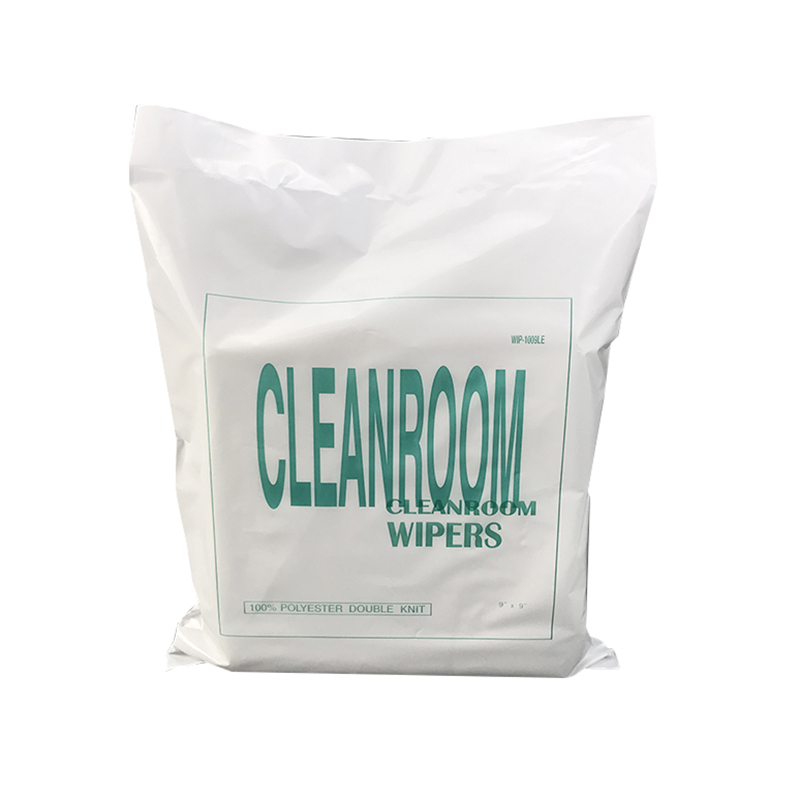
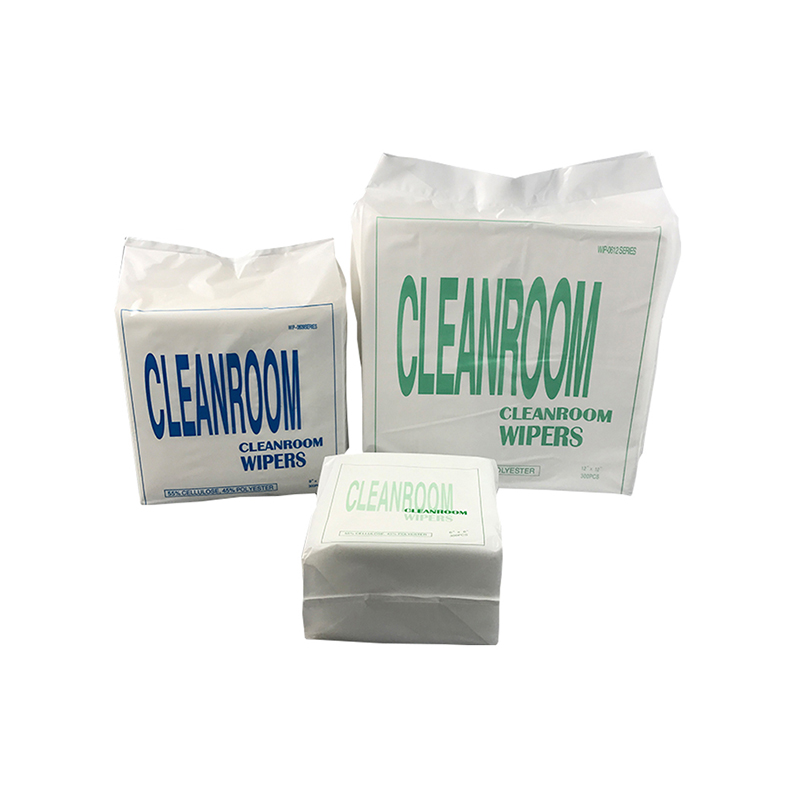
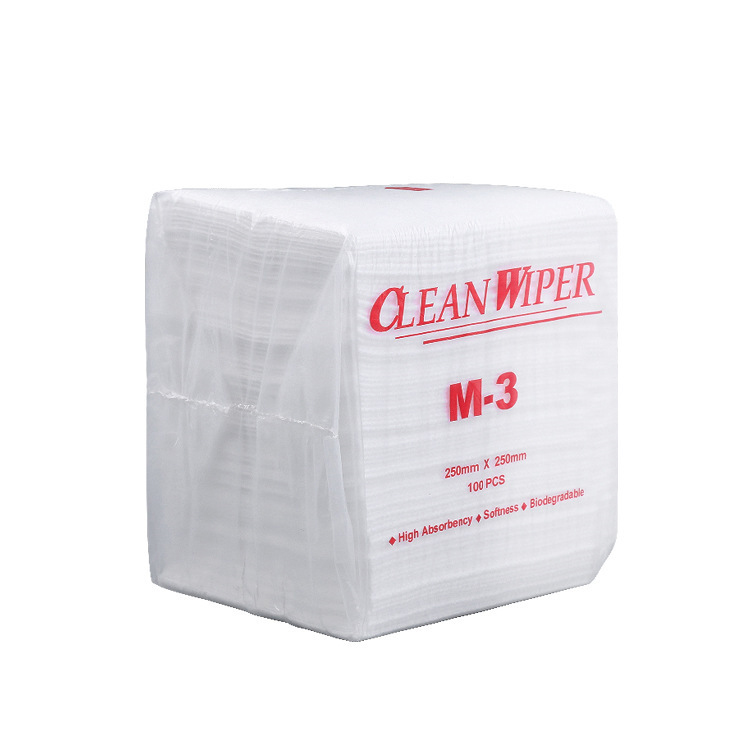
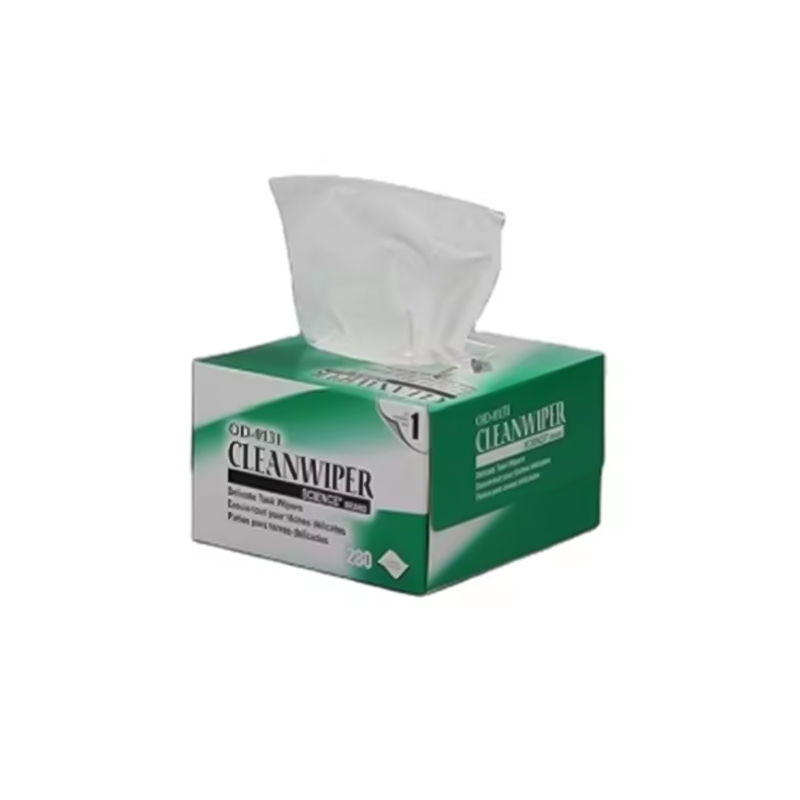
If a cleaning procedure is part of your contamination control strategy, the wiper itself must not become a particle source. A cloth cut from ordinary fabric and packed in uncontrolled conditions can shed thousands of particles per wipe. A wiper made, washed, and packaged under controlled conditions, such as a 2-ply polyester cleanroom wiper, keeps particle release within limits that match ISO Class 5 and 6 environments. For corners, ports, and optical surfaces that a wiper cannot reach, a knitted polyester tipped cleaning swab gives you the same controlled material in a precision format. And at every doorway, a cleanroom sticky mat captures particles from shoe soles before they are carried into the classified space.
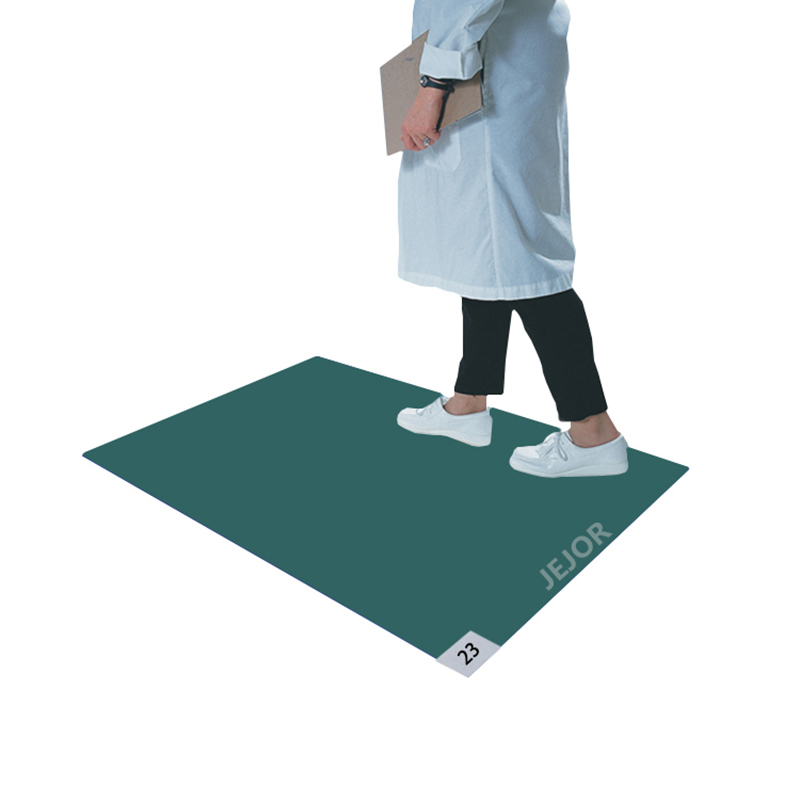 Custom Sticky Mat Suppliers, OEM/ODM Factory - Suzhou Jujie Electron Co.,LtdSuzhou Jujie Electron Co.,Ltd is a China OEM/ODM Sticky Mat supplier and Sticky Mat factory, We specialize in custom Sticky Mat and other...View Product →
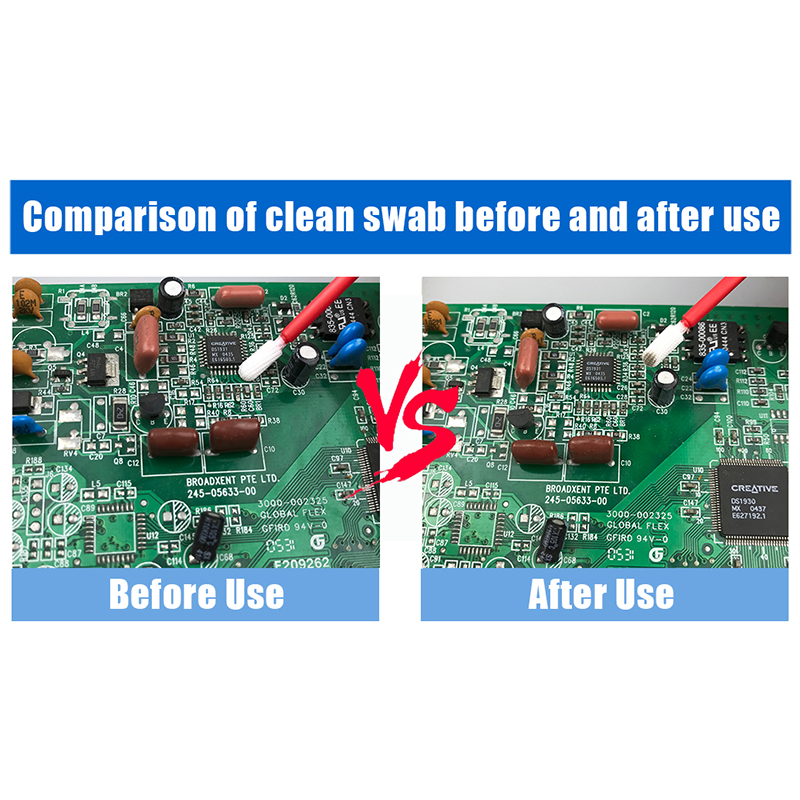 Custom Knitted Polyester Tipped Swab Suppliers, OEM/ODM Factory - Suzhou Jujie ESuzhou Jujie Electron Co.,Ltd is a China OEM/ODM Knitted Polyester Tipped Swab supplier and Knitted Polyester Tipped Swab factory, We spe...View Product →
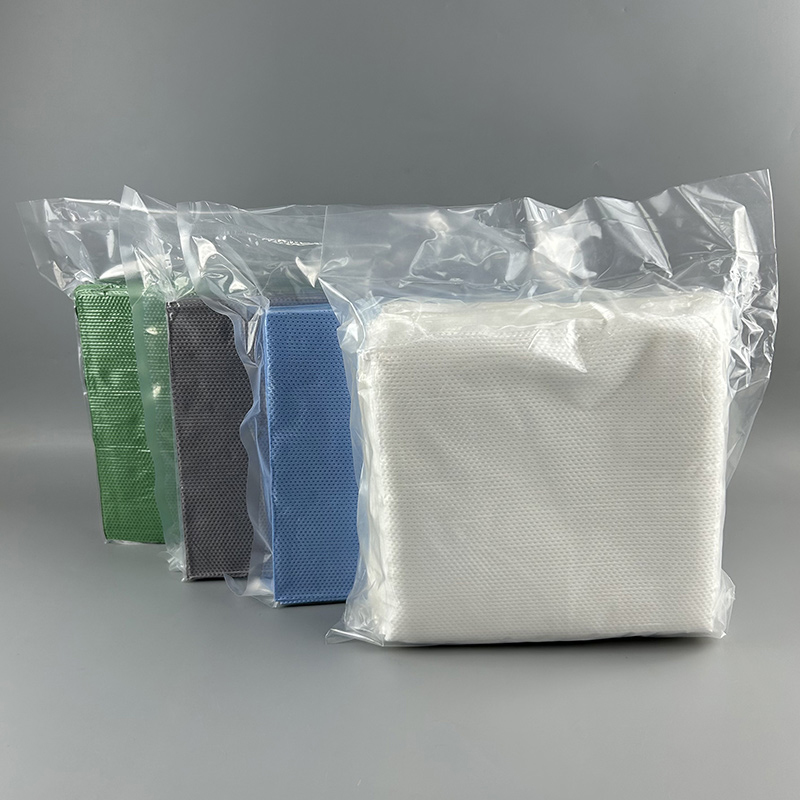 Custom JW-24011 2 Ply Polyester Cleanroom Wiper Suppliers, OEM/ODM Factory - SuzSuzhou Jujie Electron Co.,Ltd is a China OEM/ODM JW-24011 2 Ply Polyester Cleanroom Wiper supplier and JW-24011 2 Ply Polyester Cleanroom...View Product →
For wipers, the relevant industry reference is IEST-RP-CC004.3, which defines limits for particle shedding, ions, and other contaminants. When you buy a wiper for an ISO Class 5 or 6 room, check that the supplier can provide test data against that practice. At Suzhou Jujie Electron, our wipers and swabs are manufactured in rooms built to ISO Class 5 and ISO Class 6 standards, because the consumable you use in your cleanroom should be born in an environment as clean as the one you operate.
Common Classification Mistakes and Procurement Risks
From an auditor's point of view, the most common failures are predictable:
- One-time certification without a monitoring plan. The room passed once; nobody checked whether it stayed in class after production ramped up.
- Quoting the wrong particle size. A supplier or internal report says "ISO 8" without stating that the reference size is 0.5 micrometres, which makes the limit harder to compare across facilities.
- Consumables chosen by price alone. Cut-price wipers and swabs with no validated particle release data can push a room out of class during routine cleaning.
- Operational drift. Adding equipment, changing furniture, or increasing staff density without re-testing invalidates the original classification basis.
- Ignoring viable contamination. For pharmaceutical rooms, the ISO particle count is only half the story; microbiological limits in Annex 1 are equally binding.
Each of these failures is avoidable if you treat the ISO class as a living specification rather than a one-time label.
Frequently Asked Questions
What is the difference between ISO Class 7 and ISO Class 8?
At 0.5 micrometres, ISO Class 7 allows 352,000 particles per cubic metre, and ISO Class 8 allows 3,520,000. That is a tenfold difference in permitted particle concentration, so moving from ISO 8 to ISO 7 generally requires better filtration, higher air-change rates, and stricter gowning procedures.
How is ISO Class 5 verified in practice?
The room is tested with a discrete particle counter at 0.5 and 5 micrometres, using the number of sampling points derived from the room area, and the data is analysed with the upper confidence limit formula in ISO 14644-1. Most ISO Class 5 rooms are also monitored continuously at a few critical locations.
Can consumables manufactured outside a cleanroom be used inside an ISO 5 room?
Technically a wiper can be used if its particle-shedding performance has been measured and accepted, but a wiper that is manufactured, laundered, and packaged in an uncontrolled environment can introduce far more contamination than it removes. For critical processes, choose products made in cleanroom conditions, ideally in facilities that are themselves classified.
ISO 14644 cleanroom classification is a decision tool, not a decoration. Choose the class that your process actually requires, verify it with a properly executed classification test, monitor it on a risk-based schedule, and select consumables that have been engineered and produced for cleanroom use. When the particle counter crosses the limit on an otherwise normal morning, the question is not whether you have a certificate on the wall; it is whether you have the data, the procedures, and the right supplies to bring the room back into class.
If you are choosing wipers, swabs, and mats for an ISO Class 5 or 6 protocol, contact our cleanroom consumables team and we will help you specify products matched to your process and classification.