

 中文简体
中文简体 Español
 русский
 Deutsch
 Français
Content
- 1 Material Foundation Comparison: Chemical Structure Determines Performance Boundaries
- 2 In-Depth Application Scenario Analysis: Optimal Selection for Different Processes
- 3 Electrostatic Protection Performance Testing: Let Data Speak
- 4 Comfort and Ergonomics: Hidden Costs of Extended Wear
- 5 Total Cost and Service Life: Full-Cycle Perspective
- 6 Selection Decision Framework: Four Steps to Lock in the Optimal Solution
PVC gloves and nitrile gloves are the two most widely used materials in the anti static glove series, with significant differences in chemical resistance, comfort, electrostatic control, and cost dimensions. For processes focused on dry environment assembly and basic protection, PVC gloves perform excellently due to their smooth surface and dust-resistant properties. In operations involving oils, chemical exposure, or requiring higher dexterity such as welding and packaging, nitrile gloves' oil resistance, elasticity, and fit offer greater advantages. Enterprises should make targeted selections based on the electrostatic protection level, chemical exposure risk, and operational precision requirements of specific application scenarios.
Material Foundation Comparison: Chemical Structure Determines Performance Boundaries
PVC gloves use polyvinyl chloride as the primary base material, achieving anti static functionality through the addition of plasticizers and conductive fillers. Their molecular chains contain chlorine elements, giving the material natural flame retardancy and chemical stability. Nitrile gloves use butadiene-acrylonitrile copolymer as the base material, with acrylonitrile content typically ranging from 18% to 50%; higher content provides stronger oil resistance but correspondingly reduces elasticity.
Physical and Chemical Performance Parameter Comparison
| Comparison Dimension | PVC Gloves | Nitrile Gloves |
|---|---|---|
| Primary Base Material | Polyvinyl Chloride (PVC) | Butadiene-Acrylonitrile Copolymer |
| Surface Resistance | 10 to 10 ohms | 10 to 10 ohms |
| Oil Resistance | General, prone to hardening after oil contact | Excellent, resistant to mineral and synthetic oils |
| Chemical Resistance | Resistant to acids and bases, not resistant to organic solvents | Resistant to various chemicals including ketones and esters |
| Elasticity and Fit | Moderate, becomes brittle after plasticizer migration | High elasticity, conforms to hand contours |
| Surface Characteristics | Smooth, less prone to dust adhesion | Micro-textured or smooth options, sensitive touch |
| Thickness Range | 0.08 to 0.15mm | 0.06 to 0.12mm |
| Service Life | Shorter, prone to aging and cracking | Longer, abrasion and tear resistant |
As shown in the table, both glove types meet industry standards for electrostatic control indicators, but nitrile gloves hold a 2 to 3 times advantage in oil resistance and service life. PVC gloves are typically thicker, providing greater security in scenarios requiring certain mechanical protection, but sacrificing some operational flexibility.
In-Depth Application Scenario Analysis: Optimal Selection for Different Processes
Anti static glove selection cannot be separated from specific process environments. The following provides adaptability analysis for two typical scenarios in electronics manufacturing.
Scenario 1: Electronics Assembly and Semiconductor Testing
In visual inspection and functional testing after PCB placement, the operating environment is relatively dry, with primary risks coming from human body static electricity and dust particles. PVC gloves' smooth surface is less likely to adsorb fibers and dust, and they have certain waterproof properties to prevent hand sweat from penetrating and contaminating circuit boards. Measured data shows that in standard workshops with humidity of 40% to 60%, PVC gloves' static decay time remains stable at 0.5 to 1.2 seconds, fully meeting ASTM D257 standard requirements.
Scenario 2: Precision Soldering and Chip Packaging
In wave soldering and reflow soldering processes, operators frequently contact flux, cleaning agents, and high-temperature equipment. Nitrile gloves' resistance time to rosin-based flux and isopropanol cleaning agents exceeds 4 hours, while PVC gloves typically show surface swelling within 1.5 hours under the same conditions. Additionally, nitrile gloves' elastic modulus is approximately 1.5 times that of PVC, providing more precise force feedback when holding precision soldering irons and tweezers, reducing operational error rates.
| Process Type | PVC Glove Adaptability | Nitrile Glove Adaptability | Recommended Choice |
|---|---|---|---|
| PCB Assembly and Inspection | Excellent | Very Good | PVC |
| Wave/Reflow Soldering | Fair | Excellent | Nitrile |
| Chip Packaging and Wire Bonding | Fair | Excellent | Nitrile |
| Semiconductor Wafer Inspection | Very Good | Excellent | Nitrile |
| Warehousing and Logistics Handling | Very Good | Very Good | Either |
Electrostatic Protection Performance Testing: Let Data Speak
Core indicators for electrostatic protection include surface resistance, static decay time, and triboelectric voltage. The following data comes from comparative testing in standard laboratory environments (temperature 23 plus or minus 2 degrees Celsius, relative humidity 50 plus or minus 5 percent).
Key Electrostatic Parameter Comparison
- Surface Resistance: PVC gloves measured 3.2 times 10 to the power of 7 ohms, nitrile gloves measured 8.5 times 10 to the power of 7 ohms, both within the ideal range of 10 to the power of 6 to 10 to the power of 9 ohms, with limited difference in protection effectiveness.
- Static Decay Time: PVC gloves averaged 0.8 seconds to decay from 1000V to 100V, nitrile gloves averaged 1.1 seconds, both well below the industry upper limit of 2 seconds.
- Triboelectric Voltage: In standard nylon friction testing, PVC gloves generated static voltage of 85V, nitrile gloves generated 120V, both below the typical damage threshold for CMOS devices (approximately 250V).
Notably, in low-temperature, low-humidity environments (temperature 15 degrees Celsius, humidity 30 percent), PVC gloves' static decay time extended to 2.5 seconds, exceeding the safety threshold; while nitrile gloves remained within 1.8 seconds. This indicates that in regions with significant seasonal humidity fluctuations, nitrile gloves offer greater stability in electrostatic control.
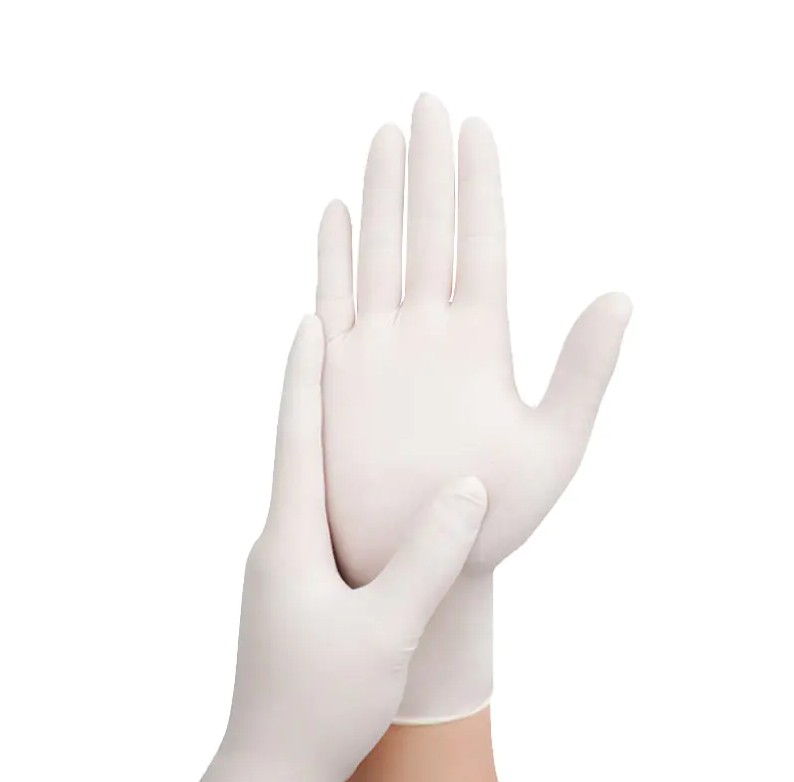
Comfort and Ergonomics: Hidden Costs of Extended Wear
Glove comfort directly impacts operator fatigue and work efficiency. Nitrile gloves' elongation rate can reach 500% to 600%, while PVC gloves only reach 200% to 300%. This means nitrile gloves can conform more closely to different hand shapes, reducing wrinkles and slippage.
Extended Wear Comparison Data
- Hand Perspiration: After 4 hours of continuous wear, PVC glove inner layer sweat accumulation is approximately 35% higher than nitrile gloves, primarily due to PVC's poorer breathability.
- Skin Allergy Rate: Plasticizers in PVC gloves (such as phthalates) may cause contact dermatitis, with allergy rates of approximately 3% to 5% in sensitive populations; nitrile gloves contain no latex proteins or plasticizers, with allergy rates below 1%.
- Operational Precision Retention: In 8-hour shift testing, operators wearing nitrile gloves showed placement positioning error growth of only 12%, while the PVC glove group reached 28%.
For production lines requiring continuous operation of 8 hours or more, nitrile gloves' comprehensive ergonomic advantages can reduce quality fluctuations caused by operator fatigue.
Total Cost and Service Life: Full-Cycle Perspective
Although there are price differences between the two glove types, full-cycle costs should comprehensively consider replacement frequency, scrap rates, and quality losses caused by glove failure.
Service Life and Replacement Frequency
| Indicator | PVC Gloves | Nitrile Gloves |
|---|---|---|
| Average Single Use Duration | 2 to 4 hours | 6 to 8 hours |
| Daily Replacement Count (8-hour shift) | 2 to 4 times | 1 to 2 times |
| Breakage Rate (Monthly Statistics) | 8% to 12% | 2% to 4% |
| Defect Rate Due to Glove Failure | 0.15% to 0.25% | 0.03% to 0.08% |
| Monthly Per Capita Consumption | Approximately 60 to 80 pairs | Approximately 20 to 30 pairs |
From a full-cycle cost perspective, although nitrile gloves' unit purchase price is typically higher than PVC gloves, their replacement frequency is reduced by over 60% and breakage rates are significantly lower. Over usage cycles of 6 months or more, comprehensive costs often become comparable or even lower. Additionally, rework costs due to electrostatic damage from glove failure are typically dozens of times the cost of the gloves themselves. This hidden cost should not be overlooked during selection.
Selection Decision Framework: Four Steps to Lock in the Optimal Solution
Based on the above analysis, enterprises can follow the following decision process for glove selection:
- Identify Chemical Exposure Risk: If processes involve flux, cleaning agents, oils, or other chemicals, prioritize nitrile gloves; for pure assembly and inspection in dry environments, PVC gloves are sufficient.
- Evaluate Operational Precision Requirements: For processes requiring high tactile feedback such as chip wire bonding and precision soldering, nitrile gloves' thin design and elasticity advantages are more pronounced.
- Consider Work Duration and Comfort: For continuous operations exceeding 4 hours, nitrile gloves are recommended to reduce hand fatigue and operational errors.
- Calculate Full-Cycle Costs: Compare not only unit prices but also incorporate replacement frequency, breakage rates, and quality loss costs for comprehensive evaluation.
Final Recommendation: For manufacturing workshops with mixed processes, a zone-based configuration strategy can be adopted. Use PVC gloves in assembly and inspection areas, and nitrile gloves in soldering and packaging areas, to achieve a balance between protection effectiveness and cost control.