

 中文简体
中文简体 Español
 русский
 Deutsch
 Français
Content
A sticky roller is a cleaning tool that removes dust, hair, and tiny debris through an adhesive surface. According to 2026 professional testing data, traditional tape-style sticky rollers still lead in single-pass cleaning efficiency compared to reusable types, while the latter excel in environmental sustainability and long-term cost-effectiveness. For ordinary household daily cleaning, a PE material standard roller with 60–100 tear-off sheets is recommended; for pet households or industrial cleanroom environments, silicone or anti-static rubber rollers should be prioritized, as their adhesion can sustain 300–500 cleaning cycles.
Working Principles and Material Classification
Adhesive Capture Mechanism
The core of a sticky roller lies in its adhesive coating. As the roller moves across a surface, the sticky layer captures dust particles, fibers, and hair through intermolecular forces (van der Waals forces). Adhesion duration varies significantly by material:
- PE (Polyethylene) Tape-Style: Each sheet has an adhesive strength of approximately 180–220 g/25 mm, suitable for single-use tear-off replacement
- Silicone Material: Washable and reusable, with an adhesion recovery rate of 85%–95% and a service life of about 300 uses per cleaning session
- Anti-Static Rubber: Designed for the electronics industry, with surface resistance controlled at 10^6–10^9 Ω to prevent electrostatic damage to precision components
Primary Material Comparison
| Material Type | Adhesion Level | Applicable Scenarios | Service Life | Eco-Friendliness |
|---|---|---|---|---|
| PE Tear-Off | Medium-High | Clothing, Furniture, Carpets | 60–100 Sheets/Roll | Moderate |
| Silicone Washable | Medium | Industrial Cleanrooms, Electronics Workshops | 300–500 Uses | High |
| Anti-Static Rubber | Medium-Low | Precision Electronics, Optical Instruments | 200–400 Uses | High |
| PP (Polypropylene) | High | Heavily Contaminated Areas | 50–80 Sheets/Roll | Moderate |
Selection Strategies for Different Scenarios
Household Daily Cleaning
For ordinary households, sticky rollers are mainly used for de-fuzzing clothing, cleaning sofas, and maintaining carpets. According to 2026 consumer report tests, a standard PE sticky roller (95 sheets/roll) can cover approximately 120–150 square meters of cleaning area, sufficient for a family of three for 2–3 months. Key selection criteria include:
- Handle length between 15–25 cm for comfortable grip and operation
- Roller diameter of 4–6 cm as the optimal balance—too small requires multiple passes, too large struggles with corners
- Choose products with perforated easy-tear design to prevent uneven tearing and waste
Pet Household Specialized Cleaning
Pet hair (especially cat fur) is characterized by being fine, electrostatically charged, and easily embedded in fabrics. Test data shows that ordinary sticky rollers achieve a single-pass removal rate of approximately 70%–80% for pet hair, while Extra Sticky rollers designed specifically for pets can increase this to over 90%. For large-area cleaning (carpets, curtains), a floor-specific model with an extension rod (up to 107 cm/42 inches) and a 10-inch wide roller is recommended, which can reduce operation time by over 50%.
Industrial and Cleanroom Applications
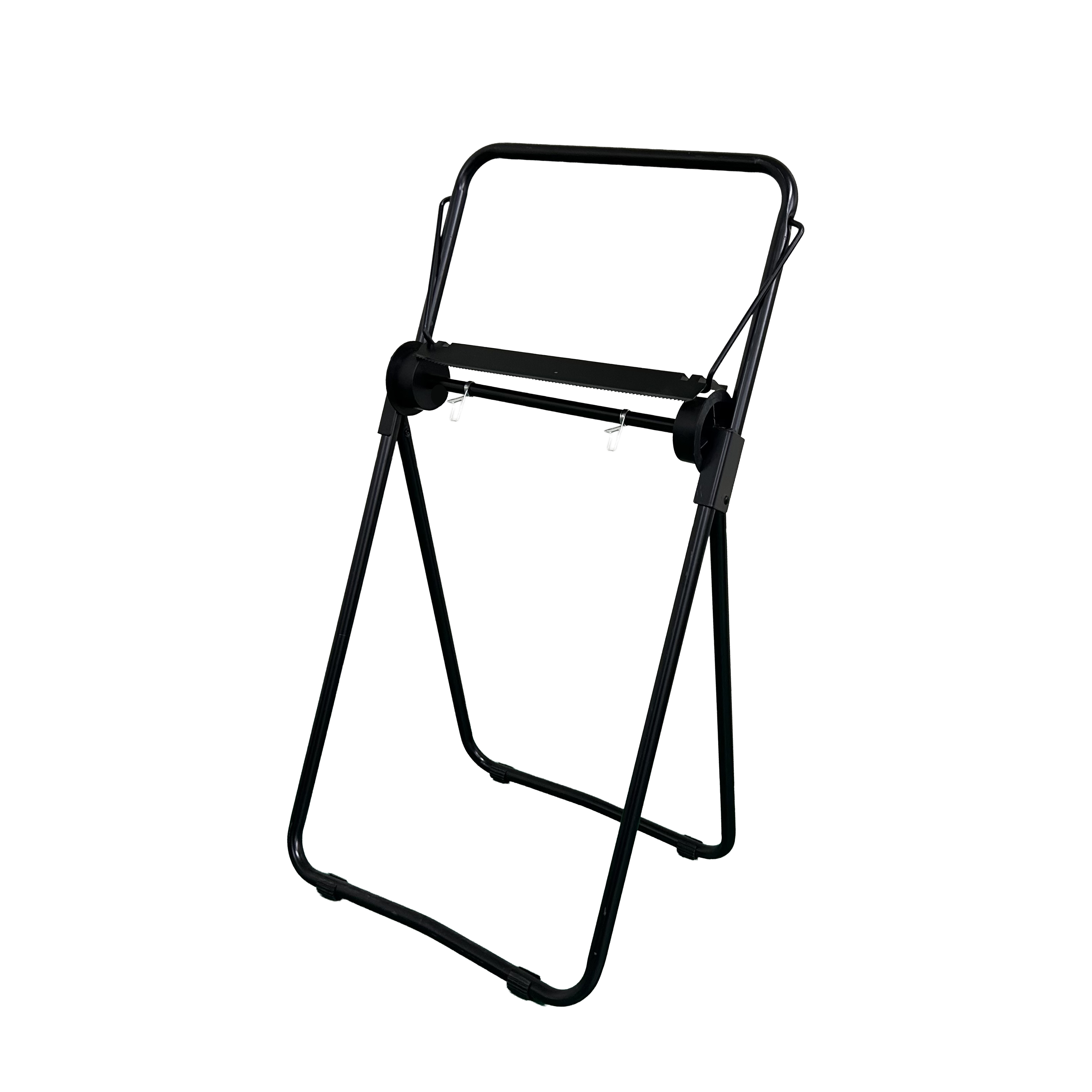
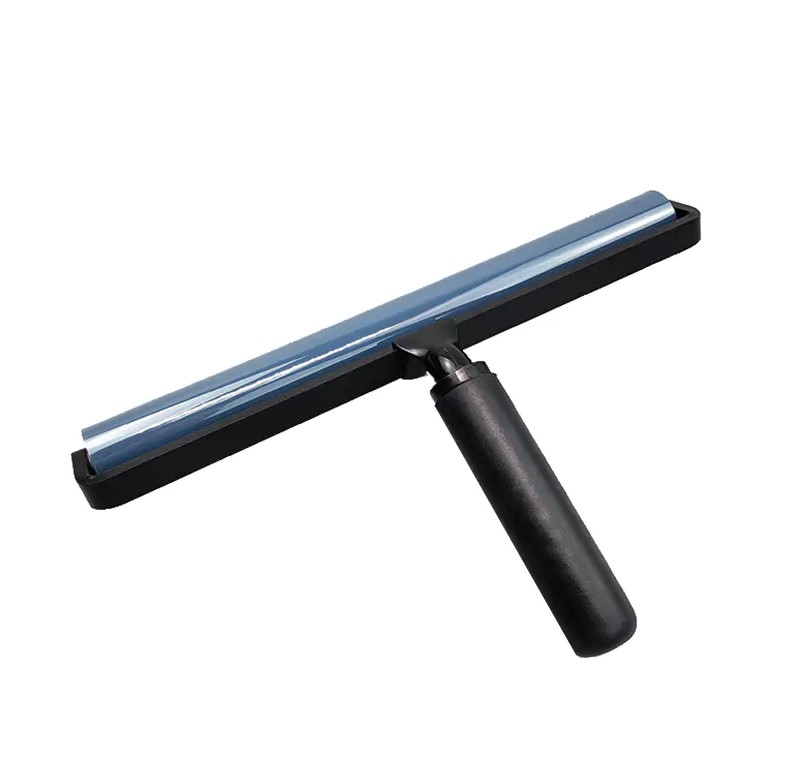
In cleanroom environments such as electronics manufacturing and pharmaceutical production, sticky rollers must meet stricter cleanliness standards. These scenarios typically use silicone rollers with all-aluminum or ABS plastic frames to avoid metal corrosion or plastic static. Roller widths range from 2 inches to 12 inches, compatible with dedicated holders for continuous operation. Notably, the adhesion decay cycle of industrial-grade sticky rollers must be monitored through regular adhesion testing (using a Dyna-Tester or similar device); replacement or cleaning should occur immediately when adhesion falls below 60% of the initial value.
Usage Techniques and Efficiency Optimization
Correct Operating Methods
Using a sticky roller is not as simple as rolling it back and forth—proper technique directly impacts cleaning efficiency. Based on cleaning area and contamination level, the following technical points are recommended:
- Unidirectional Rolling Method: Always roll in the same direction to avoid back-and-forth friction causing hair to re-adhere, improving efficiency by 20%–30%
- Segmented Cleaning Method: Divide large areas into 30 cm × 30 cm blocks, replacing the adhesive surface after each block to avoid cross-contamination
- Angle Control: Maintain a 15–30 degree tilt angle between the roller and the surface to increase effective contact area while reducing direct tearing of the adhesive sheet
Maintenance and Storage Recommendations
Improper storage can cause premature failure of sticky rollers. PE adhesive sheets exposed to high temperatures (>40°C) or direct sunlight will soften and migrate, causing adjacent sheets to stick together; silicone rollers left in dusty environments will develop a "contamination film," reducing adhesion recovery after washing to below 60%. Therefore:
- Immediately replace the dust cover or seal in a bag after use
- Store in an environment with humidity controlled at 45%–65% RH and temperature at 15–25°C
- Silicone rollers should be rinsed with clean water (or diluted neutral detergent) after each use and air-dried for over 12 hours before reuse
Common Misconceptions and Alternative Solutions
Clarifying Usage Myths
Many users hold the following misconceptions, leading to poor cleaning results or tool damage:
- Myth 1: Sticky rollers can be used on all fabrics—In reality, delicate fabrics such as wool, cashmere, and suede are susceptible to adhesive residue damage; a bristle-style lint remover should be used instead
- Myth 2: The stickier the adhesive, the better—Excessively high adhesion (>250 g/25 mm) can leave adhesive residue on silk and synthetic fibers and may pull out fabric fibers
- Myth 3: Reusable types are completely eco-friendly—Although they reduce sheet waste, silicone rollers require 3–4 times the production energy of PE adhesive sheets and must be used over 100 times to demonstrate environmental advantages
When to Choose Alternative Tools
In the following scenarios, sticky rollers are not the optimal solution; alternative tools should be considered:
| Cleaning Scenario | Sticky Roller Effectiveness | Recommended Alternative | Reason |
|---|---|---|---|
| Deep Hair in Thick Carpets | Poor (surface only) | Rubber Squeegee / Mite Remover | Hair embedded deep; requires mechanical force or suction |
| Delicate Wool Fabrics | Moderate (damage risk) | Natural Bristle Brush | Avoids adhesive residue and fiber pulling |
| Large-Area Floor Cleaning | Moderate (high cost) | Electrostatic Mop / Vacuum Cleaner | Reduces per-unit-area cleaning cost by 70% |
| Car Interior Gaps | Poor (size limitations) | Handheld Vacuum + Crevice Tool | Rollers cannot access narrow spaces |
Purchasing Decision Framework
Based on the above analysis, sticky roller selection should follow a three-dimensional "Scenario-Material-Specification" decision model:
- Define the Usage Scenario: Household daily → PE tear-off; Pet household → Extra Sticky or wide floor model; Industrial cleanroom → Silicone / Anti-static
- Determine Cleaning Frequency: Low frequency (<1 time/week) → Small roll (30–60 sheets); High frequency (>3 times/week) → Large roll (90–100 sheets) or reusable type
- Match Surface Characteristics: Smooth hard surfaces (floors, glass) → Medium-low adhesion; Soft fabric surfaces (clothing, sofas) → Medium-high adhesion; Precision electronics → Anti-static low adhesion
- Evaluate Long-Term Costs: Calculated per cleaning session, PE tear-off costs approximately $0.01–0.02 per use, while silicone washable types cost approximately $0.003–0.005 per use (based on a 300-use lifespan), though the latter requires 3–5 times higher initial investment
Final recommendation: For most users, keep one standard PE sticky roller (95 sheets) on hand for emergency cleaning, and equip one silicone washable type for high-frequency areas (such as pet activity zones) to achieve the optimal balance of efficiency and economy.